 English
 Français
 Deutsch
 Español
;
Quotes from: Insecure Parental Attachment in Pedophiles
This proposal focuses on demonstrating a correlation between attachment deficits and pedophilia that has been neglected in the research to date. Prior research shows that there is a link between insecure parental attachment and individuals diagnosed with pedophilia, which can be an indicator of inappropriate relationships in adulthood such as romantic relations with a child.
Fifty incarcerated males who have been convicted of any sexual act involving a minor will be randomly assigned to either the standard cognitive-behavioral treatment (CBT) or CBT and interpersonal psychotherapy. They will be assessed pre- and post-treatment and over a period of 10 years.
It is hypothesized that the group who receives CBT and interpersonal psychotherapy will demonstrate lower levels of recidivism than the group with the standard CBT treatment. The implications of this research study would update and correct the flaws in the current sex offender treatment being used across the country, as well as state or federal policies regarding sexual offender treatment. [...]
There is a vast difference between child sex offenders and pedophiles.
Child sexual offender is a legal term that refers to anyone who has committed a sexual act involving a child [...]. A child sexual offender may have no direct desire or love for children [...]
In contrast, pedophilia is strictly a psychological term. The DSM-IV-TR defines pedophilia as recurrent sexual fantasies, urges, and/or behaviors that involve sexual activity with a prepubescent child, as well as if the individual has acted on these fantasies or urges [...].
However, there is also the possibility that an individual diagnosed with pedophilia can also be legally classified as a child sexual offender after engaging in pedophilic illegal behavior and being convicted.
[* Ipce remarks: This a a proposal for research, including 10 years controll for recidive; published in 2011, the results can be puiblished after 2021. However, the article gives a good overview of the literature about pedophila, attachment, treatment, recidive, and more.]
This proposal focuses on demonstrating a correlation between attachment deficits and pedophilia that has been neglected in the research to date. Prior research shows that there is a link between insecure parental attachment and individuals diagnosed with pedophilia, which can be an indicator of inappropriate relationships in adulthood such as romantic relations with a child.
Fifty incarcerated males who have been convicted of any sexual act involving a minor will be randomly assigned to either the standard cognitive-behavioral treatment (CBT) or CBT and interpersonal psychotherapy. They will be assessed pre- and post-treatment and over a period of 10 years.
It is hypothesized that the group who receives CBT and interpersonal psychotherapy will demonstrate lower levels of recidivism than the group with the standard CBT treatment. The implications of this research study would update and correct the flaws in the current sex offender treatment being used across the country, as well as state or federal policies regarding sexual offender treatment. [...]
There is a vast difference between child sex offenders and pedophiles.
Child sexual offender is a legal term that refers to anyone who has committed a sexual act involving a child [...]. A child sexual offender may have no direct desire or love for children [...]
In contrast, pedophilia is strictly a psychological term. The DSM-IV-TR defines pedophilia as recurrent sexual fantasies, urges, and/or behaviors that involve sexual activity with a prepubescent child, as well as if the individual has acted on these fantasies or urges [...].
However, there is also the possibility that an individual diagnosed with pedophilia can also be legally classified as a child sexual offender after engaging in pedophilic illegal behavior and being convicted.
[* Ipce remarks: This a a proposal for research, including 10 years controll for recidive; published in 2011, the results can be puiblished after 2021. However, the article gives a good overview of the literature about pedophila, attachment, treatment, recidive, and more.]


;
Associations of the ten original Adverse Childhood Experiences (ACEs) with mental health impairments after controlling for the other ACEs (meta-analysis)
The ten original ACEs (including emotional, physical, and "sexual abuse") are associated with mental impairment among the people affected in countless studies. The corresponding bivariate associations are to a considerable extent confounding bias. The extent of the causal relationships is unresolved. [...]
Methode: A systematic literature search was conducted to search for studies that determined the associations of each of the ten original ACEs with mental impairment in "minors" or adults after controlling for each of
the nine other original ACEs (and other ACEs, if applicable). [...]
Conclusions: The causal relationships between the ten original ACEs and mental health impairments are smaller than widely suspected. In the case of several original ACEs, long-term important negative health consequences
are not to be assumed. The ACEs concept should be fundamentally
reconsidered.
Limitations: Also, because of the many uncontrolled confounding variables (including genes and other ACEs), the associations identified by the metaanalysis are not precise causal effect sizes.
The ten original ACEs (including emotional, physical, and "sexual abuse") are associated with mental impairment among the people affected in countless studies. The corresponding bivariate associations are to a considerable extent confounding bias. The extent of the causal relationships is unresolved. [...]
Methode: A systematic literature search was conducted to search for studies that determined the associations of each of the ten original ACEs with mental impairment in "minors" or adults after controlling for each of
the nine other original ACEs (and other ACEs, if applicable). [...]
Conclusions: The causal relationships between the ten original ACEs and mental health impairments are smaller than widely suspected. In the case of several original ACEs, long-term important negative health consequences
are not to be assumed. The ACEs concept should be fundamentally
reconsidered.
Limitations: Also, because of the many uncontrolled confounding variables (including genes and other ACEs), the associations identified by the metaanalysis are not precise causal effect sizes.
;
Schuster, meta-analysis - some links to the references
Some Literature … from Schulte, Meta-analysis 2024, as far as easily to find on Ipce’s websites.
Some Literature … from Schulte, Meta-analysis 2024, as far as easily to find on Ipce’s websites.
;
Quotes from: Associations of the ten original Adverse Childhood Experiences (ACEs) with mental health impairments after controlling for the other ACEs (meta-analysis)
The ten original ACEs (including emotional, physical, and "sexual abuse") are associated with mental impairment among the people affected in countless studies. The corresponding bivariate associations are to a considerable extent confounding bias. The extent of the causal relationships is unresolved.
[... ... ...]
Results: The magnitude of the bivariate associations between the ten original ACEs and mental health impairments is typically medium across
studies (median r=0.22), typically very small (r=0.07) after controlling for the nine other original ACEs, and even smaller (r=0.05) after controlling for additional ACEs. The ACEs incarceration of a household member (r=-0.01) and witnessing violence against the mother/parents (r=0.01) are not associated with mental health impairments after controlling for more than each of the nine other original ACEs. These associations are also very low for the ACEs "sexual abuse", divorce/separation of parents, and alcohol/drug problem of a household member (r=0.04 each).
Conclusions: The causal relationships between the ten original ACEs and mental health impairments are smaller than widely suspected. In the case of several original ACEs, long-term important negative health consequences
are not to be assumed. The ACEs concept should be fundamentally reconsidered.
Limitations: Also, because of the many ncontrolled confounding variables (including genes and other ACEs), the ssociations identified by the metaanalysis are not precise causal effect sizes.
The ten original ACEs (including emotional, physical, and "sexual abuse") are associated with mental impairment among the people affected in countless studies. The corresponding bivariate associations are to a considerable extent confounding bias. The extent of the causal relationships is unresolved.
[... ... ...]
Results: The magnitude of the bivariate associations between the ten original ACEs and mental health impairments is typically medium across
studies (median r=0.22), typically very small (r=0.07) after controlling for the nine other original ACEs, and even smaller (r=0.05) after controlling for additional ACEs. The ACEs incarceration of a household member (r=-0.01) and witnessing violence against the mother/parents (r=0.01) are not associated with mental health impairments after controlling for more than each of the nine other original ACEs. These associations are also very low for the ACEs "sexual abuse", divorce/separation of parents, and alcohol/drug problem of a household member (r=0.04 each).
Conclusions: The causal relationships between the ten original ACEs and mental health impairments are smaller than widely suspected. In the case of several original ACEs, long-term important negative health consequences
are not to be assumed. The ACEs concept should be fundamentally reconsidered.
Limitations: Also, because of the many ncontrolled confounding variables (including genes and other ACEs), the ssociations identified by the metaanalysis are not precise causal effect sizes.
;
The spectacular achievements of media control
Update of this article: 2024:
When most Americans think about aggression in our society, our first thoughts are apt to include children being abused and/or killed by sick or outrightly criminal adults. We usually don't consider the somewhat broader context of what is going on behind the use of these issues, or the time periods in which they are most emphasized; in fact, in not seeing this we miss out on a crucial issue that comes down to what kind of society we want to live in.
Update of this article: 2024:
When most Americans think about aggression in our society, our first thoughts are apt to include children being abused and/or killed by sick or outrightly criminal adults. We usually don't consider the somewhat broader context of what is going on behind the use of these issues, or the time periods in which they are most emphasized; in fact, in not seeing this we miss out on a crucial issue that comes down to what kind of society we want to live in.
;
5 O.C. teens identified as victims in widespread child-exploitation investigation,
Mar 19 2014
Five teenage boys from Orange County are among more than 250 juvenile victims identified in one of the largest online child exploitation investigations ever conducted by U.S. Immigration and Customs Enforcement’s Homeland Security Investigations division. [...]
The Orange County victims ranged in age from 14 to 17 and were contacted in online chat rooms, authorities said. [...]
The teens were duped into producing “very graphic images and videos of themselves” and sending them to what they believed were teenage girls when, in fact, they were producing images for pedophiles ...
Fourteen people – none in Orange County – have been charged as a result of the investigation. It targeted a child pornography website on what is known as the Darknet’s Onion Router ...
Overview of child pornography cases ...
Tips for parents ... Tips for kids ...
Comment - by an Ipce Member [...]
Wow. So many criminals, and so much criminal activity on that website. Thank God for that investigation! The millions of dollars the investigation cost were very well spent! And it is clearly worthwhile that the 26,986 other members of that site who never did anything illegal have now been denied the use of a site they had enjoyed using, and which they used completely legally. Good job, law enforcers!
Five teenage boys from Orange County are among more than 250 juvenile victims identified in one of the largest online child exploitation investigations ever conducted by U.S. Immigration and Customs Enforcement’s Homeland Security Investigations division. [...]
The Orange County victims ranged in age from 14 to 17 and were contacted in online chat rooms, authorities said. [...]
The teens were duped into producing “very graphic images and videos of themselves” and sending them to what they believed were teenage girls when, in fact, they were producing images for pedophiles ...
Fourteen people – none in Orange County – have been charged as a result of the investigation. It targeted a child pornography website on what is known as the Darknet’s Onion Router ...
Overview of child pornography cases ...
Tips for parents ... Tips for kids ...
Comment - by an Ipce Member [...]
Wow. So many criminals, and so much criminal activity on that website. Thank God for that investigation! The millions of dollars the investigation cost were very well spent! And it is clearly worthwhile that the 26,986 other members of that site who never did anything illegal have now been denied the use of a site they had enjoyed using, and which they used completely legally. Good job, law enforcers!
;
Contact Sexual Offending by Men With Online Sexual Offenses;
Annals of Sex Research · December 2010
Abstract
There is much concern about the likelihood that online sexual offenders particularly online child pornography offenders) have either committed or will commit offline sexual offenses involving contact with a victim. This study addresses this question in two metaanalyses:
[1] the first examined the contact sexual offense histories of online offenders,
whereas
[2] the second examined the recidivism rates from follow-up studies of online
offenders.
[1] The first meta-analysis found that approximately 1 in 8 online offenders (12%)
have an officially known contact sexual offense history at the time of their index offense (k = 21, N = 4,464). Approximately one in two (55%) online offenders admitted to a contact sexual offense in the six studies that had self-report data (N = 523).
[2] The second meta-analysis revealed that 4.6% of online offenders committed a new sexual offense of some kind during a 1.5- to 6-year follow-up (k = 9, N = 2,630); 2.0% committed a contact sexual offense and 3.4% committed a new child pornography offense.
The results of these two quantitative reviews suggest that there may be a distinct subgroup of online-only offenders who pose relatively low risk of committing
contact sexual offenses in the future.
Abstract
There is much concern about the likelihood that online sexual offenders particularly online child pornography offenders) have either committed or will commit offline sexual offenses involving contact with a victim. This study addresses this question in two metaanalyses:
[1] the first examined the contact sexual offense histories of online offenders,
whereas
[2] the second examined the recidivism rates from follow-up studies of online
offenders.
[1] The first meta-analysis found that approximately 1 in 8 online offenders (12%)
have an officially known contact sexual offense history at the time of their index offense (k = 21, N = 4,464). Approximately one in two (55%) online offenders admitted to a contact sexual offense in the six studies that had self-report data (N = 523).
[2] The second meta-analysis revealed that 4.6% of online offenders committed a new sexual offense of some kind during a 1.5- to 6-year follow-up (k = 9, N = 2,630); 2.0% committed a contact sexual offense and 3.4% committed a new child pornography offense.
The results of these two quantitative reviews suggest that there may be a distinct subgroup of online-only offenders who pose relatively low risk of committing
contact sexual offenses in the future.
;
Trajectories in online child sexual exploitation offending in Australia;
Trends & issues in crime and criminal justice, No. 524 January 2017
Although the full extent and nature of the sexual exploitation of children is only beginning to be recognised, it is a problem of global significance that requires strong and effective responses. The extent to which the viewing of child exploitation material (CEM) is linked to involvement in producing such material, sharing it and using it to groom and then assault children is a key concern. Most such material is held online, and it is important to understand how offenders use the internet to access CEM and to groom children for sexual exploitation.
This exploratory study examines data relating to a sample of offenders convicted of online child sexual exploitation offences under Australian Commonwealth law, to determine how online forms of child sexual exploitation and offline child sexual exploitation, or contact offending, are related.
The majority of offenders in this study appeared to commit only online offences, although in a minority of cases there was a connection between exploitative material, grooming and contact offending.
This study is an important early step in improving our understanding of offenders and points to the need for further assessment of the nature of online child sexual exploitation and its relationship to other forms of sexual and violent offences.
Although the full extent and nature of the sexual exploitation of children is only beginning to be recognised, it is a problem of global significance that requires strong and effective responses. The extent to which the viewing of child exploitation material (CEM) is linked to involvement in producing such material, sharing it and using it to groom and then assault children is a key concern. Most such material is held online, and it is important to understand how offenders use the internet to access CEM and to groom children for sexual exploitation.
This exploratory study examines data relating to a sample of offenders convicted of online child sexual exploitation offences under Australian Commonwealth law, to determine how online forms of child sexual exploitation and offline child sexual exploitation, or contact offending, are related.
The majority of offenders in this study appeared to commit only online offences, although in a minority of cases there was a connection between exploitative material, grooming and contact offending.
This study is an important early step in improving our understanding of offenders and points to the need for further assessment of the nature of online child sexual exploitation and its relationship to other forms of sexual and violent offences.
;
Villain Journalism
There are two recent anti-"pedophilic" murders, one Russian and one Ukrainian, seemingly influenced by pro-"pedophilic" propaganda, mine and of the Right-To-Love Internet portal, which published the story of a Belarussian man Roman Tsiro buried alive because of his platonic relations with a high school girl on the 22th of April 2019. This pro-"pedophilic" propaganda seems to inspire the Russian police to invent the news about bloody revenge in the Tutaev city ...
Tenths of fictious details circulate in the city about this story…
In short, the Tutaev anti-"pedophilic" murder was invented by Russian policemen to mock the death of Roman Tsiro. ...
Another anti-"pedophilic" murder, one in my city (...), was invented by the Ukrainian police and journalists on May 18th 2020. ...
Wherever this story is posted, some hints are added about so-called pedophiles "raping" children in another cities, so that murders are invented by journalists in order to heroize anti-"pedophilic" villains as the only force that can save children.
There are two recent anti-"pedophilic" murders, one Russian and one Ukrainian, seemingly influenced by pro-"pedophilic" propaganda, mine and of the Right-To-Love Internet portal, which published the story of a Belarussian man Roman Tsiro buried alive because of his platonic relations with a high school girl on the 22th of April 2019. This pro-"pedophilic" propaganda seems to inspire the Russian police to invent the news about bloody revenge in the Tutaev city ...
Tenths of fictious details circulate in the city about this story…
In short, the Tutaev anti-"pedophilic" murder was invented by Russian policemen to mock the death of Roman Tsiro. ...
Another anti-"pedophilic" murder, one in my city (...), was invented by the Ukrainian police and journalists on May 18th 2020. ...
Wherever this story is posted, some hints are added about so-called pedophiles "raping" children in another cities, so that murders are invented by journalists in order to heroize anti-"pedophilic" villains as the only force that can save children.
;
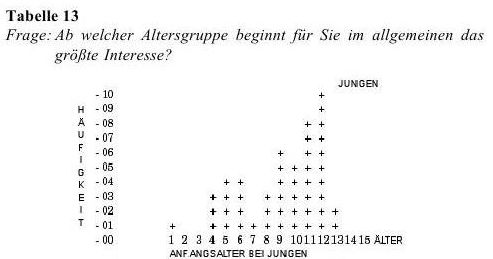
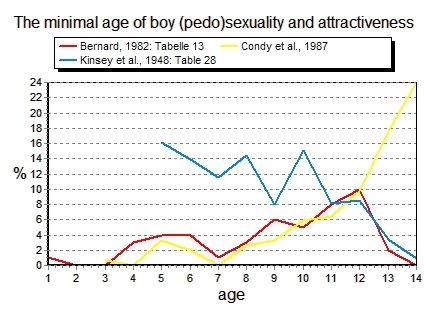
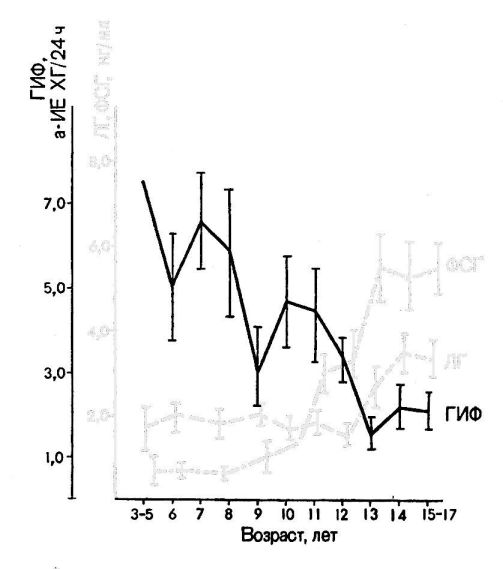
The endocrinology of latent phase in boys
"Our study gave us a cogent evidence that sexual development is active even before puberty, it totally rebuts those conceptions, still popular, of ‘neutral’ childhood,” Kolesov et al. claimed.
That's why latent phase in boy sexual development has a natural explanation, not a cultural one.
"Our study gave us a cogent evidence that sexual development is active even before puberty, it totally rebuts those conceptions, still popular, of ‘neutral’ childhood,” Kolesov et al. claimed.
That's why latent phase in boy sexual development has a natural explanation, not a cultural one.

;
The age of the girls and the boys in the Tanner stages
The studies listed were identified by the author in 2017 using a systematic literature search. ...
In recent decades, the age at which girls reach puberty has declined by 0.24 years per decade, [...] Therefore, it may be that in the last five years since the literature review was conducted, the age at reaching puberty has decreased slightly. ...
Girls do not typically reach puberty at age eleven, as has been widely claimed (...), but rather at age nine. ...
Girls are not in Tanner stage 4 (...) at 15 to 16/17 years, but at twelve to 14 years. ...
Accordingly, the desire of girls from the age of ten and of boys from the age of eleven was and is not evidence of preferential desire of prepubescents ("pedophilia").
The studies listed were identified by the author in 2017 using a systematic literature search. ...
In recent decades, the age at which girls reach puberty has declined by 0.24 years per decade, [...] Therefore, it may be that in the last five years since the literature review was conducted, the age at reaching puberty has decreased slightly. ...
Girls do not typically reach puberty at age eleven, as has been widely claimed (...), but rather at age nine. ...
Girls are not in Tanner stage 4 (...) at 15 to 16/17 years, but at twelve to 14 years. ...
Accordingly, the desire of girls from the age of ten and of boys from the age of eleven was and is not evidence of preferential desire of prepubescents ("pedophilia").
;
Statistics Laundering: false and fantastic figures,
Jan 03 2010
A very critical and well documented description of the myths, claimed to be "statistics", about child pornography and child abuse.
A very critical and well documented description of the myths, claimed to be "statistics", about child pornography and child abuse.
;
An insight into child porn,
Feb 26 2009
In recent months, I have followed closely the debate on the topic of filtering of child pornography in Germany. There have been various suggestions about how the Internet should be censored and filtered - not only by the Federal Government (...) but also by federal countries (...).
Discussions on this topic have lasted for months and have triggered a strong polemic which is also reflected in various forums. For the first time ever, I will present the "flip side" of the issue and give you an insight from the other side. I will describe controversial and possibly - from today's perspective - immoral things and technologies.
...
In order to systematically describe the situation, I decided to do this in a theme-oriented fashion.
In recent months, I have followed closely the debate on the topic of filtering of child pornography in Germany. There have been various suggestions about how the Internet should be censored and filtered - not only by the Federal Government (...) but also by federal countries (...).
Discussions on this topic have lasted for months and have triggered a strong polemic which is also reflected in various forums. For the first time ever, I will present the "flip side" of the issue and give you an insight from the other side. I will describe controversial and possibly - from today's perspective - immoral things and technologies.
...
In order to systematically describe the situation, I decided to do this in a theme-oriented fashion.
;
Approximately 0.5 percent of all "perpetrators" of "sexual abuse" of "minors" are "pedophilic" men,
Feb 17 2022
For orientation in advance, a brief summary of the following calculation: According to the available Darkfield studies,
- 74 percent of all "perpetrators" of "sexual abuse" of "minors" are "minors" (people under 18 years of age) and
- only 26 percent are adults (women and men 18 years of age and older).
- 14 percent of all "perpetrators" are female and
- 86 percent are male, according to available dark field studies.
We assume here that this result based on "minor" and adult "perpetrators" also applies to adult "perpetrators". Then
- 4 percent of all "perpetrators" are women and
- 23 percent are men.
According to two Darkfield studies, about 2 percent of all adult males who have "sexually abused" "minors" are estimated to have a sexual age preference for prepubescents (people in the 0 to 9/10 age range). Accordingly, approximately 0.5 percent of all "perpetrators" of "sexual abuse" of "minors" are "pedophilic" adult males.
For orientation in advance, a brief summary of the following calculation: According to the available Darkfield studies,
- 74 percent of all "perpetrators" of "sexual abuse" of "minors" are "minors" (people under 18 years of age) and
- only 26 percent are adults (women and men 18 years of age and older).
- 14 percent of all "perpetrators" are female and
- 86 percent are male, according to available dark field studies.
We assume here that this result based on "minor" and adult "perpetrators" also applies to adult "perpetrators". Then
- 4 percent of all "perpetrators" are women and
- 23 percent are men.
According to two Darkfield studies, about 2 percent of all adult males who have "sexually abused" "minors" are estimated to have a sexual age preference for prepubescents (people in the 0 to 9/10 age range). Accordingly, approximately 0.5 percent of all "perpetrators" of "sexual abuse" of "minors" are "pedophilic" adult males.
;
Politically, we are failing to save ourselves;
Posted on Heretic TOC Forum
I was acquainted with the UK branch of Stop it Now! (SIN) on and off from 2007 to 2015. SIN began in the US ... SIN has spread its influence across the world to other countries including the UK and the Netherlands ...
The UK branch denies that minor attracted people exist. According to them, nobody is a paedophile. It is a “media stereotype”. They find the very idea that any adult person could be sexually attracted to a child preposterous in spite of many people telling them that this is the case. They believe a child has nothing to offer an adult. ...
SIN UK is part of a wider movement that wants to see the complex questions about nature and the universe reduced to a few simple axioms ...
SIN believe that sex offending is a “learned behaviour” that can be “unlearned”. ...
the “therapist” systematically torments the client for admitting that they have these feelings. ... As they do not believe minor attraction exists, they cannot accept either that people can have paedophilic feelings but not act on them. ...
I think that SIN NL is a good deal better than this.
I was acquainted with the UK branch of Stop it Now! (SIN) on and off from 2007 to 2015. SIN began in the US ... SIN has spread its influence across the world to other countries including the UK and the Netherlands ...
The UK branch denies that minor attracted people exist. According to them, nobody is a paedophile. It is a “media stereotype”. They find the very idea that any adult person could be sexually attracted to a child preposterous in spite of many people telling them that this is the case. They believe a child has nothing to offer an adult. ...
SIN UK is part of a wider movement that wants to see the complex questions about nature and the universe reduced to a few simple axioms ...
SIN believe that sex offending is a “learned behaviour” that can be “unlearned”. ...
the “therapist” systematically torments the client for admitting that they have these feelings. ... As they do not believe minor attraction exists, they cannot accept either that people can have paedophilic feelings but not act on them. ...
I think that SIN NL is a good deal better than this.
;
Child Pornography viewers not Pedophiles
There is a misconception that people who view child pornography go on to become child molesters. The actual statistics do not support this hypothesis. [...]
Over the years, I have found that most of the people who view kiddie porn do so in the privacy of their home and never go on to have contact with any minor. [...]
There is a world of difference between looking at something and acting on it. [...]
Unfortunately, now, you can get more time in prison for looking at a video than actually committing a contact sex offense.
There is a misconception that people who view child pornography go on to become child molesters. The actual statistics do not support this hypothesis. [...]
Over the years, I have found that most of the people who view kiddie porn do so in the privacy of their home and never go on to have contact with any minor. [...]
There is a world of difference between looking at something and acting on it. [...]
Unfortunately, now, you can get more time in prison for looking at a video than actually committing a contact sex offense.
;
Review of: Michael C. Seto 2008 - Pedophilia and sexual offending against children
Seto notes, accurately, that many people inaccurately conflate pedophilia with sex offending against children. In this book, Seto discusses the distinctions between the two, delineating the potential causes of sex offending against children. These causes may well include pedophilia — that is, an actual sexual attraction to prepubertal children of some persistence and strength — but may in some cases be limited to other factors, especially those associated with antisociality. ... ... ...
Seto’s book is an excellent, nuanced review of the current state of the literature. The book shows excellent breadth and depth in its coverage and analysis. Thoseworking in this specialty, even those with considerable experience, would gain much from a careful reading of Pedophilia.
Seto notes, accurately, that many people inaccurately conflate pedophilia with sex offending against children. In this book, Seto discusses the distinctions between the two, delineating the potential causes of sex offending against children. These causes may well include pedophilia — that is, an actual sexual attraction to prepubertal children of some persistence and strength — but may in some cases be limited to other factors, especially those associated with antisociality. ... ... ...
Seto’s book is an excellent, nuanced review of the current state of the literature. The book shows excellent breadth and depth in its coverage and analysis. Thoseworking in this specialty, even those with considerable experience, would gain much from a careful reading of Pedophilia.
;
Turning Points and Chains of Changings …
I will highlight some turning points and the changes that have followed within the Netherlands during the last ten decades.
First: liberalization. Then: some severe incidents > Moral Panic > magnifying the incident > more rules and laws > gradually fading out the panic.
More and more severe rules and laws followed.
Pro- and Contra Groups appeared.
Two contrasting trends are visible. Contra groups, but also more nuanced ideas of professional helpers, researchers and even the popular press: the difference between pedophilia (feeling) and pedosexuality (acts) is acknowledged. The ‘pedophiles’ themselves have developed a new ethical code [...]
Here appears [...] the “NOMAP”, the Non Offending Minor Attracted person. He or she might become welcome in society, no longer as a ‘distorted patient’, but as a person with a less common (sexual) orientation, which is not dangerous as long as the person has the self-discipline to control his or her impulses, just as every (sexual) orientation demands to every person.
I will highlight some turning points and the changes that have followed within the Netherlands during the last ten decades.
First: liberalization. Then: some severe incidents > Moral Panic > magnifying the incident > more rules and laws > gradually fading out the panic.
More and more severe rules and laws followed.
Pro- and Contra Groups appeared.
Two contrasting trends are visible. Contra groups, but also more nuanced ideas of professional helpers, researchers and even the popular press: the difference between pedophilia (feeling) and pedosexuality (acts) is acknowledged. The ‘pedophiles’ themselves have developed a new ethical code [...]
Here appears [...] the “NOMAP”, the Non Offending Minor Attracted person. He or she might become welcome in society, no longer as a ‘distorted patient’, but as a person with a less common (sexual) orientation, which is not dangerous as long as the person has the self-discipline to control his or her impulses, just as every (sexual) orientation demands to every person.
;
Finding The Right Rehab – A Buyer’s Guide
Do you or a loved one need addiction treatment for alcohol or drugs? Thousands blindly walk into addiction treatment in expensive rehab centres and find that the reality doesn't meet expectations. ...
If you're considering rehab treatment, first check our ultimate guide for complete instructions on how to find the right rehab centre for you. ...
A rehab stay normally follows the sequence Detox > Rehab > Aftercare.
Do you or a loved one need addiction treatment for alcohol or drugs? Thousands blindly walk into addiction treatment in expensive rehab centres and find that the reality doesn't meet expectations. ...
If you're considering rehab treatment, first check our ultimate guide for complete instructions on how to find the right rehab centre for you. ...
A rehab stay normally follows the sequence Detox > Rehab > Aftercare.
;
FUMA -A Brief History
In 2012 Stephen James and Adam Powell initiated the 'Forum for the Understanding of Minor Attraction' (FUMA). The plan was to form a group of 'minor-attracted people' (MAPs), partly for the purpose of peer support, but also to try and find a way of communicating with the 'outside world' about the realities of living with minor attraction and attempt to combat stereotypes of MAPs. ... ... ... ...
Looking back over the history of FUMA's development, some observers may wonder whether it couldn't have achieved more. ...
In 2012 Stephen James and Adam Powell initiated the 'Forum for the Understanding of Minor Attraction' (FUMA). The plan was to form a group of 'minor-attracted people' (MAPs), partly for the purpose of peer support, but also to try and find a way of communicating with the 'outside world' about the realities of living with minor attraction and attempt to combat stereotypes of MAPs. ... ... ... ...
Looking back over the history of FUMA's development, some observers may wonder whether it couldn't have achieved more. ...
;
How to Persecute a Pedophile
Imagine, you work in the Ukrainian Police. A pervert Kyrýlo Yevhénovych Halaburdá lives in your city Dnipró. Once in 2012 or earlier you noticed his profile in a social network where he called himself a pedophile and even posted his messages towards one 13-years-old girl. You hope this character is fake or fictional. ...
In 2014 you got to know that Kyrylo Halaburda had petitioned to parliament for adult-child sex legalization. The petition was numbered as 09-0756.04.14/01-08.14 and sent to government. That's why the Deputy Minister of Justice of Ukraine Ruslán Riaboshápka directed your office to investigate who Kyrylo was. ...
You're a policeman, and know it for sure. The pedophile must be persecuted in illegal way, and you know how to make it safe for you. ...
You're a policeman, you can outrage and threaten a pedophile without any risk. ...
A pedophile is not a demon, he's just a human being, he depends upon people, which are his enemies. Pedophile's friends cannot help, and enemies can do with him whatever they want. There is no lie, no betrayal, no menace, no violence, no imprisonment, no rape, no mutilation, no murder, no torture that cannot be justified as child protection.
Imagine, you work in the Ukrainian Police. A pervert Kyrýlo Yevhénovych Halaburdá lives in your city Dnipró. Once in 2012 or earlier you noticed his profile in a social network where he called himself a pedophile and even posted his messages towards one 13-years-old girl. You hope this character is fake or fictional. ...
In 2014 you got to know that Kyrylo Halaburda had petitioned to parliament for adult-child sex legalization. The petition was numbered as 09-0756.04.14/01-08.14 and sent to government. That's why the Deputy Minister of Justice of Ukraine Ruslán Riaboshápka directed your office to investigate who Kyrylo was. ...
You're a policeman, and know it for sure. The pedophile must be persecuted in illegal way, and you know how to make it safe for you. ...
You're a policeman, you can outrage and threaten a pedophile without any risk. ...
A pedophile is not a demon, he's just a human being, he depends upon people, which are his enemies. Pedophile's friends cannot help, and enemies can do with him whatever they want. There is no lie, no betrayal, no menace, no violence, no imprisonment, no rape, no mutilation, no murder, no torture that cannot be justified as child protection.
;
Demonizing Freedom
An Historical and actual overview of 'Satanic Rituals' in history and now.
An overview of the moral panic in the USA.
An overview of the sex revolution in Western Germany: the Indianerkommune, and the Kanalratten in Germany and Russia - and demonizing pedophile movement after the Sex Revolution of the 1960s – 1970s.
An Historical and actual overview of 'Satanic Rituals' in history and now.
An overview of the moral panic in the USA.
An overview of the sex revolution in Western Germany: the Indianerkommune, and the Kanalratten in Germany and Russia - and demonizing pedophile movement after the Sex Revolution of the 1960s – 1970s.
;
The Problem of Sex
An Exit Interview by Gerald Jones, Ph.D.
University of Southern California, 1964-2007:
Student, Lecturer, Adjunct Assistant Professor of Statistics, Staff (Retired)
In order to have any rational discussion about relationships, especially close, intimate contact, between men and boys, discussion of the subject of explicit sexual contact must be minimized. This was a difficult issue for researchers and serious writers 25 years ago, but in the intervening years the hysteria surrounding the topic has grown to the point that no progress can be made toward understanding anything if sexual contact is part of the discussion. [...]
This necessity to consider sexuality separately and to "background" (de-emphasize) the sexual questions is unfortunate, not least because we just don't know yet how the whole picture fits together. [...]
What if we were going to develop a full discussion of sexual contact between adults and minors?
What issues would we look at?
What questions would be important to ask?
Perhaps a short list here might help others now or in the future who want to tackle this Goliath.
Can sex be considered on its own? [...]
Is sex, per se, good or bad? [...]
How do we determine the source of harm? [...]
Age of consent? [...]
An Exit Interview by Gerald Jones, Ph.D.
University of Southern California, 1964-2007:
Student, Lecturer, Adjunct Assistant Professor of Statistics, Staff (Retired)
In order to have any rational discussion about relationships, especially close, intimate contact, between men and boys, discussion of the subject of explicit sexual contact must be minimized. This was a difficult issue for researchers and serious writers 25 years ago, but in the intervening years the hysteria surrounding the topic has grown to the point that no progress can be made toward understanding anything if sexual contact is part of the discussion. [...]
This necessity to consider sexuality separately and to "background" (de-emphasize) the sexual questions is unfortunate, not least because we just don't know yet how the whole picture fits together. [...]
What if we were going to develop a full discussion of sexual contact between adults and minors?
What issues would we look at?
What questions would be important to ask?
Perhaps a short list here might help others now or in the future who want to tackle this Goliath.
Can sex be considered on its own? [...]
Is sex, per se, good or bad? [...]
How do we determine the source of harm? [...]
Age of consent? [...]
;
Is It OK To Automatically Hate Sex Offenders?,
Dec 24 2016
[...] Clinically speaking, there are five primary categories of sexual offenders, delineated below, with some groups more likely to reoffend than others. [
[...]
Other factors that may hinder successful treatment and increase the odds of reoffending include: [...]
Unfortunately, we do not have official statistics on what percentage of sexual offenders fall into each of the five primary typologies. However, clinical experience and the small amount of available research strongly suggest that in today’s world, where the internet is “creating” all sorts of sexual offenders, most of whom never come into contact with the legal system, there are many more situational and/or sexually addicted offenders than violent and fixated/dedicated child offenders.
As such, and this has always been the case, the majority of sexual offenders are likely to respond positively to informed treatment, and relatively unlikely to reoffend.
[...] Clinically speaking, there are five primary categories of sexual offenders, delineated below, with some groups more likely to reoffend than others. [
[...]
Other factors that may hinder successful treatment and increase the odds of reoffending include: [...]
Unfortunately, we do not have official statistics on what percentage of sexual offenders fall into each of the five primary typologies. However, clinical experience and the small amount of available research strongly suggest that in today’s world, where the internet is “creating” all sorts of sexual offenders, most of whom never come into contact with the legal system, there are many more situational and/or sexually addicted offenders than violent and fixated/dedicated child offenders.
As such, and this has always been the case, the majority of sexual offenders are likely to respond positively to informed treatment, and relatively unlikely to reoffend.
;
Whatever happened to false memory syndrome?
False memory syndrome, where therapists encourage patients in the mistaken belief that they were abused as children, may have been exposed. But the dangerous assumptions behind the quest for repressed memories have yet to be challenged, says Jennie Bristow. [...]
Recovered memory therapy took off at a time when society was becoming increasingly concerned about the prevalence of child abuse, particularly within the family, and the lasting effect of such abuse on its victims. [...]
From the widely accepted notion that the childhood experience of abuse can explain your problems in later life, it was only a small jump to the recovery of false memories.
False memory syndrome, where therapists encourage patients in the mistaken belief that they were abused as children, may have been exposed. But the dangerous assumptions behind the quest for repressed memories have yet to be challenged, says Jennie Bristow. [...]
Recovered memory therapy took off at a time when society was becoming increasingly concerned about the prevalence of child abuse, particularly within the family, and the lasting effect of such abuse on its victims. [...]
From the widely accepted notion that the childhood experience of abuse can explain your problems in later life, it was only a small jump to the recovery of false memories.