;
Pornography Use and Sexual Aggression;
Aggressive Behavior;
35, 1-11
In this study, we examined the unique contribution of pornography consumption to the longitudinal prediction of criminal recidivism in a sample of 341 child molesters. We specifically tested the hypothesis, based on predictions informed by the confluence model of sexual aggression that pornography will be a risk factor for recidivism only for those individuals classified as relatively high risk for re-offending. [...]
Results for both frequency and type of pornography use were generally consistent with our predictions. Most importantly, after controlling for general and specific risk factors for sexual aggression, pornography added significantly to the prediction of recidivism. Statistical interactions indicated
(1) that frequency of pornography use was primarily a risk factor for higher-risk offenders, when compared with lower-risk offenders, and
(2) that content of pornography (i.e., pornography containing deviant content) was a risk factor for all groups. The importance of conceptualizing particular risk factors (e.g., pornography), within the context of other individual characteristics is discussed.

;
Preventing Sexual Abuse: Perspectives of Minor- Attracted Persons About Seeking Help;
Sexual Abuse
The primary aim of this exploratory research was to gain information from minor-attracted persons (MAPs) about their
(a) formal and informal experiences with help-seeking for minor attraction,
(b) perceived barriers to seeking help for concerns about minor attraction, and
(c) treatment priorities as identified by consumers of these services.
A nonrandom, purposive sample of MAPs (n = 293, 154 completed all questions) was recruited via an online survey.
Results show that 75% of participants did seek formal help from a professional; however, just less than half of them found the experience to be helpful. Characteristics of helpful therapeutic encounters included nonjudgmental attitudes, knowledge about minor attraction, and viewing clients in a person-centered and holistic way. Barriers to help seeking included uncertainty about confidentiality, fear of negative reaction or judgment, difficulties finding a therapist knowledgeable about MAPs, and financial constraints. Understanding or reducing attraction to minors were common treatment goals, but participants also prioritized addressing general mental health and well-being related to depression, anxiety, loneliness, and low self-esteem.
Implications for effective and ethical counseling and preventive interventions for MAPs are discussed.
;
Problems of Research into Adult-Child Sexual Interaction;
Institute for Psychological Therapies;
8(2),
Although adult-child sexual behaviors have occurred in many different cultures throughout history, there has been little serious research on adult-child sexual interactions. Barriers to performing this research include legal restrictions along with the fact that researchers attempting to understand and explain adult-child sexual interaction risk being labeled as pedophiles. Despite this, it is crucial to find ways to do research with persons who resist adopting today's standards and attitudes.
Although adult-child sexual behaviors have occurred in many different cultures throughout history, there has been little serious research on adult-child sexual interactions. Barriers to performing this research include legal restrictions along with the fact that researchers attempting to understand and explain adult-child sexual interaction risk being labeled as pedophiles. Despite this, it is crucial to find ways to do research with persons who resist adopting today's standards and attitudes.
;
Problems with Ascertainment;
Archives of Sexual Behavior;
39(6), 1225–1227
;
Promoting sexual health and responsible sexual behavior: an introduction.;
The Journal of Sex Research,
Feb 01 2002
We are at a unique juncture in history and have a rare opportunity to develop global, national, and community strategies to promote sexual health for the new century. This opportunity has been created by the fact that the world is experiencing a new sexual revolution and a public health imperative. Much like the sexual revolution of the 1960s and 1970s, it is a revolution fueled by incredible scientific advances, as well as dramatic social and economic change (...).
We also face a myriad of sexual health problems, which is creating an enormous burden on societies. These two factors are putting pressure on health ministries to develop comprehensive approaches to sexual health promotion.
;
A Prospective Examination of Whether Childhood Sexual Abuse Predicts Subsequent Sexual Offending;
JAMA Pediatrics;
January 5, 2015, ,
Jan 05 2015
Conclusions:
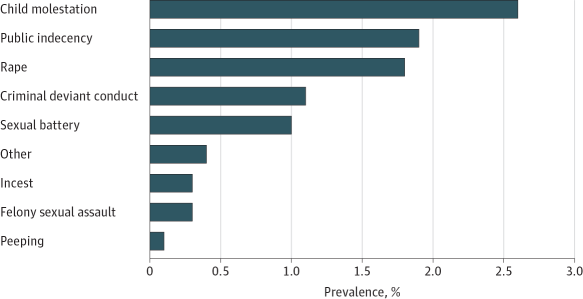
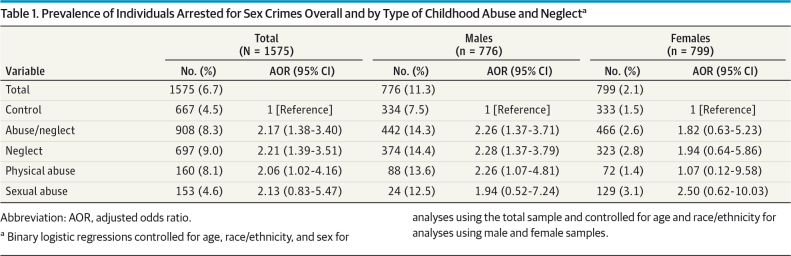
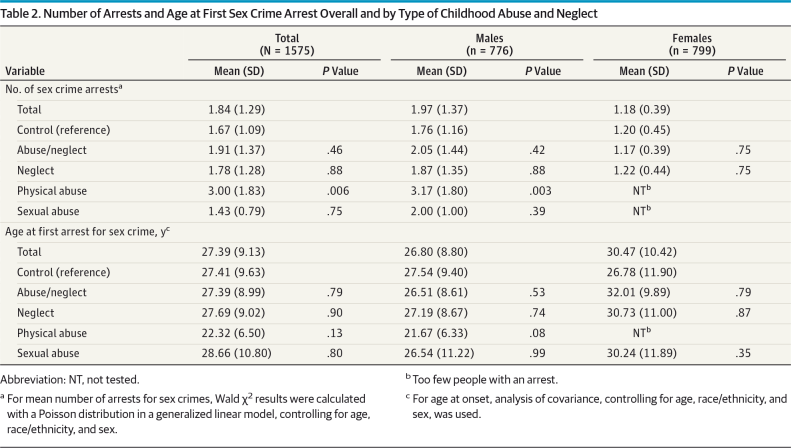
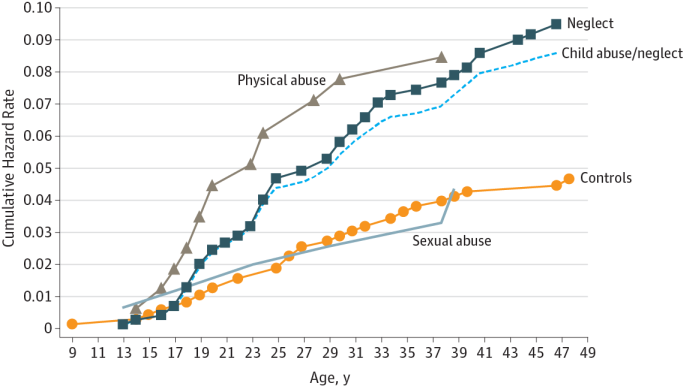
This study represents a long-term and comprehensive assessment of the extent to which sexually abused children become sex offenders and compares them to physically abused and neglected and nonmaltreated children. These findings show that physically abused and neglected children are at increased risk for being arrested for sex crimes and should receive effective interventions to avert these negative consequences. These results do not provide support for the common belief that being a survivor of childhood sexual abuse carries with it a unique increase in the risk for becoming a sex offender, contrary to some public policies and administrative practices of some jurisdictions where children may be stigmatized, placed in restrictive settings, or barred from schools. Perhaps it is time for a Government Accountability Office report or Institute of Medicine panel study to reevaluate public policies and treatment efforts that have been implemented based on common assumptions.

;
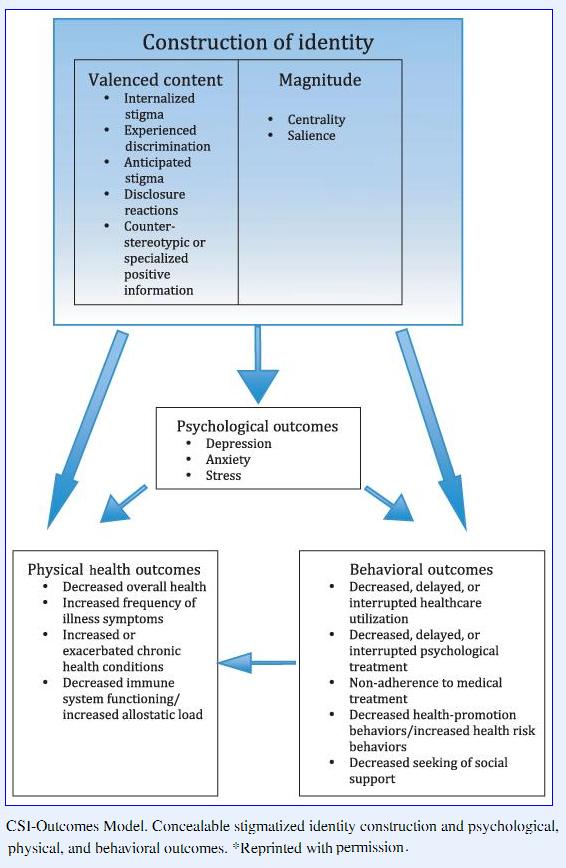
The Psychological Implications of Concealing a Stigma: A Cognitive–Affective–Behavioral Model;
Psychological Bulletin;
133(2), 328–345
Many assume that individuals with a hidden stigma escape the difficulties faced by individuals with a visible stigma. However, recent research has shown that individuals with a concealable stigma also face considerable stressors and psychological challenges. The ambiguity of social situations combined with
the threat of potential discovery makes possessing a concealable stigma a difficult predicament for many individuals. The increasing amount of research on concealable stigmas necessitates a cohesive model for integrating relevant findings. This article offers a cognitive–affective–behavioral process model for
understanding the psychological implications of concealing a stigma. It ends with discussion of potential points of intervention in the model as well as potential future routes for investigation of the model.
- - -
Ipce remarks that several stigma's are mentioned here, but just not having pedophilic feelings and desires - clearly even here a taboo that still might be kept in mind. Also, several examples of secrets that must be kept hidden are mentioned, but just not the secret of a child or teenager who has had sexual experience with an adult.
The first taboo might be deminished if the feelings will not be lead to acts, and thus ever might be accepted as human feelings. The second taboo, the secret to be kept hidden, should be avoided by the same: feelings that do not lead to an act.
;
The Public Policy Implications of ‘‘Hebephilia’’: A Response to Blanchard et al. (2008);
Archives of Sexual Behavior;
38, 319-320,
Oct 16 2008
Blanchard et al. (2008) present their article on "hebephilia" as an objective analysis of research data. In fact, it is a textbook example of subjective values masquerading as science. Avoiding the crucial public policy implications of their argument, Blanchard et al. advance hebephilia as if it exists in a cultural vacuum. Their recommendations are even more troubling in light of their study's methodological flaws.
Blanchard et al. (2008) present their article on "hebephilia" as an objective analysis of research data. In fact, it is a textbook example of subjective values masquerading as science. Avoiding the crucial public policy implications of their argument, Blanchard et al. advance hebephilia as if it exists in a cultural vacuum. Their recommendations are even more troubling in light of their study's methodological flaws.
;
Public Safety, Individual Liberty, and Suspect Science;
Temple Law Review
In recent decades, federal, state, and local governments have become increasingly restrictive on the freedom and privacy of those labeled sexually violent predators (“SVP”s) in hopes of preventing further sexual violence. The most commonly used tools to manage SVPs are involuntary commitments for mental treatment, sex offender registration, and residency restrictions (hereinafter “SVP laws”).
This article critically analyzes whether future dangerousness assessments using actuarial tools are responsive to legal standards contained in SVP laws and whether courts, when confronted with such assessments, are adequately engaging in the gatekeeper role to accept only good science considering the evidentiary benchmarks of Daubert and Frye.
Specifically, this article concludes that because of uncritical reliance upon actuarial assessments of future dangerousness, legal professionals have largely failed to grasp the significant empirical limitations of these tests.
;
Quotes from Malón's "Participating Victim";
Archives of Sexual Behavior
During the 20th century, erotic experiences between minors and adults occupied a position of increasing interest, both public as well as scientific. In this area of research, one of the most notable evolutions in how these experiences are treated has been the progressive disappearance and/or the intense redefinition of what earlier researchers called ‘‘participating victims,’’ i.e., minors apparently interested in accepting and/or sustaining these relationships.
The present work, through a comparative analysis of the literature, seeks to substantiate this transformation during the second third of the 20th century.
;
Quotes from: Humanizing Pedophilia as Stigma Reduction: A Large‑Scale Intervention Study;
Archives of Sexual Behavior ;
2022(51), 945–960
The stigmatization of people with pedophilic sexual interests is a topic of growing academic and professional consideration, owing to its potential role in moderating pedophiles’ emotional well-being, and motivation and engagement in child abuse prevention schemes. Thus, improving attitudes and reducing stigmatization toward this group is of paramount importance.
Prior research has suggested that narrative humanization — presenting personal stories of self-identified non-offending pedophiles — could be one route to doing this.
However, this work has only been conducted with students or trainee psychotherapists, meaning the public generalizability of this method is still unknown.
In this study, we compared two stigma interventions to test whether narratives reduce stigma toward people with pedophilic interests more effectively than an informative alternative (scientific information about pedophilia). Using a longitudinal experimental design with a lack of non-intervention control (initial N = 950; final N = 539), we found that
(1) narratives had consistently positive effects on all measured aspects of stigmatization (dangerousness, intentionality), whereas
(2) an informative alternative had mixed results, and actually increased perceptions of pedophiles’ levels of deviance.
These effects were still present four months after the initial presentation.
We discuss these data in relation to ongoing debates about treating pedophilia as a public health issue requiring a broad societal approach to well-being and child abuse prevention.
;
Quotes from: Lover, Mentor, or Exploiter;
Archives of Sexual Behavior;
51, 987-999
Sexual relationships between an adolescent and an older person are considered controversial and in many countries are conceptualized under the legal definition of statutory relationship/rape. Despite the consensus regarding their potential negative implications, little is known about how adolescents perceive and construct them. To address this lacuna, the current exploratory study examined how individuals who have experienced sexual relationships with an adult while growing up perceived the older person and the meaning they ascribed to the age gap [...]
A qualitative thematic methodology was incorporated in analyzing in-depth semi-structured interviews with 28 individuals (...) who had experienced sexual relationships with an (at least 2 years) older person during adolescence (...).
Participants described five different perceptions of the older persons:
- [1] romantic partner;
- [2] sexual partner;
- [3] authority figure;
- [4] complex/unstable figure; and
- [5] exploiter.
Subsequent analysis, focusing on the role participants assigned to age when describing these different images of older persons, shed additional light on their subjective perceptions; namely, for each image, age had a particular meaning.
This paper may contribute to the understanding of individuals’ experiences of sexual relationships with an older person by emphasizing the complexity of such relationships, as reflected in the participants’ construction of the older person’s image, potentially providing important information that can inform best practice for professionals working with this population.
Findings highlight the need to address diversity and ambiguity rather than the uniform dichotomy that characterizes the legal framing of automatically constructing these relationships as statutory.
Further implications for research, policy, and practice are discussed.

;
Quotes from: Making Sense of the Life Stories of Minor‑Attracted Persons;
Archives of Sexual Behavior;
55(March 2026), 1091–1104
Minor-attracted persons (MAPs) who have not engaged in child sexual abuse are a largely hidden and under-researched population (... ...). The interchangeable use of non-offending MAPs and child sexual offenders in public narratives and media representations frames adult attraction to minors primarily as a criminal justice issue. Consequently, non-offending MAPs face significant stigma and profound invisibility and are frequently depicted as criminals (...).
This study used critical narrative analysis (CNA) (...) to explore how six non-offending MAPs narrate their lives. The participants’ stories revealed the diverse and complex ways they constructed their identities in a society which often presumes they are inherently dangerous.
The findings highlight how participants develop personal narratives in the absence of master narratives available in society and how this shapes the development of sexual identity among non-offending MAPs. These stories also reflect a collective effort to challenge deeply ingrained societal views of MAPs.
Drawing on queer theory as a hermeneutic of suspicion, the analysis examines how the categorization and pathologizing of sexualities produce oppression within participants’ life stories. The CNA approach provided a critical framework for discussing this marginalized group, contributing to a deeper contextual understanding of how the absence of culturally accepted frameworks shapes the development of sexual identity among non-offending MAPs. [...]
The [...] participants’ life stories revealed the difficulties of identity formation in the absence of supportive master narratives, while also demonstrating how personal storytelling can resist marginalization.
Early life experiences, social interactions, and cultural frameworks were central to this process.
The findings underscore the need for mental health professionals to move beyond a narrow risk paradigm when working with MAPs. [... ...]
Greater awareness of MAPs’ well-being and identity construction can equip professionals to provide care that is ethical, supportive, and empowering.
;
Quotes from: Pedophilia, A Diagnosis in Search of a Disorder;
Arch Sex Behav;
41, 1083 - 1097,
Feb 25 2012
This article presents a critical review of the recent controversies concerning the diagnosis of pedophilia in the context of the preparation of the fifth edition of theDSM.
The analysis focuses basically on the relationship between pedophilia and the currentDSM-IV-TR’s definition ofmental disorder. Scholars appear not to share numerous basic assumptions ranging from their underlying ideas about what constitutes a mental disorder to the role of psychiatry in modern society, including irreconcilable theories about human sexuality, which interfere with reaching any kind of a consensus as to what the psychiatric status of pedophilia
should be.
It is questioned if the diagnosis of pedophilia containedin the DSM is more forensic than therapeutic, focusing rather on the dangers inherent in the condition of pedophilia (dangerous dysfunction) than on its negative effects for the subject (harmful dysfunction).
The apparent necessity of the diagnosis of pedophilia in the DSM is supported, but the basis for this diagnosis is uncertain.

;
Quotes from: Sexual Violence Against Children and Adolescents;
Deutsches Ärzteblatt | Jg. 122 | Heft 11 | 30. Mai 2025;
122(11), ,
May 30 2025
Methods:
A representative sample of the German population aged 18 to 59 was selected for this survey with the aid of Infratest dimap (a private polling company). The participants were asked to fill in a combination of written postal and online questionnaires in a mixed-mode design from January to October 2024.
Results:
10 000 people were contacted in writing (response rate: 30.2%). 12.7% [...] stated that they were affected by sexual violence, including 20.6% of all women and 4.8% of all men. Men had more frequently experienced sexual violence in sports and leisure facilities, in a church context, and in the setting of government-provided child, youth, and family services. 37.4% [...] of the affected persons had not previously reported the crime to anyone. 31.7% [...] of respondents reported sexual violence via the internet and social media. The mental health of affected persons was poorer than that of unaffected persons.
Conclusion:
Many cases of sexual violence go unreported. The different settings in which these offenses are committed, e.g., the preponderance of male victims in institutional settings, further imply a need for differentiated protection strategies, addressing both potential victims and potential perpetrators.
;
Quotes from: The Treatment Needs and Experiences of Pedohebephiles: A Systematic Review;
Archives of Sexual Behavior;
3329 - 3346,
Jul 15 2024
People with a sexual interest in children face significant barriers to seeking and receiving mental health treatment.
This review aims to bridge the gap between the treatment needs and experiences of pedohebephiles, and the services aiming to support them. [...]
Research suggests that this population experiences significant levels of distress, depression, and anxiety related to their sexual interest.
Many individuals belonging to this population would seek (median=42.3%), or have sought (median=46.5%), treatment to cope with their sexual interest or with potential related mental health repercussions.
Their experiences in treatment have been mixed, with some reporting positive experiences with empathic therapists and others reporting rejection. Most frequently, pedohebephiles report fear of exposure and rejection as barriers to seeking treatment, in addition to fear of the legal repercussions. [...]
The findings indicate that the treatment needs of pedohebephiles often remain unaddressed. Suggestions to increase the fit between treatment services and the needs of pedohebephiles are put forward.
;
Reactions to Minor-Older and Minor-Peer Sex ...;
Archives of Sexual Behavior;
51(January 11, 2022), 961 - 985
Felson et al. (2019) used a large-scale nationally representative Finnish sample of sixth and ninth graders to estimate the population prevalence of negative subjective reactions to sexual experiences between minors under age 18 and persons at least 5 years older and between minors and peer-aged partners for comparison. [...]
The present study argued that focusing exclusively on negative reactions short-changed a fuller scientific understanding. It analyzed the full range of reactions in the same sample, focusing on positive reactions.
[... ... ...]
The [clearly high] frequency of positive reactions, their responsiveness to context, the similarity in reaction patterns with minor-peer sex, and the generalizability of the sample were argued to contradict the trauma view often applied to minor-older sex, holding it to be intrinsically aversive irrespective of context.
;
References - Oellerich 2007 - Rethinking Routines ...;
International Journal of Behavioral Cinsultation and Therapy;
3(1),
References - Rethinking Routine ... Oellerich 2007
References - Rethinking Routine ... Oellerich 2007
;
References at Being Sexual Attracted to Minors;
Journal of Sex & Marital Therapy;
1-21(22 June 2015),
References at "Being Sexually Attracted to Minors: Sexual Development, Coping With Forbidden Feelings, and Relieving Sexual Arousal in Self-Identified Pedophiles.
References at "Being Sexually Attracted to Minors: Sexual Development, Coping With Forbidden Feelings, and Relieving Sexual Arousal in Self-Identified Pedophiles.
;
References at Childhood ‘Innocence’ is Not Ideal: Virtue Ethics and Child–Adult Sex, Tom O'Carroll;
Sexuality & Culture
References at "Childhood ‘Innocence’ is Not Ideal: Virtue Ethics and Child–Adult Sex" by Tom O'Carroll.
References at "Childhood ‘Innocence’ is Not Ideal: Virtue Ethics and Child–Adult Sex" by Tom O'Carroll.
;
References of Malón's Adult-Child Sex and the Demands of Virtuous Sexual Morality;
Sexuality & Culture;
21(1),
References of: Adult-Child Sex and the Demands of Virtuous Sexual Morality
Sexuality & Culture, by Malón, Augustin
References of: Adult-Child Sex and the Demands of Virtuous Sexual Morality
Sexuality & Culture, by Malón, Augustin
;
References of The ‘‘Participating Victim’’ in the Study of Erotic Experiences Between Children and Adults: An Historical Analysis;
Archives of Sexual Behavior, 2009
The references of The ‘‘Participating Victim’’ in the Study of Erotic Experiences Between Children and Adults: An Historical Analysis, August Malón, Archives of Sexual Behavior, 2009, in a separate file.
The references of The ‘‘Participating Victim’’ in the Study of Erotic Experiences Between Children and Adults: An Historical Analysis, August Malón, Archives of Sexual Behavior, 2009, in a separate file.
;
The relationship between early sexual debut and psychosocial outcomes: A longitudinal study of Dutch adolescents;
Archives of Sexual Behavior
In a longitudinal dataset of 470 Dutch adolescents, the current study examined the ways in which early sexual initiation was related to subsequent attachment, self-perception, internalizing problems, and externalizing problems. For male adolescents, analyses revealed general attachment to mother and externalizing problems at Wave 1 to predict to early transition at Wave 2. However, there was no differential change in these psychosocial factors over time for early initiators of sexual intercourse and their non-initiating peers. For female adolescents, the model including psychosocial factors at Wave 1 did not predict to sexual initiation at Wave 2. However, univariate repeated measures analyses revealed early initiators to have signi?cantly larger increases in self-concept and externalizing problems than their non-initiating female peers. While the difference between female early initiators and non-initiators were statistically signi?cant, the mean levels of problem behaviors were very low. The ?ndings suggest that, contrary to previous research, early sexual initiation does not seem to be clustered with problem behaviors for this sample of Dutch adolescents. [A]
In a longitudinal dataset of 470 Dutch adolescents, the current study examined the ways in which early sexual initiation was related to subsequent attachment, self-perception, internalizing problems, and externalizing problems. For male adolescents, analyses revealed general attachment to mother and externalizing problems at Wave 1 to predict to early transition at Wave 2. However, there was no differential change in these psychosocial factors over time for early initiators of sexual intercourse and their non-initiating peers. For female adolescents, the model including psychosocial factors at Wave 1 did not predict to sexual initiation at Wave 2. However, univariate repeated measures analyses revealed early initiators to have signi?cantly larger increases in self-concept and externalizing problems than their non-initiating female peers. While the difference between female early initiators and non-initiators were statistically signi?cant, the mean levels of problem behaviors were very low. The ?ndings suggest that, contrary to previous research, early sexual initiation does not seem to be clustered with problem behaviors for this sample of Dutch adolescents. [A]
;
Rethinking the Routine Provision of Psychotherapy to Children/Adolescents Labeled “Sexually Abused”;
International Journal of Behavioral Consultation and Therapy ;
3(1),
Whether symptomatic or asymptomatic, children labeled sexually abused are routinely offered treatment at considerable financial cost. One result of this is that mental health professionals are being charged with exploiting the problem of child sexual abuse (CSA). Is the routine provision of psychotherapy for children and adolescents labeled sexually abused warranted? In this paper, it is argued that the evidence indicates it is not warranted. Further, its provision is not in the best interests of either the children or mental health professionals. It is argued it is time to rethink the routine provision of psychotherapy to children and adolescents labeled sexually abuse. A number of recommendations are given which follow from the evidence. ...
A finding of guilt or substantiation does not necessarily mean that sexual abuse has in fact occurred. Professionals involved in protecting children will sometimes say that just because a case has not been substantiated does not mean that abuse has not occurred. But the contrary is at least equally true. ...
The evidence indicates that the impact of CSA has been greatly exaggerated ...
The widespread belief that CSA necessarily and usually causes psychological damage is a myth. ...
Not all sexual encounters between a child and an adolescent or an adult or between an adolescent and adult are abusive ...
Cognitive Attachment Therapy, was identified as having a substantial risk. It carried a significant risk of psychological and physical harm. ...
the evidence does not support the contention that therapy for children and adolescents labeled sexually abused is helpful. It may, in fact, be harmful. ...
The term “abuse” should be replaced by such terms as “experience” or “event,” until it is determined the event was in fact harmful or coercive. ...
The so-called abuse may be experienced positively by the child or adolescent.
;
The role of child sexual abuse in the etiology of suicide and non-suicidal self-injury;
Acta Psychiatrica Scandinavica;
2011(124), 30 - 41
Objective: To address the best available scienti?c evidence on the role of child sexual abuse in the etiology of suicide and non-suicidal self-injury. Seven databases were searched.
There is evidence that child sexual abuse is a statistically signi?cant, although general and non-speci?c, risk factor for suicide and non-suicidal self-injury.
Child sexual abuse may not have a psrimary role in the etiology of suicide and non-suicidal self-injury.
The role of child sexual abuse in the etiology of suicide and non-suicidal self-injury is complex.
Additional biological and psychological risk factors may, in some cases, be directly responsible for, or, in other cases, contribute to the risk of suicidal en on-suicidal self-injurious behavior by mediating the relationship between child sexual abuse and self-injurious behavior.
The presence of confounding variables and the poor quality of the studies do not allow for causal inferences to be made.