 English
 Français
 Deutsch
 Español
;
Russia toughens laws to curb pedophilia;
PRAVDA.Ru,
Jan 17 2014
The adoption of the Russia Law "On protection of victims' rights" has caused a significant transformation of the country's legislation. One of the key and long-awaited reforms will be the introductions of a serious control over individuals accused of pedophilia. As described by Pravda.Ru experts, pedophiles are incorrigible and are held back only by fear.
The main innovation is introduction of a life-long administrative supervision of pedophiles.
The adoption of the Russia Law "On protection of victims' rights" has caused a significant transformation of the country's legislation. One of the key and long-awaited reforms will be the introductions of a serious control over individuals accused of pedophilia. As described by Pravda.Ru experts, pedophiles are incorrigible and are held back only by fear.
The main innovation is introduction of a life-long administrative supervision of pedophiles.
;
Promoting sexual health and responsible sexual behavior: an introduction.;
The Journal of Sex Research,
Feb 01 2002
We are at a unique juncture in history and have a rare opportunity to develop global, national, and community strategies to promote sexual health for the new century. This opportunity has been created by the fact that the world is experiencing a new sexual revolution and a public health imperative. Much like the sexual revolution of the 1960s and 1970s, it is a revolution fueled by incredible scientific advances, as well as dramatic social and economic change (...).
We also face a myriad of sexual health problems, which is creating an enormous burden on societies. These two factors are putting pressure on health ministries to develop comprehensive approaches to sexual health promotion.
We are at a unique juncture in history and have a rare opportunity to develop global, national, and community strategies to promote sexual health for the new century. This opportunity has been created by the fact that the world is experiencing a new sexual revolution and a public health imperative. Much like the sexual revolution of the 1960s and 1970s, it is a revolution fueled by incredible scientific advances, as well as dramatic social and economic change (...).
We also face a myriad of sexual health problems, which is creating an enormous burden on societies. These two factors are putting pressure on health ministries to develop comprehensive approaches to sexual health promotion.
;
Problems of Research into Adult-Child Sexual Interaction;
Institute for Psychological Therapies;
8(2),
Although adult-child sexual behaviors have occurred in many different cultures throughout history, there has been little serious research on adult-child sexual interactions. Barriers to performing this research include legal restrictions along with the fact that researchers attempting to understand and explain adult-child sexual interaction risk being labeled as pedophiles. Despite this, it is crucial to find ways to do research with persons who resist adopting today's standards and attitudes.
Although adult-child sexual behaviors have occurred in many different cultures throughout history, there has been little serious research on adult-child sexual interactions. Barriers to performing this research include legal restrictions along with the fact that researchers attempting to understand and explain adult-child sexual interaction risk being labeled as pedophiles. Despite this, it is crucial to find ways to do research with persons who resist adopting today's standards and attitudes.
;
Coerced Sex Not Uncommon for Young Men, Teenage Boys, Study Finds;
APA Org. News ;
03,
A large proportion of teenage boys and college men report having been coerced into sex or sexual behavior, according to research published by the American Psychological Association. A total of 43 percent of high school boys and young college men reported they had an unwanted sexual experience and of those, 95 percent said a female acquaintance was the aggressor. [...]
“While not typically addressed in sexual violence research, unwanted seduction was a particularly pervasive form of sexual coercion in this study, as well as peer pressure and a victim’s own sense of an obligation. Seduction was a particularly salient and potentially unique form of coercion for teenage boys and young men when compared to their female counterparts.”
A large proportion of teenage boys and college men report having been coerced into sex or sexual behavior, according to research published by the American Psychological Association. A total of 43 percent of high school boys and young college men reported they had an unwanted sexual experience and of those, 95 percent said a female acquaintance was the aggressor. [...]
“While not typically addressed in sexual violence research, unwanted seduction was a particularly pervasive form of sexual coercion in this study, as well as peer pressure and a victim’s own sense of an obligation. Seduction was a particularly salient and potentially unique form of coercion for teenage boys and young men when compared to their female counterparts.”

;
Can Boys Be ‘Coerced’ Into Sex?;
US News,
Mar 28 2014
The notion of teenage boys as sexual aggressors is so engrained, the results of a new study, which reveal that they are being coerced into sex by girls and young women, will surprise many.
“43 percent of high school boys and young college men”—yes, boys and young men—“reported they had an unwanted sexual experience and of those, 95 percent said a female acquaintance was the aggressor.”
The notion of teenage boys as sexual aggressors is so engrained, the results of a new study, which reveal that they are being coerced into sex by girls and young women, will surprise many.
“43 percent of high school boys and young college men”—yes, boys and young men—“reported they had an unwanted sexual experience and of those, 95 percent said a female acquaintance was the aggressor.”
;
Does Porn Hurt Children?;
New York Times Sunday Review
[...] After sifting through [276 research] papers, the report [of a Commision] found a link between exposure to pornography and engagement in risky behavior, such as unprotected sex or sex at a young age. But little could be said about that link. Most important, “causal relationships” between pornography and risky behavior “could not be established". [...]
Among the most prolific and revered researchers to examine teenagers and pornography is a duo in the Netherlands, Jochen Peter and Patti M. Valkenburg. The pair has been publishing studies about this issue for nearly a decade, most of it based on surveys of teenagers. “when teens watch more porn they tend to be more dissatisfied with their sexual lives. This effect is not really a strong effect, though." ... The pair also found that adolescents who watch more porn than their typical peers are generally less averse to casual sex. [...]
“I would be very cautious saying that what we found in the Netherlands is applicable in the U.S.,” Mr. Peter said. “Our findings are in a country that is pretty liberal when it comes to adolescent sexuality.” [...]
“One of our recommendations is that children should be taught about relationships and sex at a young age,” Professor Horvath “One of our recommendations is that children should be taught about relationships and sex at a young age,” Professor Horvath said. [...]
At a minimum, researchers believe a parent-teenager conversation about sexuality and pornography is a good idea, as unnerving to both sides as that may sound.
[...] After sifting through [276 research] papers, the report [of a Commision] found a link between exposure to pornography and engagement in risky behavior, such as unprotected sex or sex at a young age. But little could be said about that link. Most important, “causal relationships” between pornography and risky behavior “could not be established". [...]
Among the most prolific and revered researchers to examine teenagers and pornography is a duo in the Netherlands, Jochen Peter and Patti M. Valkenburg. The pair has been publishing studies about this issue for nearly a decade, most of it based on surveys of teenagers. “when teens watch more porn they tend to be more dissatisfied with their sexual lives. This effect is not really a strong effect, though." ... The pair also found that adolescents who watch more porn than their typical peers are generally less averse to casual sex. [...]
“I would be very cautious saying that what we found in the Netherlands is applicable in the U.S.,” Mr. Peter said. “Our findings are in a country that is pretty liberal when it comes to adolescent sexuality.” [...]
“One of our recommendations is that children should be taught about relationships and sex at a young age,” Professor Horvath “One of our recommendations is that children should be taught about relationships and sex at a young age,” Professor Horvath said. [...]
At a minimum, researchers believe a parent-teenager conversation about sexuality and pornography is a good idea, as unnerving to both sides as that may sound.
;
Masking hegemonic masculinity: reconstructing the paedophile as the dangerous stranger;
British journal of social work;
31(3), 399-414
In this article we argue that the current social construction of ‘the paedophile’ creates a media-orchestrated ‘moral panic’ that masks hegemonic masculinity and diverts attention from the extensive variety of forms of sexual abuse perpetrated upon women and children that take place in both the private and public domains.
In this article we argue that the current social construction of ‘the paedophile’ creates a media-orchestrated ‘moral panic’ that masks hegemonic masculinity and diverts attention from the extensive variety of forms of sexual abuse perpetrated upon women and children that take place in both the private and public domains.
;
Child Sexual Abuse: The Sources of Anxiety Making and the Negative Effects;
IPT Journal;
18,
Conclusion
Christian belief about child sexuality and feminist ideations have more in common than is generally thought. Together they have negatively influenced the perception of child sexual abuse.
With the active collaboration of professionals and lay persons, undue alarm was created about the sexual morality of children being in great danger. This led to the exaggeration of child sexual abuse at the expense of other more frequently occurring, and also under-reported, other abuses of children.
It seemed to be the sexual moral nature of the abuse that attracted these protagonists, rather than a genuine concern about child protection. This surreptitious moral concern spilled over into other areas of child sexuality (such as "problematic sexual behaviors" and "child sexualization").
As outlined, the moral and ideological thrust of the child sexual abuse exaggeration has come at considerable cost, particularly to families and children. It is only balanced and rational research, and sober and objective professional analysis, that may turn the tide in the decades to come.
Conclusion
Christian belief about child sexuality and feminist ideations have more in common than is generally thought. Together they have negatively influenced the perception of child sexual abuse.
With the active collaboration of professionals and lay persons, undue alarm was created about the sexual morality of children being in great danger. This led to the exaggeration of child sexual abuse at the expense of other more frequently occurring, and also under-reported, other abuses of children.
It seemed to be the sexual moral nature of the abuse that attracted these protagonists, rather than a genuine concern about child protection. This surreptitious moral concern spilled over into other areas of child sexuality (such as "problematic sexual behaviors" and "child sexualization").
As outlined, the moral and ideological thrust of the child sexual abuse exaggeration has come at considerable cost, particularly to families and children. It is only balanced and rational research, and sober and objective professional analysis, that may turn the tide in the decades to come.
;
The Suggestibility of Young Children;
Current Directions In Psychological Science;
6(No. 3, Memory as the Theater of the Past (Jun., 1997)), 75-79
Since the beginning of the 1980s, there have been a number of legalcases in which young childrenhave provided uncorroborated testimony involving sexual abuse. Although it seemed from the evidence that the children in many ofthese cases were subjected to anumber of suggestive interviews,the primary issue in deciding guilt or innocence was the degree to which such interviews could actually bring children to make serious allegations. [...]
This empirical vacuum forced a new conceptualization of issues related to children's suggestibility, which, in turn, resulted in an outpouring of new research in the area. In general, two features of the newer research make it more relevant to forensic issues.
First, the studies are designed to examine children's suggestibility about events that are personally salient, that involve bodily touching, and that involve insinuations of sexual abuse.
Second, the concept of suggestive techniques has been expanded from the traditional view of asking a misleading question or planting a piece of misinformation, so that now studies examine the larger structure and the components of suggestive interviews.
In this article, we provide an overview of the results of these newer studies of children's suggestibility. [... ... ...]
In summary, interviewer bias is revealed by a number of suggestive techniques, each of which can conipromise fhe accuracy of young children's reports. In this secfion,we qualify and elaborate on this conclusion by raising several points.
Since the beginning of the 1980s, there have been a number of legalcases in which young childrenhave provided uncorroborated testimony involving sexual abuse. Although it seemed from the evidence that the children in many ofthese cases were subjected to anumber of suggestive interviews,the primary issue in deciding guilt or innocence was the degree to which such interviews could actually bring children to make serious allegations. [...]
This empirical vacuum forced a new conceptualization of issues related to children's suggestibility, which, in turn, resulted in an outpouring of new research in the area. In general, two features of the newer research make it more relevant to forensic issues.
First, the studies are designed to examine children's suggestibility about events that are personally salient, that involve bodily touching, and that involve insinuations of sexual abuse.
Second, the concept of suggestive techniques has been expanded from the traditional view of asking a misleading question or planting a piece of misinformation, so that now studies examine the larger structure and the components of suggestive interviews.
In this article, we provide an overview of the results of these newer studies of children's suggestibility. [... ... ...]
In summary, interviewer bias is revealed by a number of suggestive techniques, each of which can conipromise fhe accuracy of young children's reports. In this secfion,we qualify and elaborate on this conclusion by raising several points.
;
Pedophilia and DSM-5;
Journal of American Academic Psychiatry Law 42:404 –7, 2014;
42(4), 404 - 407
Psychiatric terminology should convey information in as clear and unambiguous a manner as possible. In light of the associated stigma, that is especially so of the terms Pedophilia and Pedophilic Disorder. Although from a psychiatric perspective the term Pedophilia is intended to define a recognized clinical entity, in the collective consciousness of contemporary society, the term has become a demonizing pejorative.
Many in society are likely to equate Pedophilia with child molestation. They are not the same. The Diagnostic and Statistical Manual of Mental Disorders, Fifth Edition (DSM-5) may be contributing inadvertently to the misconception that they are the same ...
Berlin defends to view Pedophilia as a Sexual Orientation, thus not by definition as a distortion.
Psychiatric terminology should convey information in as clear and unambiguous a manner as possible. In light of the associated stigma, that is especially so of the terms Pedophilia and Pedophilic Disorder. Although from a psychiatric perspective the term Pedophilia is intended to define a recognized clinical entity, in the collective consciousness of contemporary society, the term has become a demonizing pejorative.
Many in society are likely to equate Pedophilia with child molestation. They are not the same. The Diagnostic and Statistical Manual of Mental Disorders, Fifth Edition (DSM-5) may be contributing inadvertently to the misconception that they are the same ...
Berlin defends to view Pedophilia as a Sexual Orientation, thus not by definition as a distortion.
;
Is Pedophilia a Mental Disorder?;
Archives of Sexual Behavior;
31(6), 467 - 471
Conclusion:
Sexual arousal patterns to children are subjectively reported and physiologically demonstrable in a substantial minority of “normal” people. Historically, they have been common and accepted in varying cultures at varying times. This does not mean that they must be accepted culturally and legally today.
The question is: Do they constitute a mental illness? Not unless we declare a lot of people in many cultures and in much of the past to be mentally ill. And certainly not by the criteria of DSM.
Conclusion:
Sexual arousal patterns to children are subjectively reported and physiologically demonstrable in a substantial minority of “normal” people. Historically, they have been common and accepted in varying cultures at varying times. This does not mean that they must be accepted culturally and legally today.
The question is: Do they constitute a mental illness? Not unless we declare a lot of people in many cultures and in much of the past to be mentally ill. And certainly not by the criteria of DSM.
;
Feminism, Child Sexual Abuse, and the Erasure of Child Sexuality;
GLQ: A Journal of Lesbian and Gay Studies;
10(2), 141 - 177
In the 1970s the child protection lobby and feminism together spearheaded a painstaking interrogation and politicization of the social problem of child sexual abuse.
...
By the 1980s a powerful discourse of child sexual abuse was working hard to expose the widespread problem of incest in the patriarchal family and was vigorously contesting legal definitions of abuse that ignored or downplayed nonpenetrative sexual acts.
...
The myth of stranger danger was found ....
...
In a significant reversal of the common twentieth-century tendency of victim
blaming, the innocent, powerless, blameless, and unconsenting “victim” and “survivor” of sexual abuse became key cultural terms.
...
The “rediscovery” of child sexual abuse — perhaps more accurately called
a “reinterpretation” — has been profoundly important for Western culture.
...
This essay suggests that, despite admirable efforts to empower children and protect them from the harmful consequences of sexual abuse, they have in one particularly notable way been disempowered and disarmed by the child sexual abuse movement.
...
I argue that the discourse of child sexual abuse has expanded at the expense of a discourse of child sexuality. Rigorous attempts to expose the reality and dynamics of child sexual abuse have been aided, if not in part made possible, by equally rigorous attempts to conceal, repress, or ignore the reality and dynamics of child sexuality.
... ... ... ... ... ...
Queer theory offers an important corrective to the culturally prevailing linear and sequential model of age stratification and sexual development. In its psychoanalytic form, queer theory has inherited from Freud the idea that sexuality involves not a chronological unfolding of distinct stages of sexual development but an interminable interplay between these stages.
...
In a contemporary context of escalating anxiety and panic surrounding pedophilia and child sexual abuse, it is increasingly difficult, and perhaps for this reason all the more imperative, for queer studies to problematize the cultural and relational construction of age, child sexuality, and subjectivity.
In the 1970s the child protection lobby and feminism together spearheaded a painstaking interrogation and politicization of the social problem of child sexual abuse.
...
By the 1980s a powerful discourse of child sexual abuse was working hard to expose the widespread problem of incest in the patriarchal family and was vigorously contesting legal definitions of abuse that ignored or downplayed nonpenetrative sexual acts.
...
The myth of stranger danger was found ....
...
In a significant reversal of the common twentieth-century tendency of victim
blaming, the innocent, powerless, blameless, and unconsenting “victim” and “survivor” of sexual abuse became key cultural terms.
...
The “rediscovery” of child sexual abuse — perhaps more accurately called
a “reinterpretation” — has been profoundly important for Western culture.
...
This essay suggests that, despite admirable efforts to empower children and protect them from the harmful consequences of sexual abuse, they have in one particularly notable way been disempowered and disarmed by the child sexual abuse movement.
...
I argue that the discourse of child sexual abuse has expanded at the expense of a discourse of child sexuality. Rigorous attempts to expose the reality and dynamics of child sexual abuse have been aided, if not in part made possible, by equally rigorous attempts to conceal, repress, or ignore the reality and dynamics of child sexuality.
... ... ... ... ... ...
Queer theory offers an important corrective to the culturally prevailing linear and sequential model of age stratification and sexual development. In its psychoanalytic form, queer theory has inherited from Freud the idea that sexuality involves not a chronological unfolding of distinct stages of sexual development but an interminable interplay between these stages.
...
In a contemporary context of escalating anxiety and panic surrounding pedophilia and child sexual abuse, it is increasingly difficult, and perhaps for this reason all the more imperative, for queer studies to problematize the cultural and relational construction of age, child sexuality, and subjectivity.
;
Historicizing affect, psychoanalyzing history: pedophilia and the discourse of child sexuality;
Journal of Homosexuality;
46(Februari), 79 - 109
Within the last two decades in Australia, Britain, and the United States, we have seen a veritable explosion of cultural panic regarding the problem of pedophilia. Scarcely a day passes without some mention in the media of predatory pedophiles or organized pedophile networks. Many social constructionist historians and sociologists have described this incitement to discourse as indicative of a moral panic.
[...]
Here, I will suggest a repressed discourse of child sexuality is writ large. I will argue that the hegemonic discourse of pedophilia is contained largely within a neurotic structure and that many of our prevailing responses to pedophilia function as a way to avoid tackling crucial issues about the reality and trauma of childhood sexuality.
The question that concerns me in this article is: If this incitement to discourse is indicative of a moral panic, to what does the panic refer?
Within the last two decades in Australia, Britain, and the United States, we have seen a veritable explosion of cultural panic regarding the problem of pedophilia. Scarcely a day passes without some mention in the media of predatory pedophiles or organized pedophile networks. Many social constructionist historians and sociologists have described this incitement to discourse as indicative of a moral panic.
[...]
Here, I will suggest a repressed discourse of child sexuality is writ large. I will argue that the hegemonic discourse of pedophilia is contained largely within a neurotic structure and that many of our prevailing responses to pedophilia function as a way to avoid tackling crucial issues about the reality and trauma of childhood sexuality.
The question that concerns me in this article is: If this incitement to discourse is indicative of a moral panic, to what does the panic refer?
;
Subjectivity under Erasure: Adolescent Sexuality, Gender, and Teacher-Student Sex;
The Journal of Men’s Studies, Vol. 15, No. 3, Fall 2007, 347-360.;
15(3, Fall 2007), The Journal of Men’s Studies, Vol. 15, No. 3, Fall 2007, 347-360.
This article offers a reading of a recent Australian teacher-student sex scandal
in order to interrogate the relationship between gendered subjectivity and cultural codes of gender.
The questions of whether gender ought to make a difference to how we understand instances of so-called “intergenerational sex” and whether cultural codes accurately reflect sexual subjectivity are posed.
It is argued that while cultural codes are not external or equivalent to subjectivity, this does not mean that they are not expressive of elements of subjectivity.
The article concludes with the suggestion that the failure to attend to the nexus
of the social and the psychical not only serves to strengthen a very recent and
particular set of historical, political, and ideological forces but also risks creating foundations for misreadings of the history of male adolescent subjectivities.
This article offers a reading of a recent Australian teacher-student sex scandal
in order to interrogate the relationship between gendered subjectivity and cultural codes of gender.
The questions of whether gender ought to make a difference to how we understand instances of so-called “intergenerational sex” and whether cultural codes accurately reflect sexual subjectivity are posed.
It is argued that while cultural codes are not external or equivalent to subjectivity, this does not mean that they are not expressive of elements of subjectivity.
The article concludes with the suggestion that the failure to attend to the nexus
of the social and the psychical not only serves to strengthen a very recent and
particular set of historical, political, and ideological forces but also risks creating foundations for misreadings of the history of male adolescent subjectivities.
;
Evidence for ... Inhibitory Control Abilities ...;
Human Brain Mapping;
38(2), ,
Oct 21 2016
Neurobehavioral models of pedophilia and child sexual offending suggest a pattern of temporal and in particular prefrontal disturbances leading to inappropriate behavioral control and subsequently an increased propensity to sexually offend against children. However, clear empirical evidence for such mechanisms is still missing. [...]
We compared behavioral performance and neural response patterns among three groups of men [...]: pedophiles with (...) and without (...) a history of hands-on sexual offences against children as well as healthy non-offending controls (...).
As compared to offending pedophiles, non-offending pedophiles exhibited superior inhibitory control [...] while no significant differences were found between pedophiles and healthy controls.
Data therefore suggest that heightened inhibition-related recruitment [...] is related to better inhibitory control in pedophiles who successfully avoid committing hands-on sexual offences against children.
Neurobehavioral models of pedophilia and child sexual offending suggest a pattern of temporal and in particular prefrontal disturbances leading to inappropriate behavioral control and subsequently an increased propensity to sexually offend against children. However, clear empirical evidence for such mechanisms is still missing. [...]
We compared behavioral performance and neural response patterns among three groups of men [...]: pedophiles with (...) and without (...) a history of hands-on sexual offences against children as well as healthy non-offending controls (...).
As compared to offending pedophiles, non-offending pedophiles exhibited superior inhibitory control [...] while no significant differences were found between pedophiles and healthy controls.
Data therefore suggest that heightened inhibition-related recruitment [...] is related to better inhibitory control in pedophiles who successfully avoid committing hands-on sexual offences against children.
;
A Prospective Examination of Whether Childhood Sexual Abuse Predicts Subsequent Sexual Offending;
JAMA Pediatrics;
January 5, 2015, ,
Jan 05 2015
Conclusions:
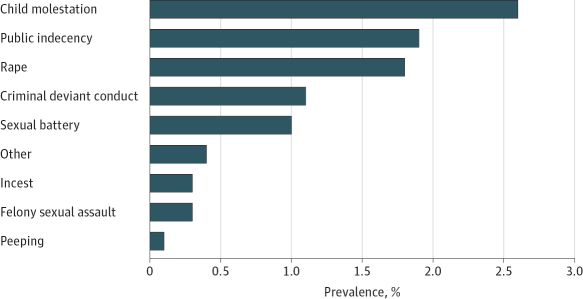
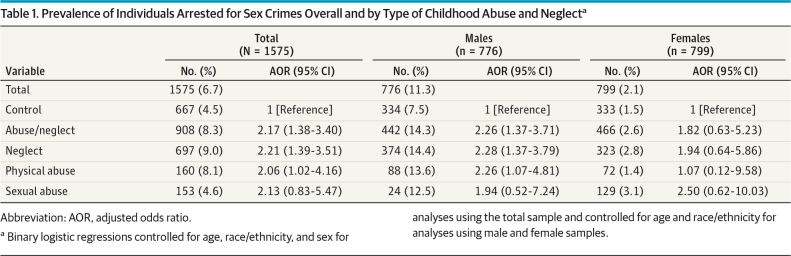
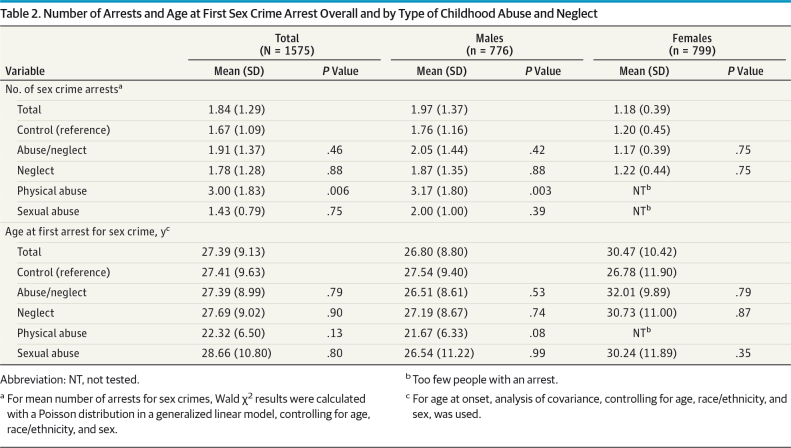
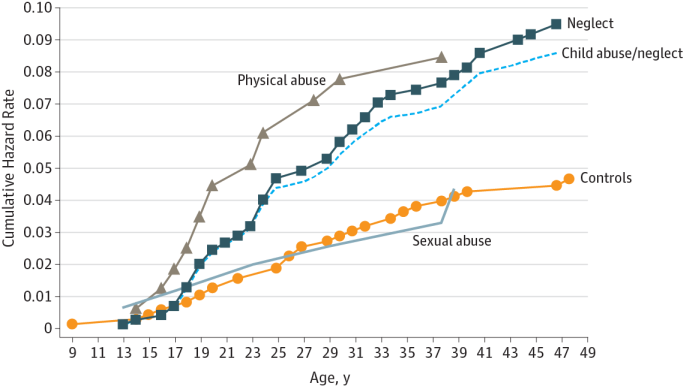
This study represents a long-term and comprehensive assessment of the extent to which sexually abused children become sex offenders and compares them to physically abused and neglected and nonmaltreated children. These findings show that physically abused and neglected children are at increased risk for being arrested for sex crimes and should receive effective interventions to avert these negative consequences. These results do not provide support for the common belief that being a survivor of childhood sexual abuse carries with it a unique increase in the risk for becoming a sex offender, contrary to some public policies and administrative practices of some jurisdictions where children may be stigmatized, placed in restrictive settings, or barred from schools. Perhaps it is time for a Government Accountability Office report or Institute of Medicine panel study to reevaluate public policies and treatment efforts that have been implemented based on common assumptions.
Conclusions:
This study represents a long-term and comprehensive assessment of the extent to which sexually abused children become sex offenders and compares them to physically abused and neglected and nonmaltreated children. These findings show that physically abused and neglected children are at increased risk for being arrested for sex crimes and should receive effective interventions to avert these negative consequences. These results do not provide support for the common belief that being a survivor of childhood sexual abuse carries with it a unique increase in the risk for becoming a sex offender, contrary to some public policies and administrative practices of some jurisdictions where children may be stigmatized, placed in restrictive settings, or barred from schools. Perhaps it is time for a Government Accountability Office report or Institute of Medicine panel study to reevaluate public policies and treatment efforts that have been implemented based on common assumptions.

;
Memory and Eye Movement Desensitization and Reprocessing Therapy ...;
Memory;
August 2021,
Does Eye Movement and Desensitization and Reprocessing (EMDR) therapy affect the accuracy of memories? This recurrent issue in recent memory research bears relevance to expert witness work in the courtroom. In this review, we will argue that several crucial aspects of EMDR may be detrimental to memory.
Does Eye Movement and Desensitization and Reprocessing (EMDR) therapy affect the accuracy of memories? This recurrent issue in recent memory research bears relevance to expert witness work in the courtroom. In this review, we will argue that several crucial aspects of EMDR may be detrimental to memory.
;
Child Pornography Study;
The Express, UK
A study in Germany has looked at who watches child pornography.
[Jens Wagner's] study shows just half of those who watch child porn are paedophiles. [...]
Janis Wolak [...] describes three types of consumers who are interested in child pornography without being paedophilic.
A study in Germany has looked at who watches child pornography.
[Jens Wagner's] study shows just half of those who watch child porn are paedophiles. [...]
Janis Wolak [...] describes three types of consumers who are interested in child pornography without being paedophilic.
;
Stigma-related stress and its correlates among men with pedophilic sexual interests.;
Archives of Sexual Behavior;
November 2015,
Despite decades of research on the adverse consequences of stereotyping and discrimination for many stigmatized groups, little is known about how people with pedophilia perceive and react to stigma.
In this article, we present a framework that outlines how stigma-related stress might negatively affect emotional and social areas of functioning, cognitive distortions, and the motivation to pursue therapy, all of which may contribute to an increased risk of sexual offending.
We tested our hypotheses in an online survey among self-identified German speaking people with pedophilia (N = 104) using a wide range of validated indicators of social and emotional functioning (...). Specific risk factors such as self-efficacy, cognitive distortions and the motivation to seek treatment were also assessed.
In line with our hypotheses, fear of discovery generally predicted reduced social and emotional functioning. Contrary to our predictions, perceived social distance and fear of discovery were not linked to self-efficacy, cognitive distortions, or treatment motivation. [...]
Despite decades of research on the adverse consequences of stereotyping and discrimination for many stigmatized groups, little is known about how people with pedophilia perceive and react to stigma.
In this article, we present a framework that outlines how stigma-related stress might negatively affect emotional and social areas of functioning, cognitive distortions, and the motivation to pursue therapy, all of which may contribute to an increased risk of sexual offending.
We tested our hypotheses in an online survey among self-identified German speaking people with pedophilia (N = 104) using a wide range of validated indicators of social and emotional functioning (...). Specific risk factors such as self-efficacy, cognitive distortions and the motivation to seek treatment were also assessed.
In line with our hypotheses, fear of discovery generally predicted reduced social and emotional functioning. Contrary to our predictions, perceived social distance and fear of discovery were not linked to self-efficacy, cognitive distortions, or treatment motivation. [...]
;
Pornography Use and Sexual Aggression;
Aggressive Behavior;
35, 1-11
In this study, we examined the unique contribution of pornography consumption to the longitudinal prediction of criminal recidivism in a sample of 341 child molesters. We specifically tested the hypothesis, based on predictions informed by the confluence model of sexual aggression that pornography will be a risk factor for recidivism only for those individuals classified as relatively high risk for re-offending. [...]
Results for both frequency and type of pornography use were generally consistent with our predictions. Most importantly, after controlling for general and specific risk factors for sexual aggression, pornography added significantly to the prediction of recidivism. Statistical interactions indicated
(1) that frequency of pornography use was primarily a risk factor for higher-risk offenders, when compared with lower-risk offenders, and
(2) that content of pornography (i.e., pornography containing deviant content) was a risk factor for all groups. The importance of conceptualizing particular risk factors (e.g., pornography), within the context of other individual characteristics is discussed.
In this study, we examined the unique contribution of pornography consumption to the longitudinal prediction of criminal recidivism in a sample of 341 child molesters. We specifically tested the hypothesis, based on predictions informed by the confluence model of sexual aggression that pornography will be a risk factor for recidivism only for those individuals classified as relatively high risk for re-offending. [...]
Results for both frequency and type of pornography use were generally consistent with our predictions. Most importantly, after controlling for general and specific risk factors for sexual aggression, pornography added significantly to the prediction of recidivism. Statistical interactions indicated
(1) that frequency of pornography use was primarily a risk factor for higher-risk offenders, when compared with lower-risk offenders, and
(2) that content of pornography (i.e., pornography containing deviant content) was a risk factor for all groups. The importance of conceptualizing particular risk factors (e.g., pornography), within the context of other individual characteristics is discussed.
;
The Roots of Violence;
Essays on Law, Policy and Psychiatry, Vol. 10;
10,
‘The Roots of Violence: Why Humans Are Not By Nature Violent’ (Essays on Law, Policy and Psychiatry, Vol. 10, 2018) is an analytical and policy study that presents abundant evidence that human beings are not by nature violent and that violence therefore is a conditioned response. The scientific disciplines examined are anthropology, biology, neurology, pedagogy, psychoanalysis, and sociology.
The book shows the historical development of the roots of violence as they sprang forth from the patriarchal murder cultures that were putting an end to the peaceful matriarchal empires such as the Minoan Civilization in Crete.
[...]
Based on the research being on the table, the author draws policy conclusions for the prevention of violence both in the social and the educational domain.
‘The Roots of Violence: Why Humans Are Not By Nature Violent’ (Essays on Law, Policy and Psychiatry, Vol. 10, 2018) is an analytical and policy study that presents abundant evidence that human beings are not by nature violent and that violence therefore is a conditioned response. The scientific disciplines examined are anthropology, biology, neurology, pedagogy, psychoanalysis, and sociology.
The book shows the historical development of the roots of violence as they sprang forth from the patriarchal murder cultures that were putting an end to the peaceful matriarchal empires such as the Minoan Civilization in Crete.
[...]
Based on the research being on the table, the author draws policy conclusions for the prevention of violence both in the social and the educational domain.
;
Pedophilia Revisited;
Essays on Law, Policy and Psychiatry;
7,
Pedophilia Revisited: The Making of a Crime for Justifying Lacking Social Policy (Essays on Law, Policy and Psychiatry, Vol. 7) — 2019 Apple Books Edition — is an extended study on the controversial subject of pedophilia, the sexual love of adults for children — humans who by legal definition are to be considered a ‘child’ for the purposes of criminal law.
This form of love, also called ‘child-love’ by those who feel sexually attracted to children, can be exclusive or non-exclusive, but the author’s research clearly points to the fact that pedophile attraction is not inborn, just as homosexual attraction is not inborn, but a conditioned response.
The article gives links to the PDF edition and the paperback edition of the book.
Pedophilia Revisited: The Making of a Crime for Justifying Lacking Social Policy (Essays on Law, Policy and Psychiatry, Vol. 7) — 2019 Apple Books Edition — is an extended study on the controversial subject of pedophilia, the sexual love of adults for children — humans who by legal definition are to be considered a ‘child’ for the purposes of criminal law.
This form of love, also called ‘child-love’ by those who feel sexually attracted to children, can be exclusive or non-exclusive, but the author’s research clearly points to the fact that pedophile attraction is not inborn, just as homosexual attraction is not inborn, but a conditioned response.
The article gives links to the PDF edition and the paperback edition of the book.
;
Minotaur Unveiled: The Truncated Account of Adult-Child Erotic Attraction;
Essays on Law, Policy and Psychiatry;
5,
Minotaur Unveiled: The Truncated Account of Adult-Child Erotic Attraction (Essays on Law, Policy and Psychiatry, Vol. 5) — 2019 Apple Books Edition — is a historical assessment of adult-child sexual relations as they are to be found not only in historical and forensic literature, but also in the poetic writings of many famous authors around the world. [...]
The study establishes a basis for the view that adult-child sexual interaction is a universal phenomenon that passes over cultural and epochal borders. [...]
Sadly, many of those adult-child sexual relations were and are the result of social and moral corruption and have to be called abusive and exploitative.
The article gives links to the PDF edition and the paperback edition of the book.
Minotaur Unveiled: The Truncated Account of Adult-Child Erotic Attraction (Essays on Law, Policy and Psychiatry, Vol. 5) — 2019 Apple Books Edition — is a historical assessment of adult-child sexual relations as they are to be found not only in historical and forensic literature, but also in the poetic writings of many famous authors around the world. [...]
The study establishes a basis for the view that adult-child sexual interaction is a universal phenomenon that passes over cultural and epochal borders. [...]
Sadly, many of those adult-child sexual relations were and are the result of social and moral corruption and have to be called abusive and exploitative.
The article gives links to the PDF edition and the paperback edition of the book.
;
The Legal Split in Child Protection - Overcoming the Double Standard;
Essays on Law, Policy and Psychiatry;
9,
The Legal Split in Child Protection: Overcoming the Double Standard (Essays on Law, Policy and Psychiatry, Vol. 9) - 2019 Apple Books Edition - is a study that attempts to redefine child protection, and goes as far as formulating a new paradigm of child protection that is healed of the legal split that pervades it until now. The study explains that the laws for protecting the child against abuse are following a fundamental split in social mores and statutory regulation of physical violence against children, on one hand, and sexual relationships with children, on the other.
Links to the book in PDF Format and the paperback edition are given.
The Legal Split in Child Protection: Overcoming the Double Standard (Essays on Law, Policy and Psychiatry, Vol. 9) - 2019 Apple Books Edition - is a study that attempts to redefine child protection, and goes as far as formulating a new paradigm of child protection that is healed of the legal split that pervades it until now. The study explains that the laws for protecting the child against abuse are following a fundamental split in social mores and statutory regulation of physical violence against children, on one hand, and sexual relationships with children, on the other.
Links to the book in PDF Format and the paperback edition are given.
;
Love or Laws: When Law Punishes Life;
Essays on Law, Policy and Psychiatry;
4,
Love or Laws: When Law Punishes Life (Essays on Law, Policy and Psychiatry, Vol. 4, 2018) is a study on so-called ‘sex laws’ or age-of-consent laws. The study takes a critical point of departure and attempts to demonstrate that ages of consent are rather arbitrary legal instruments for so-called child protection. In fact, they are ineffective and do not protect children effectively against sexual abuse. [...]
The essays sets out to propose an altogether different solution: a love reform instead of a law reform, which means a different way of looking at the problem.
[...] With links to PDF and paper edition of the book
Love or Laws: When Law Punishes Life (Essays on Law, Policy and Psychiatry, Vol. 4, 2018) is a study on so-called ‘sex laws’ or age-of-consent laws. The study takes a critical point of departure and attempts to demonstrate that ages of consent are rather arbitrary legal instruments for so-called child protection. In fact, they are ineffective and do not protect children effectively against sexual abuse. [...]
The essays sets out to propose an altogether different solution: a love reform instead of a law reform, which means a different way of looking at the problem.
[...] With links to PDF and paper edition of the book