Library 4

;
Is Pedophilia a Sexual Orientation?;
Arch Sex Behav;
41, 231–236
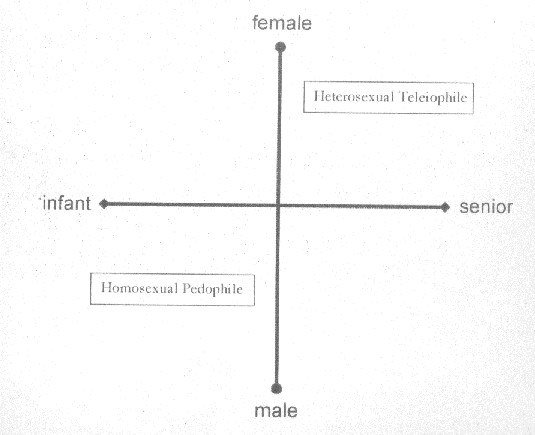
In this article, I address the question of whether pedophilia in men can be construed as a male sexual orientation, and the implications for thinking of it in this way for scientific research, clinical practice, and public policy.
I begin by defining pedophilia and sexual orientation, and then compare pedophilia (as a potential sexual orientation with regard to age) to sexual orientations with regard to gender (heterosexuality, bisexuality, and homosexuality), on the bases of age of onset, correlations with sexual and romantic behavior, and stability over time. I conclude with comments about the potential social and legal implications of conceptualizing pedophilia as a type of sexual orientation in males.
In this article, I address the question of whether pedophilia in men can be construed as a male sexual orientation, and the implications for thinking of it in this way for scientific research, clinical practice, and public policy.
I begin by defining pedophilia and sexual orientation, and then compare pedophilia (as a potential sexual orientation with regard to age) to sexual orientations with regard to gender (heterosexuality, bisexuality, and homosexuality), on the bases of age of onset, correlations with sexual and romantic behavior, and stability over time. I conclude with comments about the potential social and legal implications of conceptualizing pedophilia as a type of sexual orientation in males.

;
The Origins of Peace and Violence (Website) Deprivation of Physical Affection as a Main Cause of Depression, Aggression and Drug Abuse
This is a copy of the content page a website with articles and books about the connection between oppressing childhood sexuality and depression and violence in later life.
This is a copy of the content page a website with articles and books about the connection between oppressing childhood sexuality and depression and violence in later life.
;
The tail end of a dachshund
In May 2011, the Martijn Association decided to set up an Ethics Commission. Ethics is concerned with the question of what is good and what is bad; with values, norms and guidelines. [...]
In this article, I aim to place these guidelines in a broader context, namely that of the debate which has taken place in the Netherlands – and far beyond its borders – since the 1990s. The commission does not come up with any revolutionary, new advice, but follows up on a long-standing discussion, like the tail end of a long dachshund.
It shows that, as long as people with paedophilic feelings are allowed to enter into serious discussion, far from ending up in ‘raunchy suggestions’ the end result is an actual ethical code – and a fairly strict one at that.
In May 2011, the Martijn Association decided to set up an Ethics Commission. Ethics is concerned with the question of what is good and what is bad; with values, norms and guidelines. [...]
In this article, I aim to place these guidelines in a broader context, namely that of the debate which has taken place in the Netherlands – and far beyond its borders – since the 1990s. The commission does not come up with any revolutionary, new advice, but follows up on a long-standing discussion, like the tail end of a long dachshund.
It shows that, as long as people with paedophilic feelings are allowed to enter into serious discussion, far from ending up in ‘raunchy suggestions’ the end result is an actual ethical code – and a fairly strict one at that.
;
United Nations Convention on the Rights of the Child - History
Information about the way the Declaration of Children's rights was developed and accepted by the UN.
Information about the way the Declaration of Children's rights was developed and accepted by the UN.
;
Warped Desire: Inside the mind of a child pornographer
The article gives a view within the mind of a man convicted inthe USA to 35 years of prison because child sexual abuse and child pornography making, posessing and viewing, as well in the mind of the morther of the child, and indirectly the mind of the child.
... In a jailhouse interview, the undocumented, Mexican-born Cardenas prefers to characterize the abuse as “consensual sex.” He says he didn’t understand how society would see such acts until U.S Attorney prosecutor Carol Dain told him he had repeatedly raped the child. “When she said that, that gave me an idea what people were thinking out there,” he says. “I did not rape that kid. I never did anything against his will.” ...
The article gives a view within the mind of a man convicted inthe USA to 35 years of prison because child sexual abuse and child pornography making, posessing and viewing, as well in the mind of the morther of the child, and indirectly the mind of the child.
... In a jailhouse interview, the undocumented, Mexican-born Cardenas prefers to characterize the abuse as “consensual sex.” He says he didn’t understand how society would see such acts until U.S Attorney prosecutor Carol Dain told him he had repeatedly raped the child. “When she said that, that gave me an idea what people were thinking out there,” he says. “I did not rape that kid. I never did anything against his will.” ...
;
Quotes from: Pedophilia, A Diagnosis in Search of a Disorder;
Arch Sex Behav;
41, 1083 - 1097,
Feb 25 2012
This article presents a critical review of the recent controversies concerning the diagnosis of pedophilia in the context of the preparation of the fifth edition of theDSM.
The analysis focuses basically on the relationship between pedophilia and the currentDSM-IV-TR’s definition ofmental disorder. Scholars appear not to share numerous basic assumptions ranging from their underlying ideas about what constitutes a mental disorder to the role of psychiatry in modern society, including irreconcilable theories about human sexuality, which interfere with reaching any kind of a consensus as to what the psychiatric status of pedophilia
should be.
It is questioned if the diagnosis of pedophilia containedin the DSM is more forensic than therapeutic, focusing rather on the dangers inherent in the condition of pedophilia (dangerous dysfunction) than on its negative effects for the subject (harmful dysfunction).
The apparent necessity of the diagnosis of pedophilia in the DSM is supported, but the basis for this diagnosis is uncertain.
This article presents a critical review of the recent controversies concerning the diagnosis of pedophilia in the context of the preparation of the fifth edition of theDSM.
The analysis focuses basically on the relationship between pedophilia and the currentDSM-IV-TR’s definition ofmental disorder. Scholars appear not to share numerous basic assumptions ranging from their underlying ideas about what constitutes a mental disorder to the role of psychiatry in modern society, including irreconcilable theories about human sexuality, which interfere with reaching any kind of a consensus as to what the psychiatric status of pedophilia
should be.
It is questioned if the diagnosis of pedophilia containedin the DSM is more forensic than therapeutic, focusing rather on the dangers inherent in the condition of pedophilia (dangerous dysfunction) than on its negative effects for the subject (harmful dysfunction).
The apparent necessity of the diagnosis of pedophilia in the DSM is supported, but the basis for this diagnosis is uncertain.


;
Scorched Earth,
Feb 27 2012
The 21st century American view of sex is warped beyond that of any other historical culture. The official and popular paradigm appears to be based on the belief that sex is such a horrible, monstrous abomination that the mere mention of it to an adult can constitute “violence”, that participating in it for taboo reasons can be a “crime”, and that if a person is exposed to sexual contact, conversation or imagery (...) even one minute before midnight on her 18th birthday she will be instantly and irreversibly ruined beyond any hope of redemption.
[...]
It’s time to stop being afraid of the activity to which every single one of us owes his existence, and to stop fighting a war whose casualties are far greater than any the “threat” itself has ever produced.
The 21st century American view of sex is warped beyond that of any other historical culture. The official and popular paradigm appears to be based on the belief that sex is such a horrible, monstrous abomination that the mere mention of it to an adult can constitute “violence”, that participating in it for taboo reasons can be a “crime”, and that if a person is exposed to sexual contact, conversation or imagery (...) even one minute before midnight on her 18th birthday she will be instantly and irreversibly ruined beyond any hope of redemption.
[...]
It’s time to stop being afraid of the activity to which every single one of us owes his existence, and to stop fighting a war whose casualties are far greater than any the “threat” itself has ever produced.
;
You would never want to harm a child, would you?,
Mar 01 2012
Intimacy can be desired or undesired. Everybody is aware of this. It has become increasingly clear how serious and long-lasting the effects of undesired intimacy can be. However besotted you may be with a child, that does not make the child your property. The child belongs to the child. But... maybe it is possible for you to have a close relationship with the child.
The Martijn Association advises all its members to observe the law and to act in accordance with the following guidelines. Exercise integrity in all situations involving children while respecting:
Intimacy can be desired or undesired. Everybody is aware of this. It has become increasingly clear how serious and long-lasting the effects of undesired intimacy can be. However besotted you may be with a child, that does not make the child your property. The child belongs to the child. But... maybe it is possible for you to have a close relationship with the child.
The Martijn Association advises all its members to observe the law and to act in accordance with the following guidelines. Exercise integrity in all situations involving children while respecting:
- Consent: the consent of both in every contact.
- Freedom: freedom for the child to end the contact if desired.
- Harmony: acting in accordance with the child’s development.
- Openness: openness towards the parents, especially in the case of young children.
;
California High School Teacher-Student Romance: Therapist Calls Man 'Sexual Predator',
Mar 05 2012
The former high school teacher who left his family to be with a former student is a "sex predator" and the couple are suffering from shared paranoia, thinking that the world is against them, a therapist who has spoken to the man said.
The former high school teacher who left his family to be with a former student is a "sex predator" and the couple are suffering from shared paranoia, thinking that the world is against them, a therapist who has spoken to the man said.
;
Low reoffending risk found for child porn users,
Mar 11 2012
REOFFENDING rates by child pornography users are far below rates for assaults, drink-driving or property damage, with fewer than one in 10 people who download sexual images of minors later convicted of the crime again.
Despite community concern about the dangers posed by convicted child pornography users, new Corrections Victoria figures reveal only about 7.5 per cent are found to reoffend.
REOFFENDING rates by child pornography users are far below rates for assaults, drink-driving or property damage, with fewer than one in 10 people who download sexual images of minors later convicted of the crime again.
Despite community concern about the dangers posed by convicted child pornography users, new Corrections Victoria figures reveal only about 7.5 per cent are found to reoffend.
;
Fear of Relapse,
Mar 21 2012
What moved the inhabitants? Fear of relapse of the man Karl.
Is this fear realistic?
Are there figures about relapse? Yes.
[...]
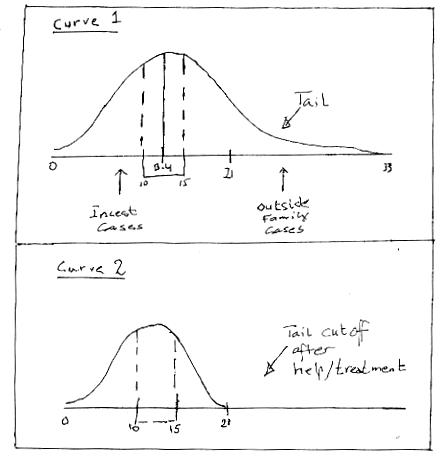
These figures represent cases of child sexual abuse, of which every case is one too much, so they are a cause for concern, but not a cause to panic - at least not a cause to attack people, to ban people from the community and by doing so increasing their feelings of anxiety and stress, thus increasing the chance of relapse. The same figures are a cause to find other ways of acting.
What moved the inhabitants? Fear of relapse of the man Karl.
Is this fear realistic?
Are there figures about relapse? Yes.
[...]
These figures represent cases of child sexual abuse, of which every case is one too much, so they are a cause for concern, but not a cause to panic - at least not a cause to attack people, to ban people from the community and by doing so increasing their feelings of anxiety and stress, thus increasing the chance of relapse. The same figures are a cause to find other ways of acting.

;
Dutch court forbids and dissolves Association Martijn,
Jun 27 2012
Today, a Dutch court has immediately forbidden and dissolved the Dutch Association Martijn" and "The court concludes that the association infringes the peace and the public morals, the fundamentals of our legal system.
[...]
The court concludes that the Association Martijn propagates ...
... that children are a lust object (by explicit photos and descriptions meant to excite);
... that sexual contact between children and adult is OK, that children wanted this and that the law is harmful, not the contact;
... that those sexual contacts have to be celebrated (by giving celebrating descriptions);
... that criminal convictions for immoral acts are ridiculous; and
... those contacts are natural wand wanted by the children, while child pornography may be not harmful.
Today, a Dutch court has immediately forbidden and dissolved the Dutch Association Martijn" and "The court concludes that the association infringes the peace and the public morals, the fundamentals of our legal system.
[...]
The court concludes that the Association Martijn propagates ...
... that children are a lust object (by explicit photos and descriptions meant to excite);
... that sexual contact between children and adult is OK, that children wanted this and that the law is harmful, not the contact;
... that those sexual contacts have to be celebrated (by giving celebrating descriptions);
... that criminal convictions for immoral acts are ridiculous; and
... those contacts are natural wand wanted by the children, while child pornography may be not harmful.
;
The Unfair Criminalization of Gay and Transgender Youth,
Jun 29 2012
Gay, transgender, and gender nonconforming youth are significantly over-represented in the juvenile justice system [...]. These high rates of involvement in the juvenile justice system are a result of gay and transgender youth abandonment by their families and communities, and victimization in their schools—sad realities that place this group of young people at a heightened risk of entering the school-to-prison pipeline. [...]
Angela Irvine of the National Council on Crime and Delinquency in conjunction with the Equity Project, which works to ensure gay and transgender youth in the juvenile justice system are treated with fairness and respect, have both generated groundbreaking research on the experiences of these youth in the system over the past few years.
This issue brief offers a high-level summary of some of their findings, as well as others, to explain the disproportionate pipelining of gay and transgender youth into the juvenile justice system, the bias and discrimination they face once within the system, and the steps that the federal government and state and local juvenile courts can take to ensure that gay and transgender youth are treated with dignity and respect.
Gay, transgender, and gender nonconforming youth are significantly over-represented in the juvenile justice system [...]. These high rates of involvement in the juvenile justice system are a result of gay and transgender youth abandonment by their families and communities, and victimization in their schools—sad realities that place this group of young people at a heightened risk of entering the school-to-prison pipeline. [...]
Angela Irvine of the National Council on Crime and Delinquency in conjunction with the Equity Project, which works to ensure gay and transgender youth in the juvenile justice system are treated with fairness and respect, have both generated groundbreaking research on the experiences of these youth in the system over the past few years.
This issue brief offers a high-level summary of some of their findings, as well as others, to explain the disproportionate pipelining of gay and transgender youth into the juvenile justice system, the bias and discrimination they face once within the system, and the steps that the federal government and state and local juvenile courts can take to ensure that gay and transgender youth are treated with dignity and respect.
;
Meet pedophiles who mean well;
Salon.com,
Jul 01 2012
The goal of the organization is to offer support to pedophiles who want to live virtuously and to raise public awareness about the fact that such pedophiles exist.
Support is a major aim of the site, beyond even raising awareness in the outside world.
Edwards wants to shine a spotlight on the sort of pedophiles that don’t make the evening news.
“I hope people start to realize that virtuous pedophiles exist, [...] and “that many are no danger and shouldn’t be branded as dangerous without evidence.”
The goal of the organization is to offer support to pedophiles who want to live virtuously and to raise public awareness about the fact that such pedophiles exist.
Support is a major aim of the site, beyond even raising awareness in the outside world.
Edwards wants to shine a spotlight on the sort of pedophiles that don’t make the evening news.
“I hope people start to realize that virtuous pedophiles exist, [...] and “that many are no danger and shouldn’t be branded as dangerous without evidence.”
;
About the Trauma Myth,
Sep 20 2012
Letter from an Ipce-member to Ipce, critisizing Susan Clancy's book and essay about the Trauma myth.
Letter from an Ipce-member to Ipce, critisizing Susan Clancy's book and essay about the Trauma myth.
;
Architects of Oppression
The history of the child sex abuse witch hunt is chronicled from the times of Anthony Comstock and J. Edgar Hoover to the NCMEC of the present, including the influence of Kenneth Lanting, Ernie Allen and others.
The history of the child sex abuse witch hunt is chronicled from the times of Anthony Comstock and J. Edgar Hoover to the NCMEC of the present, including the influence of Kenneth Lanting, Ernie Allen and others.
;
Censoring Sex Research: The Debate over Male Intergenerational Relations;
368 pp
This volume sheds light on one of the most explosive episodes of censure of academic scholarship in recent decades. Bruce Rind, a former psychology professor at Temple University, investigated sexual relations between male adults and adolescents through history and across cultures, from highly institutionalized relationships in Ancient Greece and Rome, to 33 contemporary cultures including the USA, and among various species. His conclusions that these relations, when consensual, are not always negative was radical, but based in his research findings. Even before publication of an invited article on the topic, he was subjected to intensive attacks, censured, and censored. This book presents a substantially extended version of Rind’s original, unpublished article, plus 12 scholarly responses to his work that argue for or against Rind’s conclusions or offer useful context on his work. For anyone interested in sex research and the academic freedom issues surrounding it, whether supportive of or vehemently opposed to Rind’s ideas, this book is a must-read.
This volume sheds light on one of the most explosive episodes of censure of academic scholarship in recent decades. Bruce Rind, a former psychology professor at Temple University, investigated sexual relations between male adults and adolescents through history and across cultures, from highly institutionalized relationships in Ancient Greece and Rome, to 33 contemporary cultures including the USA, and among various species. His conclusions that these relations, when consensual, are not always negative was radical, but based in his research findings. Even before publication of an invited article on the topic, he was subjected to intensive attacks, censured, and censored. This book presents a substantially extended version of Rind’s original, unpublished article, plus 12 scholarly responses to his work that argue for or against Rind’s conclusions or offer useful context on his work. For anyone interested in sex research and the academic freedom issues surrounding it, whether supportive of or vehemently opposed to Rind’s ideas, this book is a must-read.
;
Child sexual abuse, sexual exploitation of children and pedophilia: different names, different problems?
This article discusses the emergence of “sexual violence against children” as a current “social problem” and its breakdown into different modalities such as “child sexual abuse”, “sexual exploitation of children” and “pedophilia”. Although focused on a “problem” whose repercussions and visibility are not limited by national borders, it does not intend to account for all the different levels of this phenomenon. Instead, it aims to contribute to the understanding of one of this problem’s local manifestations, within the Brazilian legal, social and political context. Where relevant, references will be made to the international scene.
[... ... ...]
As we have seen, words are not neutral in this universe of political struggles, in so far they delineate not only differences of meaning, but also different political positions; not only different interpretations but also action strategies. [...]
Words and their meanings are constantly constructed and reinvented within disputes and social shifts at several levels. [...]
I hope that this historical and social analysis of the uses and meanings of the diversified vocabulary regarding “sexual violence against children” will contribute to a more reflective usage of the relevant classificatory categories.
This article discusses the emergence of “sexual violence against children” as a current “social problem” and its breakdown into different modalities such as “child sexual abuse”, “sexual exploitation of children” and “pedophilia”. Although focused on a “problem” whose repercussions and visibility are not limited by national borders, it does not intend to account for all the different levels of this phenomenon. Instead, it aims to contribute to the understanding of one of this problem’s local manifestations, within the Brazilian legal, social and political context. Where relevant, references will be made to the international scene.
[... ... ...]
As we have seen, words are not neutral in this universe of political struggles, in so far they delineate not only differences of meaning, but also different political positions; not only different interpretations but also action strategies. [...]
Words and their meanings are constantly constructed and reinvented within disputes and social shifts at several levels. [...]
I hope that this historical and social analysis of the uses and meanings of the diversified vocabulary regarding “sexual violence against children” will contribute to a more reflective usage of the relevant classificatory categories.
;
Concealable Stigmatized Identities and Psychological Well-Being;
Soc Personal Psychol Compass.;
Jan 7(1), 40–51
Abstract
Many people have concealable stigmatized identities: Identities that can be hidden from others and that are socially devalued and negatively stereotyped. Understanding how these concealable stigmatized identities affect psychological well-being is critical. We present our model of the components of concealable stigmatized identities including valenced content – internalized stigma, experienced discrimination, anticipated stigma, disclosure reactions, and counter-stereotypic/positive information – and magnitude – centrality and salience. Research has shown that negatively valenced content is related to increased psychological distress. However, smaller identity magnitude may buffer this distress. We review the research available and discuss important areas for future work.
Abstract
Many people have concealable stigmatized identities: Identities that can be hidden from others and that are socially devalued and negatively stereotyped. Understanding how these concealable stigmatized identities affect psychological well-being is critical. We present our model of the components of concealable stigmatized identities including valenced content – internalized stigma, experienced discrimination, anticipated stigma, disclosure reactions, and counter-stereotypic/positive information – and magnitude – centrality and salience. Research has shown that negatively valenced content is related to increased psychological distress. However, smaller identity magnitude may buffer this distress. We review the research available and discuss important areas for future work.
;
From Deviation to Disorder: the medicalization of sexuality in contemporary psychiatric classifications of disease
In the final decades of the 20th century, the psychiatric field witnessed an important transformation. The psycho-social view of mental disorders, characterized in part by the hegemony of psychoanalytic interpretation and by a political and social critique of traditional psychiatric practices, gave way to a view that was strictly biological.
A landmark in this transformation was the publication in 1980 of the third version of the Diagnostic and Statistic Manual of Mental Disorders (DSM-III) by the American Psychiatric Association. But this shift in the understanding of mental disorders — from psycho-sociological to biological — was not an isolated phenomenon. In fact, it was part of a larger process of the “re-biologization” of topics and debates, such as race and sexual difference, which were earlier reserved to the realm of political struggle.
[... ... ...]
The fragmentation and specification of disorders of “normal” sexuality are part of this broader process, which points to the very objectification and fragmentation of the “self, “subject” and “person” concepts.
In the final decades of the 20th century, the psychiatric field witnessed an important transformation. The psycho-social view of mental disorders, characterized in part by the hegemony of psychoanalytic interpretation and by a political and social critique of traditional psychiatric practices, gave way to a view that was strictly biological.
A landmark in this transformation was the publication in 1980 of the third version of the Diagnostic and Statistic Manual of Mental Disorders (DSM-III) by the American Psychiatric Association. But this shift in the understanding of mental disorders — from psycho-sociological to biological — was not an isolated phenomenon. In fact, it was part of a larger process of the “re-biologization” of topics and debates, such as race and sexual difference, which were earlier reserved to the realm of political struggle.
[... ... ...]
The fragmentation and specification of disorders of “normal” sexuality are part of this broader process, which points to the very objectification and fragmentation of the “self, “subject” and “person” concepts.
;
Navigating the Stigma of Pedophilia: The Experiences of Nine Minor Attracted Men in Canada;
99 pp
This thesis presents findings and analysis arising from semi-structured qualitative interviews with nine minor-attracted men (i.e. men who are primarily attracted to children and/or adolescents) in Canada.
The central research question is “how do minor-attracted people understand and manage their stigmatized identities?” I situated the participants' experiences within a broader social context by reviewing relevant academic literature, laws, and dominant cultural attitudes. Utilizing a symbolic-interactionist approach, and drawing on Goffman's concept of “stigma,” t
his thesis illustrates the unique challenges facing minor-attracted people.
The study reveals that minor-attracted people become aware of their sexuality at an early age, experience stress caused by real or perceived societal rejection, and encounter both positive and negative reacti
The conclusion underscores the need for a new approach to dealing with
minor-attraction in contemporary Western society. I offer eight recommendations for instituting a strategy which incorporates empathy, education, and anti-discrimination measures.
This thesis presents findings and analysis arising from semi-structured qualitative interviews with nine minor-attracted men (i.e. men who are primarily attracted to children and/or adolescents) in Canada.
The central research question is “how do minor-attracted people understand and manage their stigmatized identities?” I situated the participants' experiences within a broader social context by reviewing relevant academic literature, laws, and dominant cultural attitudes. Utilizing a symbolic-interactionist approach, and drawing on Goffman's concept of “stigma,” t
his thesis illustrates the unique challenges facing minor-attracted people.
The study reveals that minor-attracted people become aware of their sexuality at an early age, experience stress caused by real or perceived societal rejection, and encounter both positive and negative reacti
The conclusion underscores the need for a new approach to dealing with
minor-attraction in contemporary Western society. I offer eight recommendations for instituting a strategy which incorporates empathy, education, and anti-discrimination measures.
;
The Neuropsychology of Sexual Offenders: A Meta-Analysis
Abstract
Typically, neuropsychological studies of sex offenders have grouped together different types of individuals and different types of measures. This is why results have tended to be nonspecific and divergent across studies.
Against this background, the authors undertook a review of the literature regarding the neuropsychology of sex offenders, taking into account subgroups based on criminological theories.
They also conducted a meta-analysis of the data to demonstrate the cognitive heterogeneity of sex offenders statistically. Their main objective was to test the hypothesis to the effect that the neuropsychological deficits of sex offenders are not broad and generalized compared with specific subgroups of participants based on specific measures.
In all, 23 neuropsychological studies reporting data on 1,756 participants were taken into consideration. As expected, a highly significant, broad, and heterogeneous overall effect size was found. Taking subgroups of participants and specific cognitive measures into account significantly improved homogeneity.
Sex offenders against children tended to obtain lower scores than did sex offenders against adults on higher order executive functions, whereas sex offenders against adults tended to obtain results similar to those of non-sex offenders, with lower scores in verbal fluency and inhibition.
However, it is concluded that neuropsychological data on sex offenders are still too scarce to confirm these trends or to test more precise hypotheses. For greater clinical relevance, future neuropsychological studies should consider specific subgroups of participants and measures to verify the presence of different cognitive profiles.
[... ... ... ...]
The main goal was to define specific subgroups of sex offenders based on criminological typologies and to demonstrate that they present distinct cognitive profiles. Unfortunately, it was not possible for us to achieve this goal.
Consequently, it is currently impossible to say whether sex offenders present broad, nonspecific cognitive impairments or, instead, specific neuropsychological profiles.
Abstract
Typically, neuropsychological studies of sex offenders have grouped together different types of individuals and different types of measures. This is why results have tended to be nonspecific and divergent across studies.
Against this background, the authors undertook a review of the literature regarding the neuropsychology of sex offenders, taking into account subgroups based on criminological theories.
They also conducted a meta-analysis of the data to demonstrate the cognitive heterogeneity of sex offenders statistically. Their main objective was to test the hypothesis to the effect that the neuropsychological deficits of sex offenders are not broad and generalized compared with specific subgroups of participants based on specific measures.
In all, 23 neuropsychological studies reporting data on 1,756 participants were taken into consideration. As expected, a highly significant, broad, and heterogeneous overall effect size was found. Taking subgroups of participants and specific cognitive measures into account significantly improved homogeneity.
Sex offenders against children tended to obtain lower scores than did sex offenders against adults on higher order executive functions, whereas sex offenders against adults tended to obtain results similar to those of non-sex offenders, with lower scores in verbal fluency and inhibition.
However, it is concluded that neuropsychological data on sex offenders are still too scarce to confirm these trends or to test more precise hypotheses. For greater clinical relevance, future neuropsychological studies should consider specific subgroups of participants and measures to verify the presence of different cognitive profiles.
[... ... ... ...]
The main goal was to define specific subgroups of sex offenders based on criminological typologies and to demonstrate that they present distinct cognitive profiles. Unfortunately, it was not possible for us to achieve this goal.
Consequently, it is currently impossible to say whether sex offenders present broad, nonspecific cognitive impairments or, instead, specific neuropsychological profiles.
;
New: Ipce Magazine # 5 - Theme: Sexually active youth
Youth actually is sexually active. In our society, over-filled with sexual images and scenes - if not at least an obsession - this not seen as a sign of natural development, a right or a joy, but as a problem. Just this vision raises problems. There are better visions.
Youth actually is sexually active. In our society, over-filled with sexual images and scenes - if not at least an obsession - this not seen as a sign of natural development, a right or a joy, but as a problem. Just this vision raises problems. There are better visions.
;
New: Ipce Magazine # 6 - Theme: Civil Commitments;
Ipce Magazine
This article examines how civil commitment has been rolled out in the case of the sex offender, and focuses on the implementation of the program in the US and the controversy that has been spawned as a result. [...]
The term ‘mental disorder’ has been expanded therefore to include ‘mental abnormality’, to enable sex offenders to be committed civilly.
This article examines how civil commitment has been rolled out in the case of the sex offender, and focuses on the implementation of the program in the US and the controversy that has been spawned as a result. [...]
The term ‘mental disorder’ has been expanded therefore to include ‘mental abnormality’, to enable sex offenders to be committed civilly.
;
Pedophilia and the American Psychiatric Association: Mental Illness vs. Aberration
... The APA said that the discussion about diagnostic criterion for pedophilic disorder contained an error; it should have read, “sexual interest,” instead of “sexual orientation.” ...
The APA classifies pedophilia as a type of paraphilia, or an atypical sexual interest. In its notes about changes in the definitions of paraphilia, the APA clearly states that most people with atypical sexual interests do not have a mental disorder. ...
The APA’s notes explain that they did not change the definition of pedophilia in its new edition of the DSM; instead it only changed the name of the disorder from “pedophilia” to “pedophilic disorder.” ...
in order to be diagnosed with Pedophilic Disorder, people must not only have thoughts of attraction to children, they must act on the attraction as well.
A Comment of PhD Frans Gieles is added to this article by Ipce.
... The APA said that the discussion about diagnostic criterion for pedophilic disorder contained an error; it should have read, “sexual interest,” instead of “sexual orientation.” ...
The APA classifies pedophilia as a type of paraphilia, or an atypical sexual interest. In its notes about changes in the definitions of paraphilia, the APA clearly states that most people with atypical sexual interests do not have a mental disorder. ...
The APA’s notes explain that they did not change the definition of pedophilia in its new edition of the DSM; instead it only changed the name of the disorder from “pedophilia” to “pedophilic disorder.” ...
in order to be diagnosed with Pedophilic Disorder, people must not only have thoughts of attraction to children, they must act on the attraction as well.
A Comment of PhD Frans Gieles is added to this article by Ipce.