Library 4

;
Perv: The Sexual Deviant in All of Us by Jesse Bering – review;
The Guardian,
Feb 12 2014
Quotes from a review by Steven Poole, in The Guardian, 12 Februari 2014.
"We cannot choose who we are sexually attracted to – so stop judging."
... In a friendly way, Bering, a former psychologist, argues that all sexual "perversions" or "deviancies" should be viewed objectively as just statistically more-or-less common structures of desire, without the moral disapproval that usually attaches to them. ...
He becomes more serious during the last third of the book, which is about paedophilia and child pornography. ...
Despite its wild variations in tone, this is, overall, a serious and humane book.
Quotes from a review by Steven Poole, in The Guardian, 12 Februari 2014.
"We cannot choose who we are sexually attracted to – so stop judging."
... In a friendly way, Bering, a former psychologist, argues that all sexual "perversions" or "deviancies" should be viewed objectively as just statistically more-or-less common structures of desire, without the moral disapproval that usually attaches to them. ...
He becomes more serious during the last third of the book, which is about paedophilia and child pornography. ...
Despite its wild variations in tone, this is, overall, a serious and humane book.
;
5 O.C. teens identified as victims in widespread child-exploitation investigation,
Mar 19 2014
Five teenage boys from Orange County are among more than 250 juvenile victims identified in one of the largest online child exploitation investigations ever conducted by U.S. Immigration and Customs Enforcement’s Homeland Security Investigations division. [...]
The Orange County victims ranged in age from 14 to 17 and were contacted in online chat rooms, authorities said. [...]
The teens were duped into producing “very graphic images and videos of themselves” and sending them to what they believed were teenage girls when, in fact, they were producing images for pedophiles ...
Fourteen people – none in Orange County – have been charged as a result of the investigation. It targeted a child pornography website on what is known as the Darknet’s Onion Router ...
Overview of child pornography cases ...
Tips for parents ... Tips for kids ...
Comment - by an Ipce Member [...]
Wow. So many criminals, and so much criminal activity on that website. Thank God for that investigation! The millions of dollars the investigation cost were very well spent! And it is clearly worthwhile that the 26,986 other members of that site who never did anything illegal have now been denied the use of a site they had enjoyed using, and which they used completely legally. Good job, law enforcers!
Five teenage boys from Orange County are among more than 250 juvenile victims identified in one of the largest online child exploitation investigations ever conducted by U.S. Immigration and Customs Enforcement’s Homeland Security Investigations division. [...]
The Orange County victims ranged in age from 14 to 17 and were contacted in online chat rooms, authorities said. [...]
The teens were duped into producing “very graphic images and videos of themselves” and sending them to what they believed were teenage girls when, in fact, they were producing images for pedophiles ...
Fourteen people – none in Orange County – have been charged as a result of the investigation. It targeted a child pornography website on what is known as the Darknet’s Onion Router ...
Overview of child pornography cases ...
Tips for parents ... Tips for kids ...
Comment - by an Ipce Member [...]
Wow. So many criminals, and so much criminal activity on that website. Thank God for that investigation! The millions of dollars the investigation cost were very well spent! And it is clearly worthwhile that the 26,986 other members of that site who never did anything illegal have now been denied the use of a site they had enjoyed using, and which they used completely legally. Good job, law enforcers!
;
Can Boys Be ‘Coerced’ Into Sex?;
US News,
Mar 28 2014
The notion of teenage boys as sexual aggressors is so engrained, the results of a new study, which reveal that they are being coerced into sex by girls and young women, will surprise many.
“43 percent of high school boys and young college men”—yes, boys and young men—“reported they had an unwanted sexual experience and of those, 95 percent said a female acquaintance was the aggressor.”
The notion of teenage boys as sexual aggressors is so engrained, the results of a new study, which reveal that they are being coerced into sex by girls and young women, will surprise many.
“43 percent of high school boys and young college men”—yes, boys and young men—“reported they had an unwanted sexual experience and of those, 95 percent said a female acquaintance was the aggressor.”
;
Dangerous Diagnoses, Risky Assumptions, and the Failed Experiment of 'Sexually Violent Predator' Commitment;
Oklahoma Law Review,
Jun 11 2014
In the 1997 opinion, Kansas v. Hendricks, the U.S. Supreme Court upheld a law that presented a new model of civil commitment. The targets of these new commitment laws were dubbed “Sexually Violent Predators,” and the Court upheld this form of indefinite detention on the assumption that there is a psychiatrically distinct class of individuals who, unlike typical recidivists, have a mental condition that impairs their ability to refrain from violent sexual behavior. And, more specifically, the Court assumed that the justice system could reliably identify the true “predators,” those for whom this unusual and extraordinary deprivation of liberty is appropriate and legitimate, with the aid of testimony from mental health professionals.
This Article evaluates the extent to which those assumptions were correct and concludes that they were seriously flawed and, therefore, the due process rationale used to uphold the SVP laws is invalid. The category of the “Sexually Violent Predator” is a political and moral construct, not a medical classification. The implementation of the laws has resulted in dangerous distortions of both psychiatric expertise and important legal principles, and such distortions reveal an urgent need to re-examine the Supreme Court’s core rationale in upholding the SVP commitment experiment.
In the 1997 opinion, Kansas v. Hendricks, the U.S. Supreme Court upheld a law that presented a new model of civil commitment. The targets of these new commitment laws were dubbed “Sexually Violent Predators,” and the Court upheld this form of indefinite detention on the assumption that there is a psychiatrically distinct class of individuals who, unlike typical recidivists, have a mental condition that impairs their ability to refrain from violent sexual behavior. And, more specifically, the Court assumed that the justice system could reliably identify the true “predators,” those for whom this unusual and extraordinary deprivation of liberty is appropriate and legitimate, with the aid of testimony from mental health professionals.
This Article evaluates the extent to which those assumptions were correct and concludes that they were seriously flawed and, therefore, the due process rationale used to uphold the SVP laws is invalid. The category of the “Sexually Violent Predator” is a political and moral construct, not a medical classification. The implementation of the laws has resulted in dangerous distortions of both psychiatric expertise and important legal principles, and such distortions reveal an urgent need to re-examine the Supreme Court’s core rationale in upholding the SVP commitment experiment.

;
Incest, paedophilia 'like being gay', judge says ;
Fairfax Media, New Zealand,
Jul 10 2014
Judge Garry Neilson compared incest and paedophilia to homosexuality.
A Sydney judge has compared incest and paedophilia to homosexuality, saying the community may no longer see sexual contact between siblings and between adults and children as "unnatural" or "taboo".
Judge Garry Neilson compared incest and paedophilia to homosexuality.
A Sydney judge has compared incest and paedophilia to homosexuality, saying the community may no longer see sexual contact between siblings and between adults and children as "unnatural" or "taboo".
;
Every fifth boy and man is pedophilic or hebephilic,
Sep 24 2014
Abstract
A meta-analysis of all seven relevant phallometric studies reveals that 22% of normal men show greater or equal sexual arousal to child stimuli (individuals up to 13 years old) than to adult stimuli.
Combined results of two of these studies reveal male prevalence rates of about 3% for pedophilia (mostly sexually aroused by prepubescents) and about 16% for hebephilia (mostly sexually aroused by pubescents). Details of these studies are described, and implications of the results for sexual science and society are discussed.
Abstract
A meta-analysis of all seven relevant phallometric studies reveals that 22% of normal men show greater or equal sexual arousal to child stimuli (individuals up to 13 years old) than to adult stimuli.
Combined results of two of these studies reveal male prevalence rates of about 3% for pedophilia (mostly sexually aroused by prepubescents) and about 16% for hebephilia (mostly sexually aroused by pubescents). Details of these studies are described, and implications of the results for sexual science and society are discussed.
;
Warum werden rund 20 Prozent der Männer ...,
Nov 01 2014
Nach dem Mittelwert der durch eine Literaturrecherche ermittelten zehn phallometrischen Studien werden 24 % der Männer stärker oder genauso stark durch Vorpubertierende oder Pubertierende sexuell erregt wie durch Erwachsene. Die Prozentwerte der zehn Studien liegen im Bereich von 14 % bis 33 %.
[...]
Der Artikel beschreibt die zehn Studien und - sofern vorhanden - die Erklärungsansätze der Autoren der zehn Studien für die hohen Prozentwerte und diskutiert anschließend weitere mögliche Ursachen.
[...]
Die plausibelste Erklärung für den Widerspruch zwischen den Umfrageergebnissen und den phallometrischen Messergebnissen ist ein häufiges Verheimlichen der sexuellen Anziehung durch (Vor-) Pubertierende in den Umfragen.
[...]
Wahrscheinlich sind tatsächlich rund 20 Prozent der Männer pädophil oder hebephil, wobei die meisten dieser Männer hebephil und nicht pädophil sind. Den Abschluss des Artikels bilden eine Einordung der Untersuchungsergebnisse in den Forschungsstand und Empfehlungen für die Forschung.
Nach dem Mittelwert der durch eine Literaturrecherche ermittelten zehn phallometrischen Studien werden 24 % der Männer stärker oder genauso stark durch Vorpubertierende oder Pubertierende sexuell erregt wie durch Erwachsene. Die Prozentwerte der zehn Studien liegen im Bereich von 14 % bis 33 %.
[...]
Der Artikel beschreibt die zehn Studien und - sofern vorhanden - die Erklärungsansätze der Autoren der zehn Studien für die hohen Prozentwerte und diskutiert anschließend weitere mögliche Ursachen.
[...]
Die plausibelste Erklärung für den Widerspruch zwischen den Umfrageergebnissen und den phallometrischen Messergebnissen ist ein häufiges Verheimlichen der sexuellen Anziehung durch (Vor-) Pubertierende in den Umfragen.
[...]
Wahrscheinlich sind tatsächlich rund 20 Prozent der Männer pädophil oder hebephil, wobei die meisten dieser Männer hebephil und nicht pädophil sind. Den Abschluss des Artikels bilden eine Einordung der Untersuchungsergebnisse in den Forschungsstand und Empfehlungen für die Forschung.
;
Adult–Child Sex and the Limits of Liberal Sexual Morality;
Archives of Sexual Behavior, 2015 - 44 - Febr.
This article is a critical review of the most common arguments in the specialized literature about the moral status of sexual relationships between adults and prepubescent children.The intent is to reveal how the usual ethical analysis of these experiences, done from a general sexual morality, with a Kantian and utilitarian basis, very clearly shows us the limits and contradictions of contemporary liberal morality regarding sexual matters.
It leaves open the possibility that, under certain circumstances, these relationships may be morally admissible. Some shortcomings and contradictions in these liberal arguments suggest that it would be of interest to refer to other authors and ideas to value adult–child sex, approaches that are based on a specific sexual morality concerning the issue of sexual virtues and a more complex conception of human sexual desire. Some of the scientific implications of these moral issues are also discussed.
From the quotes:
- My intention is to show that, limiting ourselves to these three ethical criteria [*], it can be concluded that under certain circumstances sexual experiences between children and adults could be morally permissible.
[* (1) Consent (2) No instrumentalisation and exploitation (3) No harm]
- The adult’s exploitation of the child does not depend on the inequality in power, but rather on the use the adult makes of that power.
- The problem is precisely the fact that children are taught to be submissive with adults, especially concerning sexual matters, where they are kept in dangerous ignorance that makes them especially vulnerable. Giving the child more information and more power would mean they could reject, refuse and say no, something that then puts us in the dangerous position where they could also say yes.
- It has been argued that under certain circumstances these experiences are not only harmless, but are in fact even positive and beneficial for the child. When there is no violence, coercion, deception, concealment, etc., some state that the negative consequences attributed to these events no longer exist. In these cases the simple will of the child to participate in a relationship they find pleasurable is more than enough to allow it.
- Ultimately, based on the possibility of damage that even though it may be only hypothetical and sometimes caused by society’s reaction, makes it more plausible to opt for a cautious prohibition.
- I judge it to be the case that, even if only for prudential reasons, this general rejection seems to be justified, especially when social condemnation is so intense in the large majority of people.
- I have also taken the principal criticisms to these arguments into consideration, concluding that there are sufficient reasons, even of a prudential nature, to uphold the social rejection of sexual relationships between adults and minors under a certain age.
- My aim, however, was focused on showing how these arguments are incapable of justifying a definitive and universal rejection of these relationships, as they always leave the possibility open that some of them are or could be morally permissible.
This article is a critical review of the most common arguments in the specialized literature about the moral status of sexual relationships between adults and prepubescent children.The intent is to reveal how the usual ethical analysis of these experiences, done from a general sexual morality, with a Kantian and utilitarian basis, very clearly shows us the limits and contradictions of contemporary liberal morality regarding sexual matters.
It leaves open the possibility that, under certain circumstances, these relationships may be morally admissible. Some shortcomings and contradictions in these liberal arguments suggest that it would be of interest to refer to other authors and ideas to value adult–child sex, approaches that are based on a specific sexual morality concerning the issue of sexual virtues and a more complex conception of human sexual desire. Some of the scientific implications of these moral issues are also discussed.
From the quotes:
- My intention is to show that, limiting ourselves to these three ethical criteria [*], it can be concluded that under certain circumstances sexual experiences between children and adults could be morally permissible.
[* (1) Consent (2) No instrumentalisation and exploitation (3) No harm]
- The adult’s exploitation of the child does not depend on the inequality in power, but rather on the use the adult makes of that power.
- The problem is precisely the fact that children are taught to be submissive with adults, especially concerning sexual matters, where they are kept in dangerous ignorance that makes them especially vulnerable. Giving the child more information and more power would mean they could reject, refuse and say no, something that then puts us in the dangerous position where they could also say yes.
- It has been argued that under certain circumstances these experiences are not only harmless, but are in fact even positive and beneficial for the child. When there is no violence, coercion, deception, concealment, etc., some state that the negative consequences attributed to these events no longer exist. In these cases the simple will of the child to participate in a relationship they find pleasurable is more than enough to allow it.
- Ultimately, based on the possibility of damage that even though it may be only hypothetical and sometimes caused by society’s reaction, makes it more plausible to opt for a cautious prohibition.
- I judge it to be the case that, even if only for prudential reasons, this general rejection seems to be justified, especially when social condemnation is so intense in the large majority of people.
- I have also taken the principal criticisms to these arguments into consideration, concluding that there are sufficient reasons, even of a prudential nature, to uphold the social rejection of sexual relationships between adults and minors under a certain age.
- My aim, however, was focused on showing how these arguments are incapable of justifying a definitive and universal rejection of these relationships, as they always leave the possibility open that some of them are or could be morally permissible.
;
Born as a pedophile?
A critical comment on
“Minor Physical Anomalies as a Window into the Prenatal Origins of Pedophilia”, by Fazio, Rachel L., Dyshniku Fiona, Murray Michelle E., Lykins Amy D., & Cantor James M.; Archives of Sexual Behavior; Jun 10 2015.
These authors report that they have found correlations between specific physical anomalies that are supposed to date from an early stage in utero, and what they call "pedophiles".
The conclude that the origins of 'pedophilia' also must date from that early stage in utero.
Tha author of this Comment argues the weakness of that study, and thus of its conclusion.
In an Epilogue he argues an alternative way to cope with the phenomenon 'pedophilic feelings', for person and for society.
A critical comment on
“Minor Physical Anomalies as a Window into the Prenatal Origins of Pedophilia”, by Fazio, Rachel L., Dyshniku Fiona, Murray Michelle E., Lykins Amy D., & Cantor James M.; Archives of Sexual Behavior; Jun 10 2015.
These authors report that they have found correlations between specific physical anomalies that are supposed to date from an early stage in utero, and what they call "pedophiles".
The conclude that the origins of 'pedophilia' also must date from that early stage in utero.
Tha author of this Comment argues the weakness of that study, and thus of its conclusion.
In an Epilogue he argues an alternative way to cope with the phenomenon 'pedophilic feelings', for person and for society.
;
The ethics of pedophilia;
Nordic Journal of Applied Ethics ;
9(1), 111-124
Pedophilia is bad. But how bad is it? And in what ways, and for what reasons, is it bad? This is a thorny issue, and sadly, one seldom discussed by ethicists. I argue in this article that pedophilia is bad only because, and only to the extent that, it causes harm to children, and that pedophilia itself, as well as pedophilic expressions and practices that do not cause harm to children, are morally all right. I further argue that the aim of our social and legal treatment of pedophilia should be to minimize harm to children, and that current practices are often counterproductive in this respect.
Pedophilia is bad. But how bad is it? And in what ways, and for what reasons, is it bad? This is a thorny issue, and sadly, one seldom discussed by ethicists. I argue in this article that pedophilia is bad only because, and only to the extent that, it causes harm to children, and that pedophilia itself, as well as pedophilic expressions and practices that do not cause harm to children, are morally all right. I further argue that the aim of our social and legal treatment of pedophilia should be to minimize harm to children, and that current practices are often counterproductive in this respect.
;
Pedophilia and Conflict
This research is centered on pedophiles and their place in Dutch society and based on the question: To what extent is there a conflict due to the presence of pedophiles in Dutch society?
Data was gathered and analyzed through
a qualitative content analysis of newspaper articles and
semi-structured interviews with pedophiles.
In this research pedophiles are defined as people with a sexual age orientation directed towards children younger than sixteen years old. A sexual orientation does not only revolve around sexual feelings, but romantic feelings as well.
Two main results were found.
First, newspapers present a generalized image of pedophiles as people who have engaged or are likely to engage in a form of pedosexuality. This overgeneralization leads to the formation of a stigmatized stereotype, that of a criminal sexual child abuser.
Second, the respondents experience that stigma in their daily life, since they do not feel accepted by society. Instead they experience structural conflict to some extent in the form of unequal life chances. The fact that they are unable to speak out about their sexual identity can lead to difficulties in the social life, in asking for protection and professional help, and in living without fear of discovery. The latter is a form of latent violence.
This research builds further on both classic and recent literature, yet is innovating in the sense that it connects conflict studies to the concept of pedophilia. Conflict is being used as a fluid and broad concept, instead of keeping it static and narrow. This research shows how conflict studies can be relevant in addressing conflict that is not directly visible, since it helps in understanding societal developments and structures.
This research is centered on pedophiles and their place in Dutch society and based on the question: To what extent is there a conflict due to the presence of pedophiles in Dutch society?
Data was gathered and analyzed through
a qualitative content analysis of newspaper articles and
semi-structured interviews with pedophiles.
In this research pedophiles are defined as people with a sexual age orientation directed towards children younger than sixteen years old. A sexual orientation does not only revolve around sexual feelings, but romantic feelings as well.
Two main results were found.
First, newspapers present a generalized image of pedophiles as people who have engaged or are likely to engage in a form of pedosexuality. This overgeneralization leads to the formation of a stigmatized stereotype, that of a criminal sexual child abuser.
Second, the respondents experience that stigma in their daily life, since they do not feel accepted by society. Instead they experience structural conflict to some extent in the form of unequal life chances. The fact that they are unable to speak out about their sexual identity can lead to difficulties in the social life, in asking for protection and professional help, and in living without fear of discovery. The latter is a form of latent violence.
This research builds further on both classic and recent literature, yet is innovating in the sense that it connects conflict studies to the concept of pedophilia. Conflict is being used as a fluid and broad concept, instead of keeping it static and narrow. This research shows how conflict studies can be relevant in addressing conflict that is not directly visible, since it helps in understanding societal developments and structures.
;
References at Being Sexual Attracted to Minors;
Journal of Sex & Marital Therapy;
1-21(22 June 2015),
References at "Being Sexually Attracted to Minors: Sexual Development, Coping With Forbidden Feelings, and Relieving Sexual Arousal in Self-Identified Pedophiles.
References at "Being Sexually Attracted to Minors: Sexual Development, Coping With Forbidden Feelings, and Relieving Sexual Arousal in Self-Identified Pedophiles.
;
References at Pedophilia and Conflict
References at Pedophilia and Conflict - R. Padding, 2015
References at Pedophilia and Conflict - R. Padding, 2015
;
Social Stigma
Social stigma is the extreme disapproval of (or discontent with) a person or group on socially characteristic grounds that are perceived, and serve to distinguish them, from other members of a society. Stigma may then be affixed to such a person, by the greater society, who differs from their cultural norms.
Social stigma can result from the perception of mental illness, physical disabilities, diseases such as leprosy (see leprosy stigma), illegitimacy, sexual orientation, gender identity, skin tone, education, nationality, ethnicity, ideology, religion (or lack of religion) or criminality. Attributes associated with social stigma often vary depending on the geopolitical and corresponding sociopolitical contexts employed by society, in different parts of the world.
According to Goffman there are three forms of social stigma:
Overt or external deformations, such as scars, physical manifestations of anorexia nervosa, leprosy (leprosy stigma), or of a physical disability or social disability, such as obesity.
Deviations in personal traits, including mental illness, drug addiction, alcoholism, and criminal background are stigmatized in this way.
"Tribal stigmas" are traits, imagined or real, of ethnic group, nationality, or of religion that is deemed to be a deviation from the prevailing normative ethnicity, nationality or religion.
Social stigma is the extreme disapproval of (or discontent with) a person or group on socially characteristic grounds that are perceived, and serve to distinguish them, from other members of a society. Stigma may then be affixed to such a person, by the greater society, who differs from their cultural norms.
Social stigma can result from the perception of mental illness, physical disabilities, diseases such as leprosy (see leprosy stigma), illegitimacy, sexual orientation, gender identity, skin tone, education, nationality, ethnicity, ideology, religion (or lack of religion) or criminality. Attributes associated with social stigma often vary depending on the geopolitical and corresponding sociopolitical contexts employed by society, in different parts of the world.
According to Goffman there are three forms of social stigma:
Overt or external deformations, such as scars, physical manifestations of anorexia nervosa, leprosy (leprosy stigma), or of a physical disability or social disability, such as obesity.
Deviations in personal traits, including mental illness, drug addiction, alcoholism, and criminal background are stigmatized in this way.
"Tribal stigmas" are traits, imagined or real, of ethnic group, nationality, or of religion that is deemed to be a deviation from the prevailing normative ethnicity, nationality or religion.
;
Stigma-related stress and its correlates among men with pedophilic sexual interests.;
Archives of Sexual Behavior;
November 2015,
Despite decades of research on the adverse consequences of stereotyping and discrimination for many stigmatized groups, little is known about how people with pedophilia perceive and react to stigma.
In this article, we present a framework that outlines how stigma-related stress might negatively affect emotional and social areas of functioning, cognitive distortions, and the motivation to pursue therapy, all of which may contribute to an increased risk of sexual offending.
We tested our hypotheses in an online survey among self-identified German speaking people with pedophilia (N = 104) using a wide range of validated indicators of social and emotional functioning (...). Specific risk factors such as self-efficacy, cognitive distortions and the motivation to seek treatment were also assessed.
In line with our hypotheses, fear of discovery generally predicted reduced social and emotional functioning. Contrary to our predictions, perceived social distance and fear of discovery were not linked to self-efficacy, cognitive distortions, or treatment motivation. [...]
Despite decades of research on the adverse consequences of stereotyping and discrimination for many stigmatized groups, little is known about how people with pedophilia perceive and react to stigma.
In this article, we present a framework that outlines how stigma-related stress might negatively affect emotional and social areas of functioning, cognitive distortions, and the motivation to pursue therapy, all of which may contribute to an increased risk of sexual offending.
We tested our hypotheses in an online survey among self-identified German speaking people with pedophilia (N = 104) using a wide range of validated indicators of social and emotional functioning (...). Specific risk factors such as self-efficacy, cognitive distortions and the motivation to seek treatment were also assessed.
In line with our hypotheses, fear of discovery generally predicted reduced social and emotional functioning. Contrary to our predictions, perceived social distance and fear of discovery were not linked to self-efficacy, cognitive distortions, or treatment motivation. [...]
;
Woman as 'Rapists'
"The male can rape the female, the female cannot rape the male," so wrote Diana Trilling long ago. Her point is that rape entails not only the use of violence/force or threats of same to compel the submission of a victim but also the penile violation/penetration of the victim by the assailant.
For obvious anatomical reasons, woman can't rape anyone, male or female, in the pure and literal sense of the word. But we now live in a society in which adult women are vilified as "rapists" for allowing biological men under age 18 to penetrate them in factually consensual relationships, a grotesque and ludicrous perversion of language used to distort and invert reality for ideological, political, economic, moral, and personal reasons.
"The male can rape the female, the female cannot rape the male," so wrote Diana Trilling long ago. Her point is that rape entails not only the use of violence/force or threats of same to compel the submission of a victim but also the penile violation/penetration of the victim by the assailant.
For obvious anatomical reasons, woman can't rape anyone, male or female, in the pure and literal sense of the word. But we now live in a society in which adult women are vilified as "rapists" for allowing biological men under age 18 to penetrate them in factually consensual relationships, a grotesque and ludicrous perversion of language used to distort and invert reality for ideological, political, economic, moral, and personal reasons.
;
A Prospective Examination of Whether Childhood Sexual Abuse Predicts Subsequent Sexual Offending;
JAMA Pediatrics;
January 5, 2015, ,
Jan 05 2015
Conclusions:
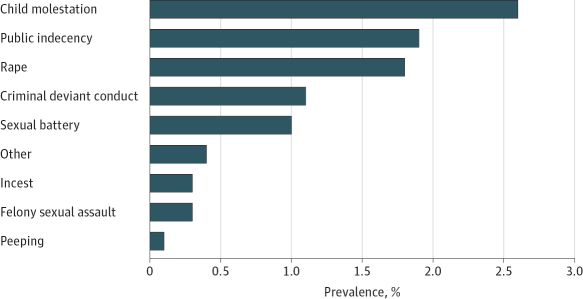
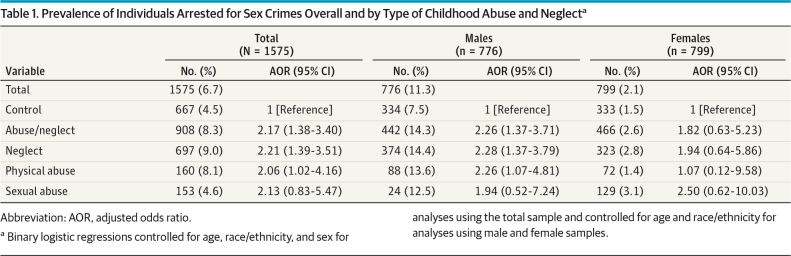
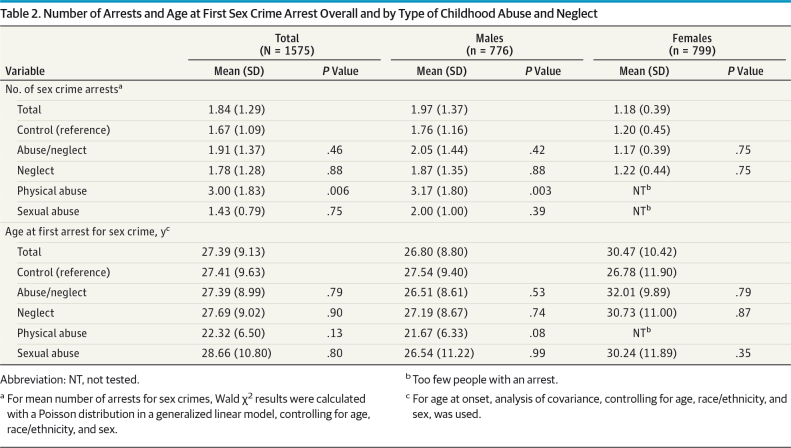
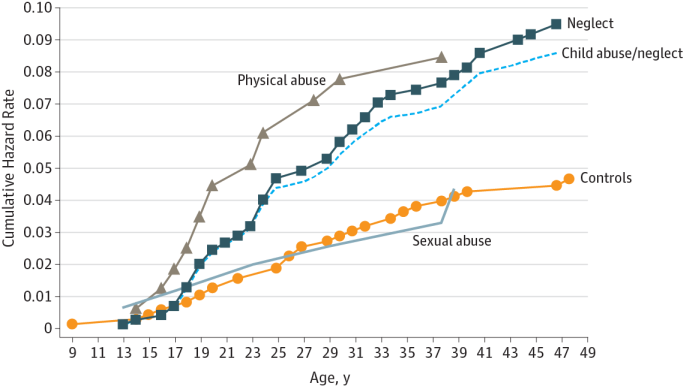
This study represents a long-term and comprehensive assessment of the extent to which sexually abused children become sex offenders and compares them to physically abused and neglected and nonmaltreated children. These findings show that physically abused and neglected children are at increased risk for being arrested for sex crimes and should receive effective interventions to avert these negative consequences. These results do not provide support for the common belief that being a survivor of childhood sexual abuse carries with it a unique increase in the risk for becoming a sex offender, contrary to some public policies and administrative practices of some jurisdictions where children may be stigmatized, placed in restrictive settings, or barred from schools. Perhaps it is time for a Government Accountability Office report or Institute of Medicine panel study to reevaluate public policies and treatment efforts that have been implemented based on common assumptions.
Conclusions:
This study represents a long-term and comprehensive assessment of the extent to which sexually abused children become sex offenders and compares them to physically abused and neglected and nonmaltreated children. These findings show that physically abused and neglected children are at increased risk for being arrested for sex crimes and should receive effective interventions to avert these negative consequences. These results do not provide support for the common belief that being a survivor of childhood sexual abuse carries with it a unique increase in the risk for becoming a sex offender, contrary to some public policies and administrative practices of some jurisdictions where children may be stigmatized, placed in restrictive settings, or barred from schools. Perhaps it is time for a Government Accountability Office report or Institute of Medicine panel study to reevaluate public policies and treatment efforts that have been implemented based on common assumptions.

;
Understanding and Challenging Stigmatization of People With Pedophilia;
Fakultät Mathematik und Naturwissenschaften der Technischen Universität Dresden;
208 pp.,
Feb 06 2015
In summary, this thesis shows that stigma against pedophilia is a serious and widespread problem, and offers concrete propositions to promote a more realistic and empathetic view of this group. By approaching the emotionally charged concept of pedophilia from a stigma perspective, the research presented in this thesis challenges the way in which not only people from the general public, but also scientists and health care professionals think about pedophilia, and corroborates the importance of stigma reduction within the wider context of child sexual abuse prevention.
In summary, this thesis shows that stigma against pedophilia is a serious and widespread problem, and offers concrete propositions to promote a more realistic and empathetic view of this group. By approaching the emotionally charged concept of pedophilia from a stigma perspective, the research presented in this thesis challenges the way in which not only people from the general public, but also scientists and health care professionals think about pedophilia, and corroborates the importance of stigma reduction within the wider context of child sexual abuse prevention.
;
How Children Learn About Sex: A Cross-Species and Cross- Cultural Analysis;
Arch Sex Behav (2015) 44:1059–1069,
Feb 18 2015
Scattered and not widely disseminated evidence from primatology, anthropology, and history of childhood sexuality support the hypothesis that throughout much of human behavioral evolution that human children have learned about sex through observing parental sexuality and then imitating it in sexual rehearsal play with peers. Contemporary theories of psychosexual development have not considered the possibility that young children are predisposed to learn about sex through observational learning and sexual rehearsal play during early childhood, a primate-wide trait that is conserved in humans but suppressed in contemporary contexts.
Scattered and not widely disseminated evidence from primatology, anthropology, and history of childhood sexuality support the hypothesis that throughout much of human behavioral evolution that human children have learned about sex through observing parental sexuality and then imitating it in sexual rehearsal play with peers. Contemporary theories of psychosexual development have not considered the possibility that young children are predisposed to learn about sex through observational learning and sexual rehearsal play during early childhood, a primate-wide trait that is conserved in humans but suppressed in contemporary contexts.
;
Minor Physical Anomalies as a Window into the Prenatal Origins of Pedophilia;
Archives of Sexual Behavior;
2015(564), ,
Jun 10 2015
Evidence is steadily accumulating to support a neurodevelopmental basis for pedophilia. This includes increased incidence of non-right-handedness, which is a result primarily of prenatal neural development and solidified very early in life. Minor physical anomalies (MPAs; superficial deviations from typical morphological development, such as un-detached earlobes) also develop only prenatally, suggesting them as another potential marker of atypical physiological development during the prenatal period among pedophiles.
This study administered the Waldrop Physical Anomaly Scale to assess the prevalence of MPAs in a clinical sample of men referred for assessment following a sexual assault, or another illegal or clinically significant sexual behavior.
Significant associations emerged between MPA indices and indicators of pedophilia, including penile responses to depictions of children, number of child victims, and possession of child pornography. Moreover, greater sexual attraction to children was associated with an elevated craniofacial-to-peripheral anomalies ratio. The overall sample demonstrated a greater number of MPAs relative to prior samples of individuals with schizophrenia as well as to healthy controls.
Evidence is steadily accumulating to support a neurodevelopmental basis for pedophilia. This includes increased incidence of non-right-handedness, which is a result primarily of prenatal neural development and solidified very early in life. Minor physical anomalies (MPAs; superficial deviations from typical morphological development, such as un-detached earlobes) also develop only prenatally, suggesting them as another potential marker of atypical physiological development during the prenatal period among pedophiles.
This study administered the Waldrop Physical Anomaly Scale to assess the prevalence of MPAs in a clinical sample of men referred for assessment following a sexual assault, or another illegal or clinically significant sexual behavior.
Significant associations emerged between MPA indices and indicators of pedophilia, including penile responses to depictions of children, number of child victims, and possession of child pornography. Moreover, greater sexual attraction to children was associated with an elevated craniofacial-to-peripheral anomalies ratio. The overall sample demonstrated a greater number of MPAs relative to prior samples of individuals with schizophrenia as well as to healthy controls.
;
Being Sexually Attracted to Minors;
Journal of Sex & Marital Therapy; ;
1-21(22 June 2015), ,
Jun 22 2015
This article aims to provide more insight into pedophilic attraction and risk and protective factors for offending in non-clinical pedophiles.
Fifteen participants were interviewed about sexuality, coping, and sexual self-regulation. Many participants struggled with acknowledging pedophilic interest in early puberty and experienced psychological difficulties as a result. Furthermore, many committed sex offenses during adolescence when they were still discovering their feelings.
Early recognition of risk factors and early start of interventions seem vital in preventing offending. Moreover, results suggest that risk for offending can be diminished by creating more openness about pedophilia and by providing pedophiles with social support and control.
This article aims to provide more insight into pedophilic attraction and risk and protective factors for offending in non-clinical pedophiles.
Fifteen participants were interviewed about sexuality, coping, and sexual self-regulation. Many participants struggled with acknowledging pedophilic interest in early puberty and experienced psychological difficulties as a result. Furthermore, many committed sex offenses during adolescence when they were still discovering their feelings.
Early recognition of risk factors and early start of interventions seem vital in preventing offending. Moreover, results suggest that risk for offending can be diminished by creating more openness about pedophilia and by providing pedophiles with social support and control.
;
A Comment on Seto's "Is Pedophilia a Sexual Orientation?",
Jun 29 2015
Seto's proposal to view pedophilia as 'being attracted to ..', thus as a feeling -- as an orientation similar to heterosexuality, bisexuality, and homosexuality -- may be a first step towards humanizing those of our fellow human beings who have such feelings.
However ...
Thus ...
Moreover ...
Seto's proposal to view pedophilia as 'being attracted to ..', thus as a feeling -- as an orientation similar to heterosexuality, bisexuality, and homosexuality -- may be a first step towards humanizing those of our fellow human beings who have such feelings.
However ...
Thus ...
Moreover ...
;
„Ich fühle mich nicht diskrimineert, ich werde diskrimineert" - Social Stigmatization of Paedophiles in Germany;
MSC Medical Antropology and Sociology,
Jun 29 2015
The focus in this thesis lies on the personal perception of self-identifying paedophiles concerning the stigmatization of their sexual preferences. In the literature there is a lack of emic perspectives regarding the stigma of paedophilia. Thus this study aims to contribute to the filling of this gap. The research is limited to a German context.
[...]
The findings of the research suggest that paedophiles do perceive a stigmatizing environment in Germany. The best solution to fight the growing stigmatization appears to be educating the German society about paedophilia.
The focus in this thesis lies on the personal perception of self-identifying paedophiles concerning the stigmatization of their sexual preferences. In the literature there is a lack of emic perspectives regarding the stigma of paedophilia. Thus this study aims to contribute to the filling of this gap. The research is limited to a German context.
[...]
The findings of the research suggest that paedophiles do perceive a stigmatizing environment in Germany. The best solution to fight the growing stigmatization appears to be educating the German society about paedophilia.
;
Kirk Douglas was "Raped" by His Teacher;
Ipce,
Jul 06 2015
Kirk Douglas fondly recalls an affair with his teacher: "I had been a ragamuffin kid of 15 coping with a neighborhood filled with gangs. Under my teacher's guidance, I became a different person. I'm eternally grateful. By today's standards, she would have gone to jail. I had no idea we were doing something wrong. Did she?"
Kirk Douglas fondly recalls an affair with his teacher: "I had been a ragamuffin kid of 15 coping with a neighborhood filled with gangs. Under my teacher's guidance, I became a different person. I'm eternally grateful. By today's standards, she would have gone to jail. I had no idea we were doing something wrong. Did she?"
;
Non-offending Pedophiles;
Current Sexual Health Reports;
8(3, september 2016; on line May 2016), 121-128
Non-offending pedophiles are a unique population of individuals who experience sexual interest in children, but despite common misperceptions, have neither had sexual contact with a child nor have accessed illegal child sexual exploitation material.
An emerging body of research has examined the prevalence of pedophilic interests, characteristics of non-offending pedophiles, correlates of pedophilic interests, and stigma associated with pedophilia.
Treatment programs are beginning to produce findings regarding the effectiveness of treatment in supporting non-offending pedophiles to remain
offense-free.
The current review spans these areas of research and discusses potential treatment options for working with non-offending pedophiles based on that research base.
Non-offending pedophiles are a unique population of individuals who experience sexual interest in children, but despite common misperceptions, have neither had sexual contact with a child nor have accessed illegal child sexual exploitation material.
An emerging body of research has examined the prevalence of pedophilic interests, characteristics of non-offending pedophiles, correlates of pedophilic interests, and stigma associated with pedophilia.
Treatment programs are beginning to produce findings regarding the effectiveness of treatment in supporting non-offending pedophiles to remain
offense-free.
The current review spans these areas of research and discusses potential treatment options for working with non-offending pedophiles based on that research base.