Library 4

;
Preventing Sexual Abuse: Perspectives of Minor- Attracted Persons About Seeking Help;
Sexual Abuse
The primary aim of this exploratory research was to gain information from minor-attracted persons (MAPs) about their
(a) formal and informal experiences with help-seeking for minor attraction,
(b) perceived barriers to seeking help for concerns about minor attraction, and
(c) treatment priorities as identified by consumers of these services.
A nonrandom, purposive sample of MAPs (n = 293, 154 completed all questions) was recruited via an online survey.
Results show that 75% of participants did seek formal help from a professional; however, just less than half of them found the experience to be helpful. Characteristics of helpful therapeutic encounters included nonjudgmental attitudes, knowledge about minor attraction, and viewing clients in a person-centered and holistic way. Barriers to help seeking included uncertainty about confidentiality, fear of negative reaction or judgment, difficulties finding a therapist knowledgeable about MAPs, and financial constraints. Understanding or reducing attraction to minors were common treatment goals, but participants also prioritized addressing general mental health and well-being related to depression, anxiety, loneliness, and low self-esteem.
Implications for effective and ethical counseling and preventive interventions for MAPs are discussed.
The primary aim of this exploratory research was to gain information from minor-attracted persons (MAPs) about their
(a) formal and informal experiences with help-seeking for minor attraction,
(b) perceived barriers to seeking help for concerns about minor attraction, and
(c) treatment priorities as identified by consumers of these services.
A nonrandom, purposive sample of MAPs (n = 293, 154 completed all questions) was recruited via an online survey.
Results show that 75% of participants did seek formal help from a professional; however, just less than half of them found the experience to be helpful. Characteristics of helpful therapeutic encounters included nonjudgmental attitudes, knowledge about minor attraction, and viewing clients in a person-centered and holistic way. Barriers to help seeking included uncertainty about confidentiality, fear of negative reaction or judgment, difficulties finding a therapist knowledgeable about MAPs, and financial constraints. Understanding or reducing attraction to minors were common treatment goals, but participants also prioritized addressing general mental health and well-being related to depression, anxiety, loneliness, and low self-esteem.
Implications for effective and ethical counseling and preventive interventions for MAPs are discussed.

;
References at Childhood ‘Innocence’ is Not Ideal: Virtue Ethics and Child–Adult Sex, Tom O'Carroll;
Sexuality & Culture
References at "Childhood ‘Innocence’ is Not Ideal: Virtue Ethics and Child–Adult Sex" by Tom O'Carroll.
References at "Childhood ‘Innocence’ is Not Ideal: Virtue Ethics and Child–Adult Sex" by Tom O'Carroll.
;
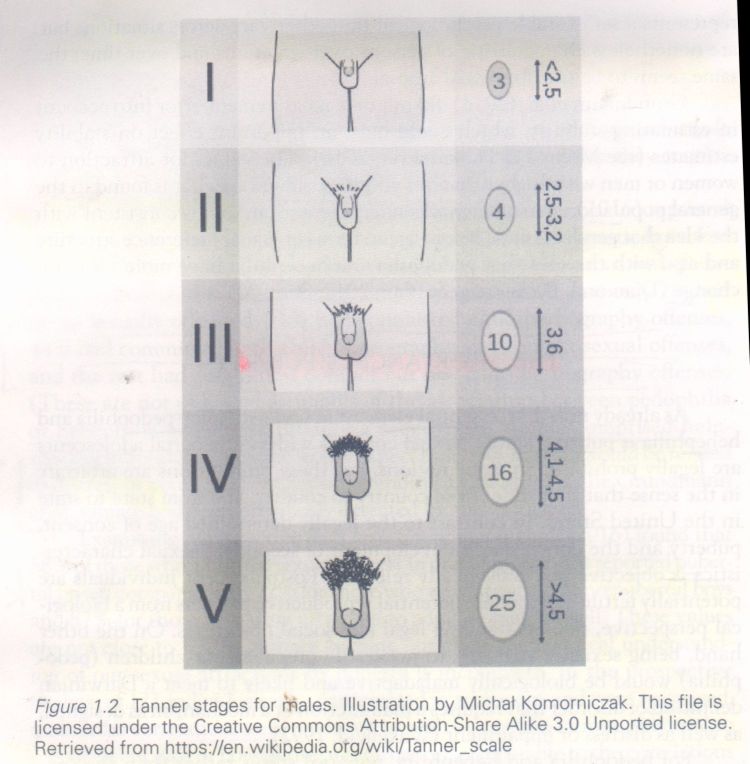
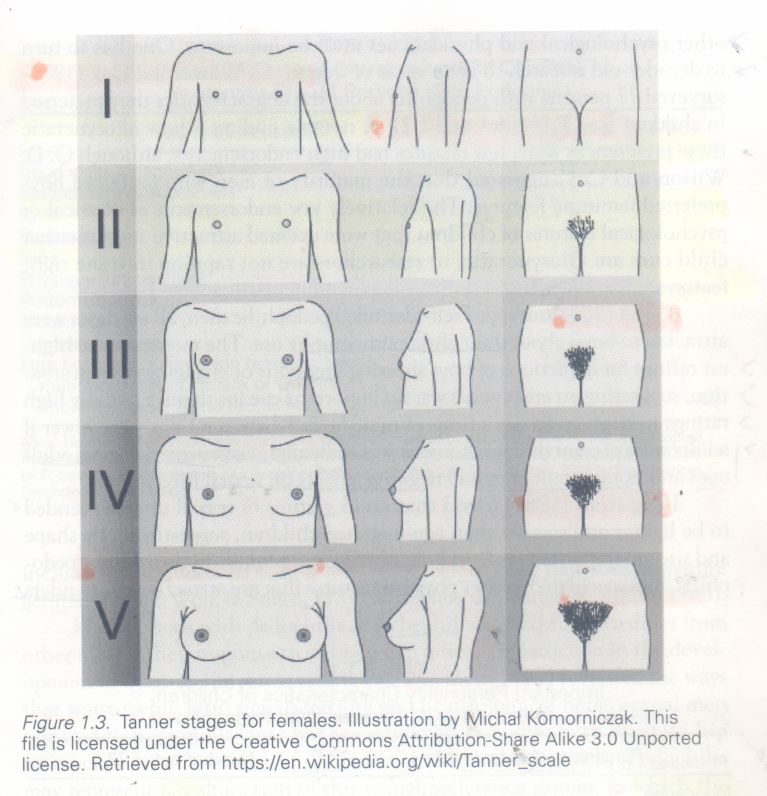
The Tanner Stages and more from Seto 2018
Figures 1.2, 1.3, 2.2., a link in chapter 2 and table 8.2
in Seto's book.
Figures 1.2, 1.3, 2.2., a link in chapter 2 and table 8.2
in Seto's book.

;
The Witch-Burning of Abgail Simon
On Nov. 26, [2014 ?] in Grand Rapids, MI, Abigail (a former tutor at a Catholic high school) was convicted at trial of three counts of
- "first-degree criminal sexual conduct," a felony with a maximum sentence of 25-years to life in prison and a mandatory minimum of 8-25 years,
- for allegedly having sex with a student who she claimed was not only the aggressor in their sexual intrigue but also forced himself on her 3 times; and
- also the felony of "accosting a minor for immoral purposes" for exchanging hundreds of emails and text-messages with her "victim," a 6'3", 220 lb. biological man of 15 and football star who initially confessed to the authorities and also testified under oath at a pretrial hearing that Abigail's version of what occurred was true but later recanted and claimed not only that he didn't force himself on her but also that she was the initiator of their liaison and controlled the action and relationship. [...]
On Jan. 14, 2015, the judge was "merciful," imposing the mandatory-minimum sentence of "only" 8-25 years in prison. [...]
He didn't have the discretion to impose a sane and "just" and condign and rational sentence. [...]
Even if he had such discretion, however, he probably would have sentenced her to 4-6 years in prison if not longer rather than "only" 6-12 months in jail or 1-2 years in prison, knowing the hysteria and outrage such "leniency" would incite not only in Grand Rapids and Michigan but nationwide [...].
On Nov. 26, [2014 ?] in Grand Rapids, MI, Abigail (a former tutor at a Catholic high school) was convicted at trial of three counts of
- "first-degree criminal sexual conduct," a felony with a maximum sentence of 25-years to life in prison and a mandatory minimum of 8-25 years,
- for allegedly having sex with a student who she claimed was not only the aggressor in their sexual intrigue but also forced himself on her 3 times; and
- also the felony of "accosting a minor for immoral purposes" for exchanging hundreds of emails and text-messages with her "victim," a 6'3", 220 lb. biological man of 15 and football star who initially confessed to the authorities and also testified under oath at a pretrial hearing that Abigail's version of what occurred was true but later recanted and claimed not only that he didn't force himself on her but also that she was the initiator of their liaison and controlled the action and relationship. [...]
On Jan. 14, 2015, the judge was "merciful," imposing the mandatory-minimum sentence of "only" 8-25 years in prison. [...]
He didn't have the discretion to impose a sane and "just" and condign and rational sentence. [...]
Even if he had such discretion, however, he probably would have sentenced her to 4-6 years in prison if not longer rather than "only" 6-12 months in jail or 1-2 years in prison, knowing the hysteria and outrage such "leniency" would incite not only in Grand Rapids and Michigan but nationwide [...].
;
What is doxxing (with examples) and how do you avoid it,
Mar 05 2018
Doxxing (also written as “doxing”) is an online threat to your privacy. Although this fad has been around in the hacker community since the 1990s, it is now become a major threat to anyone who uses the internet.
Doxxing involves researching the details of people’s lives. The purpose of this practice is either to expose that person to legal prosecution, to embarrass the victim, to draw criticism towards that person, or to cause them physical harm.
People’s lives have been ruined by doxxing. Some doxxing attacks lead to a mass campaign of public shaming, the online equivalent of mobbing. The effects can cause people to lose their jobs, their families, and even their homes. Targets of major doxxing attacks have been forced into hiding and have had to delete all of their online accounts and change their identities.
So, let’s find out more about doxxing and how to avoid it.
Doxxing (also written as “doxing”) is an online threat to your privacy. Although this fad has been around in the hacker community since the 1990s, it is now become a major threat to anyone who uses the internet.
Doxxing involves researching the details of people’s lives. The purpose of this practice is either to expose that person to legal prosecution, to embarrass the victim, to draw criticism towards that person, or to cause them physical harm.
People’s lives have been ruined by doxxing. Some doxxing attacks lead to a mass campaign of public shaming, the online equivalent of mobbing. The effects can cause people to lose their jobs, their families, and even their homes. Targets of major doxxing attacks have been forced into hiding and have had to delete all of their online accounts and change their identities.
So, let’s find out more about doxxing and how to avoid it.
;
The Commercial Exploitation of Abuse - A Study on Policy;
Essays on Law, Policy and Psychiatry;
8,
‘The Commercial Exploitation of Abuse: A Study on Policy (Essays on Law, Policy and Psychiatry, Vol. 8)’ is an essay about what the author calls the ‘abuse-centered culture,’ which is obviously a culture that puts people behind bars for love, when only focusing on certain ways how bodies are touched, fondled or otherwise erotically stimulated, when those bodies belong to a group of people legally defined as ‘children.’
Intro to a book in a pdf edition and a printed edition.
‘The Commercial Exploitation of Abuse: A Study on Policy (Essays on Law, Policy and Psychiatry, Vol. 8)’ is an essay about what the author calls the ‘abuse-centered culture,’ which is obviously a culture that puts people behind bars for love, when only focusing on certain ways how bodies are touched, fondled or otherwise erotically stimulated, when those bodies belong to a group of people legally defined as ‘children.’
Intro to a book in a pdf edition and a printed edition.
;
How to Persecute a Pedophile
Imagine, you work in the Ukrainian Police. A pervert Kyrýlo Yevhénovych Halaburdá lives in your city Dnipró. Once in 2012 or earlier you noticed his profile in a social network where he called himself a pedophile and even posted his messages towards one 13-years-old girl. You hope this character is fake or fictional. ...
In 2014 you got to know that Kyrylo Halaburda had petitioned to parliament for adult-child sex legalization. The petition was numbered as 09-0756.04.14/01-08.14 and sent to government. That's why the Deputy Minister of Justice of Ukraine Ruslán Riaboshápka directed your office to investigate who Kyrylo was. ...
You're a policeman, and know it for sure. The pedophile must be persecuted in illegal way, and you know how to make it safe for you. ...
You're a policeman, you can outrage and threaten a pedophile without any risk. ...
A pedophile is not a demon, he's just a human being, he depends upon people, which are his enemies. Pedophile's friends cannot help, and enemies can do with him whatever they want. There is no lie, no betrayal, no menace, no violence, no imprisonment, no rape, no mutilation, no murder, no torture that cannot be justified as child protection.
Imagine, you work in the Ukrainian Police. A pervert Kyrýlo Yevhénovych Halaburdá lives in your city Dnipró. Once in 2012 or earlier you noticed his profile in a social network where he called himself a pedophile and even posted his messages towards one 13-years-old girl. You hope this character is fake or fictional. ...
In 2014 you got to know that Kyrylo Halaburda had petitioned to parliament for adult-child sex legalization. The petition was numbered as 09-0756.04.14/01-08.14 and sent to government. That's why the Deputy Minister of Justice of Ukraine Ruslán Riaboshápka directed your office to investigate who Kyrylo was. ...
You're a policeman, and know it for sure. The pedophile must be persecuted in illegal way, and you know how to make it safe for you. ...
You're a policeman, you can outrage and threaten a pedophile without any risk. ...
A pedophile is not a demon, he's just a human being, he depends upon people, which are his enemies. Pedophile's friends cannot help, and enemies can do with him whatever they want. There is no lie, no betrayal, no menace, no violence, no imprisonment, no rape, no mutilation, no murder, no torture that cannot be justified as child protection.
;
Politically, we are failing to save ourselves;
Posted on Heretic TOC Forum
I was acquainted with the UK branch of Stop it Now! (SIN) on and off from 2007 to 2015. SIN began in the US ... SIN has spread its influence across the world to other countries including the UK and the Netherlands ...
The UK branch denies that minor attracted people exist. According to them, nobody is a paedophile. It is a “media stereotype”. They find the very idea that any adult person could be sexually attracted to a child preposterous in spite of many people telling them that this is the case. They believe a child has nothing to offer an adult. ...
SIN UK is part of a wider movement that wants to see the complex questions about nature and the universe reduced to a few simple axioms ...
SIN believe that sex offending is a “learned behaviour” that can be “unlearned”. ...
the “therapist” systematically torments the client for admitting that they have these feelings. ... As they do not believe minor attraction exists, they cannot accept either that people can have paedophilic feelings but not act on them. ...
I think that SIN NL is a good deal better than this.
I was acquainted with the UK branch of Stop it Now! (SIN) on and off from 2007 to 2015. SIN began in the US ... SIN has spread its influence across the world to other countries including the UK and the Netherlands ...
The UK branch denies that minor attracted people exist. According to them, nobody is a paedophile. It is a “media stereotype”. They find the very idea that any adult person could be sexually attracted to a child preposterous in spite of many people telling them that this is the case. They believe a child has nothing to offer an adult. ...
SIN UK is part of a wider movement that wants to see the complex questions about nature and the universe reduced to a few simple axioms ...
SIN believe that sex offending is a “learned behaviour” that can be “unlearned”. ...
the “therapist” systematically torments the client for admitting that they have these feelings. ... As they do not believe minor attraction exists, they cannot accept either that people can have paedophilic feelings but not act on them. ...
I think that SIN NL is a good deal better than this.
;
The Roots of Violence;
Essays on Law, Policy and Psychiatry, Vol. 10;
10,
‘The Roots of Violence: Why Humans Are Not By Nature Violent’ (Essays on Law, Policy and Psychiatry, Vol. 10, 2018) is an analytical and policy study that presents abundant evidence that human beings are not by nature violent and that violence therefore is a conditioned response. The scientific disciplines examined are anthropology, biology, neurology, pedagogy, psychoanalysis, and sociology.
The book shows the historical development of the roots of violence as they sprang forth from the patriarchal murder cultures that were putting an end to the peaceful matriarchal empires such as the Minoan Civilization in Crete.
[...]
Based on the research being on the table, the author draws policy conclusions for the prevention of violence both in the social and the educational domain.
‘The Roots of Violence: Why Humans Are Not By Nature Violent’ (Essays on Law, Policy and Psychiatry, Vol. 10, 2018) is an analytical and policy study that presents abundant evidence that human beings are not by nature violent and that violence therefore is a conditioned response. The scientific disciplines examined are anthropology, biology, neurology, pedagogy, psychoanalysis, and sociology.
The book shows the historical development of the roots of violence as they sprang forth from the patriarchal murder cultures that were putting an end to the peaceful matriarchal empires such as the Minoan Civilization in Crete.
[...]
Based on the research being on the table, the author draws policy conclusions for the prevention of violence both in the social and the educational domain.
;
Offener Brief an Michael Seto, ...,
Jul 20 2019
Dieser offene Brief wurde am 20.7.2019 per Brief und Email an die fünf Personen/Organisationen geschickt und wird zusätzlich zur Information per Email an zum Thema "Pädophilie" publizierende Sexualwissenschaftler gesendet.
Sie verbreiten seit vielen Jahren systematisch falsche Angaben über das Alter beim Beginn der Pubertät. Wie nachfolgend belegt beginnt die Pubertät der Mädchen mehrere Jahre vor den von Ihnen verbreiteten Altersangaben. Ihre falschen Altersangaben führen dazu, dass Menschen eine "Pädophilie"-Diagnose erhalten, obwohl diese Menschen nach Ihrer eigenen sich ausdrücklich auf das Begehren von Vorpubertierenden beziehenden "Pädophilie"-Definition nicht "pädophil" sind.
Dieser offene Brief wurde am 20.7.2019 per Brief und Email an die fünf Personen/Organisationen geschickt und wird zusätzlich zur Information per Email an zum Thema "Pädophilie" publizierende Sexualwissenschaftler gesendet.
Sie verbreiten seit vielen Jahren systematisch falsche Angaben über das Alter beim Beginn der Pubertät. Wie nachfolgend belegt beginnt die Pubertät der Mädchen mehrere Jahre vor den von Ihnen verbreiteten Altersangaben. Ihre falschen Altersangaben führen dazu, dass Menschen eine "Pädophilie"-Diagnose erhalten, obwohl diese Menschen nach Ihrer eigenen sich ausdrücklich auf das Begehren von Vorpubertierenden beziehenden "Pädophilie"-Definition nicht "pädophil" sind.
;
Open letter to Michael Seto,...,
Jul 20 2019
This open letter was sent by letter and e-mail to the five persons / organizations on July 20th 2019 and will be sent in addition to the information by e-mail to sexologists publishing about "pedophilia".
For many years, you have systematically spread false information about the age at the onset of puberty. As evidenced below, the puberty of girls begins several years before the age information that you give. Your false age ratings cause people to receive a "pedophilia" diagnosis, even though these people are not "pedophilic" according to your own "pedophilia" definition of the desire of pre-pubertals.
This open letter was sent by letter and e-mail to the five persons / organizations on July 20th 2019 and will be sent in addition to the information by e-mail to sexologists publishing about "pedophilia".
For many years, you have systematically spread false information about the age at the onset of puberty. As evidenced below, the puberty of girls begins several years before the age information that you give. Your false age ratings cause people to receive a "pedophilia" diagnosis, even though these people are not "pedophilic" according to your own "pedophilia" definition of the desire of pre-pubertals.
;
Finding The Right Rehab – A Buyer’s Guide
Do you or a loved one need addiction treatment for alcohol or drugs? Thousands blindly walk into addiction treatment in expensive rehab centres and find that the reality doesn't meet expectations. ...
If you're considering rehab treatment, first check our ultimate guide for complete instructions on how to find the right rehab centre for you. ...
A rehab stay normally follows the sequence Detox > Rehab > Aftercare.
Do you or a loved one need addiction treatment for alcohol or drugs? Thousands blindly walk into addiction treatment in expensive rehab centres and find that the reality doesn't meet expectations. ...
If you're considering rehab treatment, first check our ultimate guide for complete instructions on how to find the right rehab centre for you. ...
A rehab stay normally follows the sequence Detox > Rehab > Aftercare.
;
The Legal Split in Child Protection - Overcoming the Double Standard;
Essays on Law, Policy and Psychiatry;
9,
The Legal Split in Child Protection: Overcoming the Double Standard (Essays on Law, Policy and Psychiatry, Vol. 9) - 2019 Apple Books Edition - is a study that attempts to redefine child protection, and goes as far as formulating a new paradigm of child protection that is healed of the legal split that pervades it until now. The study explains that the laws for protecting the child against abuse are following a fundamental split in social mores and statutory regulation of physical violence against children, on one hand, and sexual relationships with children, on the other.
Links to the book in PDF Format and the paperback edition are given.
The Legal Split in Child Protection: Overcoming the Double Standard (Essays on Law, Policy and Psychiatry, Vol. 9) - 2019 Apple Books Edition - is a study that attempts to redefine child protection, and goes as far as formulating a new paradigm of child protection that is healed of the legal split that pervades it until now. The study explains that the laws for protecting the child against abuse are following a fundamental split in social mores and statutory regulation of physical violence against children, on one hand, and sexual relationships with children, on the other.
Links to the book in PDF Format and the paperback edition are given.
;
Minotaur Unveiled: The Truncated Account of Adult-Child Erotic Attraction;
Essays on Law, Policy and Psychiatry;
5,
Minotaur Unveiled: The Truncated Account of Adult-Child Erotic Attraction (Essays on Law, Policy and Psychiatry, Vol. 5) — 2019 Apple Books Edition — is a historical assessment of adult-child sexual relations as they are to be found not only in historical and forensic literature, but also in the poetic writings of many famous authors around the world. [...]
The study establishes a basis for the view that adult-child sexual interaction is a universal phenomenon that passes over cultural and epochal borders. [...]
Sadly, many of those adult-child sexual relations were and are the result of social and moral corruption and have to be called abusive and exploitative.
The article gives links to the PDF edition and the paperback edition of the book.
Minotaur Unveiled: The Truncated Account of Adult-Child Erotic Attraction (Essays on Law, Policy and Psychiatry, Vol. 5) — 2019 Apple Books Edition — is a historical assessment of adult-child sexual relations as they are to be found not only in historical and forensic literature, but also in the poetic writings of many famous authors around the world. [...]
The study establishes a basis for the view that adult-child sexual interaction is a universal phenomenon that passes over cultural and epochal borders. [...]
Sadly, many of those adult-child sexual relations were and are the result of social and moral corruption and have to be called abusive and exploitative.
The article gives links to the PDF edition and the paperback edition of the book.
;
Pedophilia Revisited;
Essays on Law, Policy and Psychiatry;
7,
Pedophilia Revisited: The Making of a Crime for Justifying Lacking Social Policy (Essays on Law, Policy and Psychiatry, Vol. 7) — 2019 Apple Books Edition — is an extended study on the controversial subject of pedophilia, the sexual love of adults for children — humans who by legal definition are to be considered a ‘child’ for the purposes of criminal law.
This form of love, also called ‘child-love’ by those who feel sexually attracted to children, can be exclusive or non-exclusive, but the author’s research clearly points to the fact that pedophile attraction is not inborn, just as homosexual attraction is not inborn, but a conditioned response.
The article gives links to the PDF edition and the paperback edition of the book.
Pedophilia Revisited: The Making of a Crime for Justifying Lacking Social Policy (Essays on Law, Policy and Psychiatry, Vol. 7) — 2019 Apple Books Edition — is an extended study on the controversial subject of pedophilia, the sexual love of adults for children — humans who by legal definition are to be considered a ‘child’ for the purposes of criminal law.
This form of love, also called ‘child-love’ by those who feel sexually attracted to children, can be exclusive or non-exclusive, but the author’s research clearly points to the fact that pedophile attraction is not inborn, just as homosexual attraction is not inborn, but a conditioned response.
The article gives links to the PDF edition and the paperback edition of the book.
;
Putin Saves From Pedophiles
In Russia robbers and even murderers gain journalists', people's and judges' sympathy when call their victims pedophiles. [...]
There are lots of cases when minors are used to date "pedophiles" through the Internet for the sake of pillage. [...]
[The case of] Vladimir Zaitsev, the man killed by Sankin [...]
The Russian government has always been hostile towards Western liberalism, and struggle against human rights is justified now as saving children from homosexuality. The propagandist campaign around Vladimir Sankin case can be explained as distracting people's attention from the new despotic Russian constitution.
In Russia robbers and even murderers gain journalists', people's and judges' sympathy when call their victims pedophiles. [...]
There are lots of cases when minors are used to date "pedophiles" through the Internet for the sake of pillage. [...]
[The case of] Vladimir Zaitsev, the man killed by Sankin [...]
The Russian government has always been hostile towards Western liberalism, and struggle against human rights is justified now as saving children from homosexuality. The propagandist campaign around Vladimir Sankin case can be explained as distracting people's attention from the new despotic Russian constitution.
;
Sexual Interest in Children Among Women in Two Nonclinical and Nonrepresentative Online Samples;
Sex Med;
2020(1), 1-14
Regarding women, little research is available about the prevalence of sexual interest in children (SIC), especially in nonclinical samples.
The present study aimed to investigate the extent to which adult women from 2 nonclinical and non-representative samples indicate sexual interest in prepubescent and/or pubescent children.
Participants took part in an online survey either via general websites or via websites directed toward individuals with a SIC.
The samples included are non-representative and therefore not generalizable to the female population.
Nevertheless, they strongly suggest that SIC is a phenomenon also found in women. We therefore recommend professionals in the field of sexual medicine to increase their attention and engagement for women with SIC. Based on the present results, the development of preventive treatment services specifically tailored to women with a SIC has to be strongly encouraged in the near future.
Regarding women, little research is available about the prevalence of sexual interest in children (SIC), especially in nonclinical samples.
The present study aimed to investigate the extent to which adult women from 2 nonclinical and non-representative samples indicate sexual interest in prepubescent and/or pubescent children.
Participants took part in an online survey either via general websites or via websites directed toward individuals with a SIC.
The samples included are non-representative and therefore not generalizable to the female population.
Nevertheless, they strongly suggest that SIC is a phenomenon also found in women. We therefore recommend professionals in the field of sexual medicine to increase their attention and engagement for women with SIC. Based on the present results, the development of preventive treatment services specifically tailored to women with a SIC has to be strongly encouraged in the near future.
;
Neurologgical Damage from Child Sexual Abuse,
Mar 16 2020
The medicine of the 19th century proved that masturbation had a deleterious effect on the child's brain development. ...
Modern medicine proves the same is caused by sex, not by onanism. The victims “of” childhood sexual “abuse” (CSA) are said to have electro-encephalographic (EEG) abnormalities in their brains ...
However, later research has disproved some of these findings. ...
I can offer a better explanation: all existing studies of CSA-related neurological damage have been externally and internally invalid. ...
Can they be called traumatized then? ...
What happens when children are “protected” from sexual “abuse”? ...
The medicine of the 19th century proved that masturbation had a deleterious effect on the child's brain development. ...
Modern medicine proves the same is caused by sex, not by onanism. The victims “of” childhood sexual “abuse” (CSA) are said to have electro-encephalographic (EEG) abnormalities in their brains ...
However, later research has disproved some of these findings. ...
I can offer a better explanation: all existing studies of CSA-related neurological damage have been externally and internally invalid. ...
Can they be called traumatized then? ...
What happens when children are “protected” from sexual “abuse”? ...
;
The Pedophile's Guide into Developmental Traumatology,
Mar 16 2020
Filmmakers like Ramsey and Scorsese urge war veterans to brain “pedophiles” and save children from PTSD (post-traumatic stress disorder) ....
Symptoms of PTSD in chronically traumatized children are usually not prominent ...
Hence, the Vietnam syndrome and “childhood sexual trauma” are totally different kinds of PTSD that cannot be compared! ...
What symptoms can be invented for the invisible forms of PTSD? ...
While some scientists tell us the rest of the “victims” of CSA have less cortisol in their urine ... another scientists tell us they have more cortisol in their plasma ...
Normal and even lower cortisol levels?! ...
When put together, all these scientific data make absolutely no sense. ...
Thus, scientists cannot agree upon whether the “victims” of CSA have elevated, normal or low levels of cortisol, and scientists cannot convince us that one “victim” can be both poisoned with and deprived of cortisol. ... ...
The idea that willing sex causes PTSD is far from being proved.
Filmmakers like Ramsey and Scorsese urge war veterans to brain “pedophiles” and save children from PTSD (post-traumatic stress disorder) ....
Symptoms of PTSD in chronically traumatized children are usually not prominent ...
Hence, the Vietnam syndrome and “childhood sexual trauma” are totally different kinds of PTSD that cannot be compared! ...
What symptoms can be invented for the invisible forms of PTSD? ...
While some scientists tell us the rest of the “victims” of CSA have less cortisol in their urine ... another scientists tell us they have more cortisol in their plasma ...
Normal and even lower cortisol levels?! ...
When put together, all these scientific data make absolutely no sense. ...
Thus, scientists cannot agree upon whether the “victims” of CSA have elevated, normal or low levels of cortisol, and scientists cannot convince us that one “victim” can be both poisoned with and deprived of cortisol. ... ...
The idea that willing sex causes PTSD is far from being proved.
;
Cognitive Distortion in Music,
Oct 01 2020
Having Doubts about the success of your release? It might be due to distortion
And not the kind that helped shape the sound of modern music.
No, you might be suffering from the kind of distortion that kills creativity instead of spark it.
I’m talking about cognitive distortion.
Cognitive distortion does not live in your music production software, but in your mind. [...]
Why do we suffer from cognitive distortion? [...]
8 Cognitive distortions that might be holding you back [...]
3 Steps to overcoming self-doubt [...]
Having Doubts about the success of your release? It might be due to distortion
And not the kind that helped shape the sound of modern music.
No, you might be suffering from the kind of distortion that kills creativity instead of spark it.
I’m talking about cognitive distortion.
Cognitive distortion does not live in your music production software, but in your mind. [...]
Why do we suffer from cognitive distortion? [...]
8 Cognitive distortions that might be holding you back [...]
3 Steps to overcoming self-doubt [...]
;
Dear Ipce ... Dear Samir ..
May I notice that I have placed a new Statement in Ipce's section "Statements"?
Ipce webmaster.
Dear Ipce: a letter to Ipce ... "I don't know what to do ..."
Dear Samir: Ipce's reply ... "Do not take the risk."
May I notice that I have placed a new Statement in Ipce's section "Statements"?
Ipce webmaster.
Dear Ipce: a letter to Ipce ... "I don't know what to do ..."
Dear Samir: Ipce's reply ... "Do not take the risk."
;
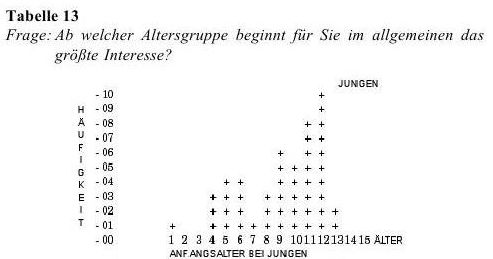
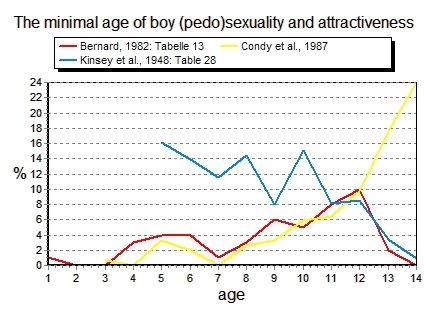
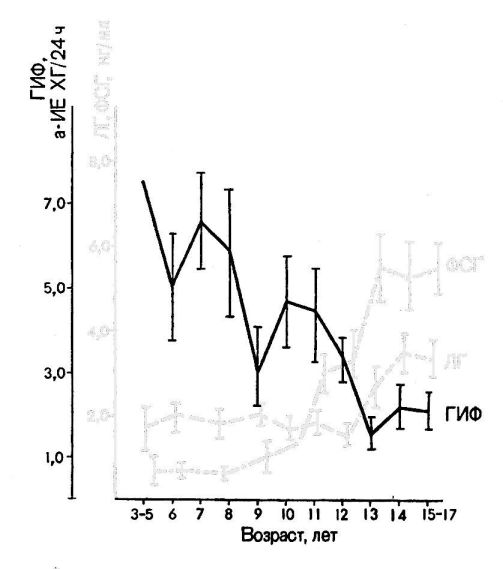
The endocrinology of latent phase in boys
"Our study gave us a cogent evidence that sexual development is active even before puberty, it totally rebuts those conceptions, still popular, of ‘neutral’ childhood,” Kolesov et al. claimed.
That's why latent phase in boy sexual development has a natural explanation, not a cultural one.
"Our study gave us a cogent evidence that sexual development is active even before puberty, it totally rebuts those conceptions, still popular, of ‘neutral’ childhood,” Kolesov et al. claimed.
That's why latent phase in boy sexual development has a natural explanation, not a cultural one.
;
Memory and Eye Movement Desensitization and Reprocessing Therapy ...;
Memory;
August 2021,
Does Eye Movement and Desensitization and Reprocessing (EMDR) therapy affect the accuracy of memories? This recurrent issue in recent memory research bears relevance to expert witness work in the courtroom. In this review, we will argue that several crucial aspects of EMDR may be detrimental to memory.
Does Eye Movement and Desensitization and Reprocessing (EMDR) therapy affect the accuracy of memories? This recurrent issue in recent memory research bears relevance to expert witness work in the courtroom. In this review, we will argue that several crucial aspects of EMDR may be detrimental to memory.
;
Quotes from: A Long Dark Shadow;
221 p.
My research participants were all minor-attracted people who refrained from any sexual contact with minors, all of whom were dedicated to living lives free of offending. This book is about them: how they form identities as minor-attracted idividuals, how they cope with the stigma they face from society. and how they strategize not to commit offenses.
I use the terms "minor attracted person" and "MAP" throughout the majority of this book ... as an established umbrella term ... with a less stigmatizing nature.
I am writing this book with two main foci - the prevention of child abuse and the promotion of wellbeing among MAPs - because protecting children is important, because MAPs are people who deserve compassion (bold is chosen by Ipce), and because these foci are not contradictairy.
It is possible that treating MAPs with empathy is the key (Bold is chosen by Ipce).
Chapter 1 is titled as "Am I a Monster?" The start of the closing word of the book reads: In each interview I asked participants what they would say to a MAP who was just beginning to realize they were attracted to minors. Far and away, the most common response was "You are not a monster."
It has been my goal with this book to make clear the distinction between MAPs and sexual offenders, and to reaffirm that attractions are not equivalent to action.
While the MAPs I spoke to in the course of my research often had experienced many struggles, many were able to find happiness, understanding, and the dignity they had been searching for. They found this dignity through the ability to be seen by others and to have their wellbeing recognized as important, through the knowledge that there were other people out there like them, and through validation that they were not destined to become monsters just because of their attractions.
My research participants were all minor-attracted people who refrained from any sexual contact with minors, all of whom were dedicated to living lives free of offending. This book is about them: how they form identities as minor-attracted idividuals, how they cope with the stigma they face from society. and how they strategize not to commit offenses.
I use the terms "minor attracted person" and "MAP" throughout the majority of this book ... as an established umbrella term ... with a less stigmatizing nature.
I am writing this book with two main foci - the prevention of child abuse and the promotion of wellbeing among MAPs - because protecting children is important, because MAPs are people who deserve compassion (bold is chosen by Ipce), and because these foci are not contradictairy.
It is possible that treating MAPs with empathy is the key (Bold is chosen by Ipce).
Chapter 1 is titled as "Am I a Monster?" The start of the closing word of the book reads: In each interview I asked participants what they would say to a MAP who was just beginning to realize they were attracted to minors. Far and away, the most common response was "You are not a monster."
It has been my goal with this book to make clear the distinction between MAPs and sexual offenders, and to reaffirm that attractions are not equivalent to action.
While the MAPs I spoke to in the course of my research often had experienced many struggles, many were able to find happiness, understanding, and the dignity they had been searching for. They found this dignity through the ability to be seen by others and to have their wellbeing recognized as important, through the knowledge that there were other people out there like them, and through validation that they were not destined to become monsters just because of their attractions.
;
Short Explanation, short comment, questions
About:
Pornography Use and Sexual Aggression: The Impact of Frequency and Type of Pornography Use on Recidivism Among Sexual Offenders
Drew A. Kingston, Paul Fedoroff, Philip Firestone, Susan Curry, and John M. Bradford. AGGRESSIVE BEHAVIOR, Volume 34, pages 1–11 (2008).
It is a quite difficult article, at least for the average student and Ipce reader.
Thus: Explanation of the used statistics, some comments and some questions.
About:
Pornography Use and Sexual Aggression: The Impact of Frequency and Type of Pornography Use on Recidivism Among Sexual Offenders
Drew A. Kingston, Paul Fedoroff, Philip Firestone, Susan Curry, and John M. Bradford. AGGRESSIVE BEHAVIOR, Volume 34, pages 1–11 (2008).
It is a quite difficult article, at least for the average student and Ipce reader.
Thus: Explanation of the used statistics, some comments and some questions.