Library 4

Filter: First Letter Of Last Name is S [Clear All Filters]
;
Lexikon der Pädophilie-Irrtümer;
489 Seiten
Beim Thema Pädophilie ist die gegenwärtige Bevölkerung ähnlich aufgeklärt und reflektiert wie die Bevölkerung des Mittelalters beim Thema Homosexualität. Aber Gott sei Dank gibt es die Wissenschaft, die sich den Irrungen und Wirrungen der Zeiten zumindest teilweise entziehen kann und aufgrund ihrer ausgefeilten Untersuchungsmethoden oft tiefe Einblicke in ideologisch umstrittene Themen ermöglicht. In diesem Buch werden die Ergebnisse vieler empirischer Studien zur Liebe und zur Sexualität zwischen Minderjährigen und Erwachsenen beschrieben, so dass Sie sich auf einen hoffentlich interessanten und tiefgründigen Blick hinter die Kulissen der sexualpolitischen Korrektheit freuen können.
Beim Thema Pädophilie ist die gegenwärtige Bevölkerung ähnlich aufgeklärt und reflektiert wie die Bevölkerung des Mittelalters beim Thema Homosexualität. Aber Gott sei Dank gibt es die Wissenschaft, die sich den Irrungen und Wirrungen der Zeiten zumindest teilweise entziehen kann und aufgrund ihrer ausgefeilten Untersuchungsmethoden oft tiefe Einblicke in ideologisch umstrittene Themen ermöglicht. In diesem Buch werden die Ergebnisse vieler empirischer Studien zur Liebe und zur Sexualität zwischen Minderjährigen und Erwachsenen beschrieben, so dass Sie sich auf einen hoffentlich interessanten und tiefgründigen Blick hinter die Kulissen der sexualpolitischen Korrektheit freuen können.
;
5 O.C. teens identified as victims in widespread child-exploitation investigation,
Mar 19 2014
Five teenage boys from Orange County are among more than 250 juvenile victims identified in one of the largest online child exploitation investigations ever conducted by U.S. Immigration and Customs Enforcement’s Homeland Security Investigations division. [...]
The Orange County victims ranged in age from 14 to 17 and were contacted in online chat rooms, authorities said. [...]
The teens were duped into producing “very graphic images and videos of themselves” and sending them to what they believed were teenage girls when, in fact, they were producing images for pedophiles ...
Fourteen people – none in Orange County – have been charged as a result of the investigation. It targeted a child pornography website on what is known as the Darknet’s Onion Router ...
Overview of child pornography cases ...
Tips for parents ... Tips for kids ...
Comment - by an Ipce Member [...]
Wow. So many criminals, and so much criminal activity on that website. Thank God for that investigation! The millions of dollars the investigation cost were very well spent! And it is clearly worthwhile that the 26,986 other members of that site who never did anything illegal have now been denied the use of a site they had enjoyed using, and which they used completely legally. Good job, law enforcers!
Five teenage boys from Orange County are among more than 250 juvenile victims identified in one of the largest online child exploitation investigations ever conducted by U.S. Immigration and Customs Enforcement’s Homeland Security Investigations division. [...]
The Orange County victims ranged in age from 14 to 17 and were contacted in online chat rooms, authorities said. [...]
The teens were duped into producing “very graphic images and videos of themselves” and sending them to what they believed were teenage girls when, in fact, they were producing images for pedophiles ...
Fourteen people – none in Orange County – have been charged as a result of the investigation. It targeted a child pornography website on what is known as the Darknet’s Onion Router ...
Overview of child pornography cases ...
Tips for parents ... Tips for kids ...
Comment - by an Ipce Member [...]
Wow. So many criminals, and so much criminal activity on that website. Thank God for that investigation! The millions of dollars the investigation cost were very well spent! And it is clearly worthwhile that the 26,986 other members of that site who never did anything illegal have now been denied the use of a site they had enjoyed using, and which they used completely legally. Good job, law enforcers!
;
Dangerous Diagnoses, Risky Assumptions, and the Failed Experiment of 'Sexually Violent Predator' Commitment;
Oklahoma Law Review,
Jun 11 2014
In the 1997 opinion, Kansas v. Hendricks, the U.S. Supreme Court upheld a law that presented a new model of civil commitment. The targets of these new commitment laws were dubbed “Sexually Violent Predators,” and the Court upheld this form of indefinite detention on the assumption that there is a psychiatrically distinct class of individuals who, unlike typical recidivists, have a mental condition that impairs their ability to refrain from violent sexual behavior. And, more specifically, the Court assumed that the justice system could reliably identify the true “predators,” those for whom this unusual and extraordinary deprivation of liberty is appropriate and legitimate, with the aid of testimony from mental health professionals.
This Article evaluates the extent to which those assumptions were correct and concludes that they were seriously flawed and, therefore, the due process rationale used to uphold the SVP laws is invalid. The category of the “Sexually Violent Predator” is a political and moral construct, not a medical classification. The implementation of the laws has resulted in dangerous distortions of both psychiatric expertise and important legal principles, and such distortions reveal an urgent need to re-examine the Supreme Court’s core rationale in upholding the SVP commitment experiment.
In the 1997 opinion, Kansas v. Hendricks, the U.S. Supreme Court upheld a law that presented a new model of civil commitment. The targets of these new commitment laws were dubbed “Sexually Violent Predators,” and the Court upheld this form of indefinite detention on the assumption that there is a psychiatrically distinct class of individuals who, unlike typical recidivists, have a mental condition that impairs their ability to refrain from violent sexual behavior. And, more specifically, the Court assumed that the justice system could reliably identify the true “predators,” those for whom this unusual and extraordinary deprivation of liberty is appropriate and legitimate, with the aid of testimony from mental health professionals.
This Article evaluates the extent to which those assumptions were correct and concludes that they were seriously flawed and, therefore, the due process rationale used to uphold the SVP laws is invalid. The category of the “Sexually Violent Predator” is a political and moral construct, not a medical classification. The implementation of the laws has resulted in dangerous distortions of both psychiatric expertise and important legal principles, and such distortions reveal an urgent need to re-examine the Supreme Court’s core rationale in upholding the SVP commitment experiment.

;
Every fifth boy and man is pedophilic or hebephilic,
Sep 24 2014
Abstract
A meta-analysis of all seven relevant phallometric studies reveals that 22% of normal men show greater or equal sexual arousal to child stimuli (individuals up to 13 years old) than to adult stimuli.
Combined results of two of these studies reveal male prevalence rates of about 3% for pedophilia (mostly sexually aroused by prepubescents) and about 16% for hebephilia (mostly sexually aroused by pubescents). Details of these studies are described, and implications of the results for sexual science and society are discussed.
Abstract
A meta-analysis of all seven relevant phallometric studies reveals that 22% of normal men show greater or equal sexual arousal to child stimuli (individuals up to 13 years old) than to adult stimuli.
Combined results of two of these studies reveal male prevalence rates of about 3% for pedophilia (mostly sexually aroused by prepubescents) and about 16% for hebephilia (mostly sexually aroused by pubescents). Details of these studies are described, and implications of the results for sexual science and society are discussed.
;
Warum werden rund 20 Prozent der Männer ...,
Nov 01 2014
Nach dem Mittelwert der durch eine Literaturrecherche ermittelten zehn phallometrischen Studien werden 24 % der Männer stärker oder genauso stark durch Vorpubertierende oder Pubertierende sexuell erregt wie durch Erwachsene. Die Prozentwerte der zehn Studien liegen im Bereich von 14 % bis 33 %.
[...]
Der Artikel beschreibt die zehn Studien und - sofern vorhanden - die Erklärungsansätze der Autoren der zehn Studien für die hohen Prozentwerte und diskutiert anschließend weitere mögliche Ursachen.
[...]
Die plausibelste Erklärung für den Widerspruch zwischen den Umfrageergebnissen und den phallometrischen Messergebnissen ist ein häufiges Verheimlichen der sexuellen Anziehung durch (Vor-) Pubertierende in den Umfragen.
[...]
Wahrscheinlich sind tatsächlich rund 20 Prozent der Männer pädophil oder hebephil, wobei die meisten dieser Männer hebephil und nicht pädophil sind. Den Abschluss des Artikels bilden eine Einordung der Untersuchungsergebnisse in den Forschungsstand und Empfehlungen für die Forschung.
Nach dem Mittelwert der durch eine Literaturrecherche ermittelten zehn phallometrischen Studien werden 24 % der Männer stärker oder genauso stark durch Vorpubertierende oder Pubertierende sexuell erregt wie durch Erwachsene. Die Prozentwerte der zehn Studien liegen im Bereich von 14 % bis 33 %.
[...]
Der Artikel beschreibt die zehn Studien und - sofern vorhanden - die Erklärungsansätze der Autoren der zehn Studien für die hohen Prozentwerte und diskutiert anschließend weitere mögliche Ursachen.
[...]
Die plausibelste Erklärung für den Widerspruch zwischen den Umfrageergebnissen und den phallometrischen Messergebnissen ist ein häufiges Verheimlichen der sexuellen Anziehung durch (Vor-) Pubertierende in den Umfragen.
[...]
Wahrscheinlich sind tatsächlich rund 20 Prozent der Männer pädophil oder hebephil, wobei die meisten dieser Männer hebephil und nicht pädophil sind. Den Abschluss des Artikels bilden eine Einordung der Untersuchungsergebnisse in den Forschungsstand und Empfehlungen für die Forschung.
;
References at Being Sexual Attracted to Minors;
Journal of Sex & Marital Therapy;
1-21(22 June 2015),
References at "Being Sexually Attracted to Minors: Sexual Development, Coping With Forbidden Feelings, and Relieving Sexual Arousal in Self-Identified Pedophiles.
References at "Being Sexually Attracted to Minors: Sexual Development, Coping With Forbidden Feelings, and Relieving Sexual Arousal in Self-Identified Pedophiles.
;
Stigma-related stress and its correlates among men with pedophilic sexual interests.;
Archives of Sexual Behavior;
November 2015,
Despite decades of research on the adverse consequences of stereotyping and discrimination for many stigmatized groups, little is known about how people with pedophilia perceive and react to stigma.
In this article, we present a framework that outlines how stigma-related stress might negatively affect emotional and social areas of functioning, cognitive distortions, and the motivation to pursue therapy, all of which may contribute to an increased risk of sexual offending.
We tested our hypotheses in an online survey among self-identified German speaking people with pedophilia (N = 104) using a wide range of validated indicators of social and emotional functioning (...). Specific risk factors such as self-efficacy, cognitive distortions and the motivation to seek treatment were also assessed.
In line with our hypotheses, fear of discovery generally predicted reduced social and emotional functioning. Contrary to our predictions, perceived social distance and fear of discovery were not linked to self-efficacy, cognitive distortions, or treatment motivation. [...]
Despite decades of research on the adverse consequences of stereotyping and discrimination for many stigmatized groups, little is known about how people with pedophilia perceive and react to stigma.
In this article, we present a framework that outlines how stigma-related stress might negatively affect emotional and social areas of functioning, cognitive distortions, and the motivation to pursue therapy, all of which may contribute to an increased risk of sexual offending.
We tested our hypotheses in an online survey among self-identified German speaking people with pedophilia (N = 104) using a wide range of validated indicators of social and emotional functioning (...). Specific risk factors such as self-efficacy, cognitive distortions and the motivation to seek treatment were also assessed.
In line with our hypotheses, fear of discovery generally predicted reduced social and emotional functioning. Contrary to our predictions, perceived social distance and fear of discovery were not linked to self-efficacy, cognitive distortions, or treatment motivation. [...]
;
Being Sexually Attracted to Minors;
Journal of Sex & Marital Therapy; ;
1-21(22 June 2015), ,
Jun 22 2015
This article aims to provide more insight into pedophilic attraction and risk and protective factors for offending in non-clinical pedophiles.
Fifteen participants were interviewed about sexuality, coping, and sexual self-regulation. Many participants struggled with acknowledging pedophilic interest in early puberty and experienced psychological difficulties as a result. Furthermore, many committed sex offenses during adolescence when they were still discovering their feelings.
Early recognition of risk factors and early start of interventions seem vital in preventing offending. Moreover, results suggest that risk for offending can be diminished by creating more openness about pedophilia and by providing pedophiles with social support and control.
This article aims to provide more insight into pedophilic attraction and risk and protective factors for offending in non-clinical pedophiles.
Fifteen participants were interviewed about sexuality, coping, and sexual self-regulation. Many participants struggled with acknowledging pedophilic interest in early puberty and experienced psychological difficulties as a result. Furthermore, many committed sex offenses during adolescence when they were still discovering their feelings.
Early recognition of risk factors and early start of interventions seem vital in preventing offending. Moreover, results suggest that risk for offending can be diminished by creating more openness about pedophilia and by providing pedophiles with social support and control.
;
Evidence for ... Inhibitory Control Abilities ...;
Human Brain Mapping;
38(2), ,
Oct 21 2016
Neurobehavioral models of pedophilia and child sexual offending suggest a pattern of temporal and in particular prefrontal disturbances leading to inappropriate behavioral control and subsequently an increased propensity to sexually offend against children. However, clear empirical evidence for such mechanisms is still missing. [...]
We compared behavioral performance and neural response patterns among three groups of men [...]: pedophiles with (...) and without (...) a history of hands-on sexual offences against children as well as healthy non-offending controls (...).
As compared to offending pedophiles, non-offending pedophiles exhibited superior inhibitory control [...] while no significant differences were found between pedophiles and healthy controls.
Data therefore suggest that heightened inhibition-related recruitment [...] is related to better inhibitory control in pedophiles who successfully avoid committing hands-on sexual offences against children.
Neurobehavioral models of pedophilia and child sexual offending suggest a pattern of temporal and in particular prefrontal disturbances leading to inappropriate behavioral control and subsequently an increased propensity to sexually offend against children. However, clear empirical evidence for such mechanisms is still missing. [...]
We compared behavioral performance and neural response patterns among three groups of men [...]: pedophiles with (...) and without (...) a history of hands-on sexual offences against children as well as healthy non-offending controls (...).
As compared to offending pedophiles, non-offending pedophiles exhibited superior inhibitory control [...] while no significant differences were found between pedophiles and healthy controls.
Data therefore suggest that heightened inhibition-related recruitment [...] is related to better inhibitory control in pedophiles who successfully avoid committing hands-on sexual offences against children.
;
Trajectories in online child sexual exploitation offending in Australia;
Trends & issues in crime and criminal justice, No. 524 January 2017
Although the full extent and nature of the sexual exploitation of children is only beginning to be recognised, it is a problem of global significance that requires strong and effective responses. The extent to which the viewing of child exploitation material (CEM) is linked to involvement in producing such material, sharing it and using it to groom and then assault children is a key concern. Most such material is held online, and it is important to understand how offenders use the internet to access CEM and to groom children for sexual exploitation.
This exploratory study examines data relating to a sample of offenders convicted of online child sexual exploitation offences under Australian Commonwealth law, to determine how online forms of child sexual exploitation and offline child sexual exploitation, or contact offending, are related.
The majority of offenders in this study appeared to commit only online offences, although in a minority of cases there was a connection between exploitative material, grooming and contact offending.
This study is an important early step in improving our understanding of offenders and points to the need for further assessment of the nature of online child sexual exploitation and its relationship to other forms of sexual and violent offences.
Although the full extent and nature of the sexual exploitation of children is only beginning to be recognised, it is a problem of global significance that requires strong and effective responses. The extent to which the viewing of child exploitation material (CEM) is linked to involvement in producing such material, sharing it and using it to groom and then assault children is a key concern. Most such material is held online, and it is important to understand how offenders use the internet to access CEM and to groom children for sexual exploitation.
This exploratory study examines data relating to a sample of offenders convicted of online child sexual exploitation offences under Australian Commonwealth law, to determine how online forms of child sexual exploitation and offline child sexual exploitation, or contact offending, are related.
The majority of offenders in this study appeared to commit only online offences, although in a minority of cases there was a connection between exploitative material, grooming and contact offending.
This study is an important early step in improving our understanding of offenders and points to the need for further assessment of the nature of online child sexual exploitation and its relationship to other forms of sexual and violent offences.
;
A Blueprint When Feeling Blue: How A Mental Health Diagnosis Can Be Empowering
A Canadian study that was facilitated in 2001 explored factors in the lives of adults with a mental illness that influenced the degree of empowerment felt in their lives. Every participant was in some kind of mental health treatment (either therapy, medication management, a peer support group, or a combination of more than one treatment method). The study revealed that the two factors below had a significant influence on empowerment:
1.) Personal motivation: When consumers of mental health services were able to take more initiative in making choices, it resulted in improved confidence, skill development, and greater sense of control over their lives.
2.) Supportive Relationships: Consumers of mental health services reported feeling more empowered when their personal and professional relationships were supportive and fair. This resulted in increased participation and involvement in the community, particularly if they were able to connect with a community of peers who they saw on a regular basis.
I have actually witnessed the peer support models become increasingly common in the past decade and know of individuals who have discovered a sense of purpose once they become involved in peer support. These kinds of groups and relationships have the potential to offer mental health consumers a sense of connection that may be difficult to find elsewhere.
Giving and receiving mutual support to other with a mental illness can provide empowerment and a sense of purpose.
A Canadian study that was facilitated in 2001 explored factors in the lives of adults with a mental illness that influenced the degree of empowerment felt in their lives. Every participant was in some kind of mental health treatment (either therapy, medication management, a peer support group, or a combination of more than one treatment method). The study revealed that the two factors below had a significant influence on empowerment:
1.) Personal motivation: When consumers of mental health services were able to take more initiative in making choices, it resulted in improved confidence, skill development, and greater sense of control over their lives.
2.) Supportive Relationships: Consumers of mental health services reported feeling more empowered when their personal and professional relationships were supportive and fair. This resulted in increased participation and involvement in the community, particularly if they were able to connect with a community of peers who they saw on a regular basis.
I have actually witnessed the peer support models become increasingly common in the past decade and know of individuals who have discovered a sense of purpose once they become involved in peer support. These kinds of groups and relationships have the potential to offer mental health consumers a sense of connection that may be difficult to find elsewhere.
Giving and receiving mutual support to other with a mental illness can provide empowerment and a sense of purpose.


;
Pedophilia and Sexual Offending against Children - Theory, Asessment, and Intervention - Second Edition - Quotes and Summaries;
329 pp
This new edition represents a critical review and integration of many active lines of research on pedophilia, hebephilia, sexual offending against children, incest, risk assessment, and treatment. My aim is to provide an accessible and scholarly book that summarizes the evidence to drive better research, policies, and practices, to prevent sexual offenses against children and to improve the lives of persons with pedophilia or hebephilia.
Some readers may be surprised that helping persons with pedophilia or hebephilia is part of my aim in this book. I ask you to imagine, whatever your sexual preferences are, that social norms and laws prohibited you from expressing your sexuality in the way you would like. Very serious consequences could result if you did express your sexual interest, including loss of employment; social ostracism; estrangement from family and friends; long prison sentences; and then a range of legal restrictions regarding residence, movement, and public notifications about you post sentence. Even if you never expressed your sexual interest, you would live in anxiety and fear because of the severe stigma associated with your sexual interest, so that it would be very difficult if not impossible to disclose to family members, friends, and others around you. That is the situation that persons with pedophilia or hebephilia currently face.
The field seems to have moved from a vigorous debate about whether sex offender treatment works at all to more fine-rained questions about what forms of treatment, for who, and under what conditions. This does not negate the many questions regarding assessment and treatment
for different populations, including non-offending persons with pedophilia, females, and juveniles.
I hope this book is a useful starting point for researchers, practitioners, and policymakers in setting an agenda for further work on these important topics. I am looking forward to the next decade of progress.
This new edition represents a critical review and integration of many active lines of research on pedophilia, hebephilia, sexual offending against children, incest, risk assessment, and treatment. My aim is to provide an accessible and scholarly book that summarizes the evidence to drive better research, policies, and practices, to prevent sexual offenses against children and to improve the lives of persons with pedophilia or hebephilia.
Some readers may be surprised that helping persons with pedophilia or hebephilia is part of my aim in this book. I ask you to imagine, whatever your sexual preferences are, that social norms and laws prohibited you from expressing your sexuality in the way you would like. Very serious consequences could result if you did express your sexual interest, including loss of employment; social ostracism; estrangement from family and friends; long prison sentences; and then a range of legal restrictions regarding residence, movement, and public notifications about you post sentence. Even if you never expressed your sexual interest, you would live in anxiety and fear because of the severe stigma associated with your sexual interest, so that it would be very difficult if not impossible to disclose to family members, friends, and others around you. That is the situation that persons with pedophilia or hebephilia currently face.
The field seems to have moved from a vigorous debate about whether sex offender treatment works at all to more fine-rained questions about what forms of treatment, for who, and under what conditions. This does not negate the many questions regarding assessment and treatment
for different populations, including non-offending persons with pedophilia, females, and juveniles.
I hope this book is a useful starting point for researchers, practitioners, and policymakers in setting an agenda for further work on these important topics. I am looking forward to the next decade of progress.
;
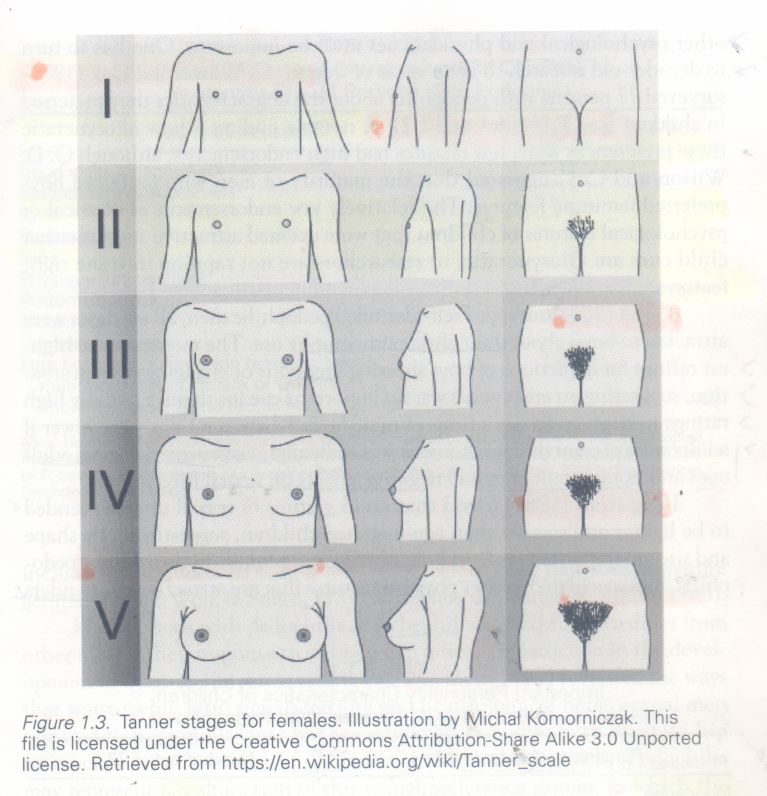
The Tanner Stages and more from Seto 2018
Figures 1.2, 1.3, 2.2., a link in chapter 2 and table 8.2
in Seto's book.
Figures 1.2, 1.3, 2.2., a link in chapter 2 and table 8.2
in Seto's book.

;
Offener Brief an Michael Seto, ...,
Jul 20 2019
Dieser offene Brief wurde am 20.7.2019 per Brief und Email an die fünf Personen/Organisationen geschickt und wird zusätzlich zur Information per Email an zum Thema "Pädophilie" publizierende Sexualwissenschaftler gesendet.
Sie verbreiten seit vielen Jahren systematisch falsche Angaben über das Alter beim Beginn der Pubertät. Wie nachfolgend belegt beginnt die Pubertät der Mädchen mehrere Jahre vor den von Ihnen verbreiteten Altersangaben. Ihre falschen Altersangaben führen dazu, dass Menschen eine "Pädophilie"-Diagnose erhalten, obwohl diese Menschen nach Ihrer eigenen sich ausdrücklich auf das Begehren von Vorpubertierenden beziehenden "Pädophilie"-Definition nicht "pädophil" sind.
Dieser offene Brief wurde am 20.7.2019 per Brief und Email an die fünf Personen/Organisationen geschickt und wird zusätzlich zur Information per Email an zum Thema "Pädophilie" publizierende Sexualwissenschaftler gesendet.
Sie verbreiten seit vielen Jahren systematisch falsche Angaben über das Alter beim Beginn der Pubertät. Wie nachfolgend belegt beginnt die Pubertät der Mädchen mehrere Jahre vor den von Ihnen verbreiteten Altersangaben. Ihre falschen Altersangaben führen dazu, dass Menschen eine "Pädophilie"-Diagnose erhalten, obwohl diese Menschen nach Ihrer eigenen sich ausdrücklich auf das Begehren von Vorpubertierenden beziehenden "Pädophilie"-Definition nicht "pädophil" sind.
;
Open letter to Michael Seto,...,
Jul 20 2019
This open letter was sent by letter and e-mail to the five persons / organizations on July 20th 2019 and will be sent in addition to the information by e-mail to sexologists publishing about "pedophilia".
For many years, you have systematically spread false information about the age at the onset of puberty. As evidenced below, the puberty of girls begins several years before the age information that you give. Your false age ratings cause people to receive a "pedophilia" diagnosis, even though these people are not "pedophilic" according to your own "pedophilia" definition of the desire of pre-pubertals.
This open letter was sent by letter and e-mail to the five persons / organizations on July 20th 2019 and will be sent in addition to the information by e-mail to sexologists publishing about "pedophilia".
For many years, you have systematically spread false information about the age at the onset of puberty. As evidenced below, the puberty of girls begins several years before the age information that you give. Your false age ratings cause people to receive a "pedophilia" diagnosis, even though these people are not "pedophilic" according to your own "pedophilia" definition of the desire of pre-pubertals.
;
Sexual Interest in Children Among Women in Two Nonclinical and Nonrepresentative Online Samples;
Sex Med;
2020(1), 1-14
Regarding women, little research is available about the prevalence of sexual interest in children (SIC), especially in nonclinical samples.
The present study aimed to investigate the extent to which adult women from 2 nonclinical and non-representative samples indicate sexual interest in prepubescent and/or pubescent children.
Participants took part in an online survey either via general websites or via websites directed toward individuals with a SIC.
The samples included are non-representative and therefore not generalizable to the female population.
Nevertheless, they strongly suggest that SIC is a phenomenon also found in women. We therefore recommend professionals in the field of sexual medicine to increase their attention and engagement for women with SIC. Based on the present results, the development of preventive treatment services specifically tailored to women with a SIC has to be strongly encouraged in the near future.
Regarding women, little research is available about the prevalence of sexual interest in children (SIC), especially in nonclinical samples.
The present study aimed to investigate the extent to which adult women from 2 nonclinical and non-representative samples indicate sexual interest in prepubescent and/or pubescent children.
Participants took part in an online survey either via general websites or via websites directed toward individuals with a SIC.
The samples included are non-representative and therefore not generalizable to the female population.
Nevertheless, they strongly suggest that SIC is a phenomenon also found in women. We therefore recommend professionals in the field of sexual medicine to increase their attention and engagement for women with SIC. Based on the present results, the development of preventive treatment services specifically tailored to women with a SIC has to be strongly encouraged in the near future.
;
0,4 Prozent, nicht 50 Prozent ...,
Sep 15 2021
Die „pädophilen“ Männer gelten in der Gesellschaft und in der Wissenschaft als die Haupt"täter"gruppe des „sexuellen Kindesmissbrauchs“. Klaus Beier behauptete in einem im August 2021 erschienenen angeblich wissenschaftlichen Artikel, dass nach Schätzungen 40 bis 50 Prozent aller „Täter“ des „sexuellen Kindesmissbrauchs“ „pädophile“ Menschen wären. [...]
In dem Artikel stützte sich Klaus Beier bei der Beschreibung der Häufigkeit des angeblich pandemischen „sexuellen Kindesmissbrauchs“ auf eine Studie, die Opfer bis zum Alter von 17 Jahren berücksichtigte.
Dieser Artikel zeigt anhand der vorliegenden Dunkelfeldstudien, dass der Anteil der „pädophilen“ Männer an allen „Tätern“ des „sexuellen Kindesmissbrauchs“ nur rund 0,4 Prozent beträgt.
Die „pädophilen“ Männer gelten in der Gesellschaft und in der Wissenschaft als die Haupt"täter"gruppe des „sexuellen Kindesmissbrauchs“. Klaus Beier behauptete in einem im August 2021 erschienenen angeblich wissenschaftlichen Artikel, dass nach Schätzungen 40 bis 50 Prozent aller „Täter“ des „sexuellen Kindesmissbrauchs“ „pädophile“ Menschen wären. [...]
In dem Artikel stützte sich Klaus Beier bei der Beschreibung der Häufigkeit des angeblich pandemischen „sexuellen Kindesmissbrauchs“ auf eine Studie, die Opfer bis zum Alter von 17 Jahren berücksichtigte.
Dieser Artikel zeigt anhand der vorliegenden Dunkelfeldstudien, dass der Anteil der „pädophilen“ Männer an allen „Tätern“ des „sexuellen Kindesmissbrauchs“ nur rund 0,4 Prozent beträgt.
;
The age of the girls and the boys in the Tanner stages
The studies listed were identified by the author in 2017 using a systematic literature search. ...
In recent decades, the age at which girls reach puberty has declined by 0.24 years per decade, [...] Therefore, it may be that in the last five years since the literature review was conducted, the age at reaching puberty has decreased slightly. ...
Girls do not typically reach puberty at age eleven, as has been widely claimed (...), but rather at age nine. ...
Girls are not in Tanner stage 4 (...) at 15 to 16/17 years, but at twelve to 14 years. ...
Accordingly, the desire of girls from the age of ten and of boys from the age of eleven was and is not evidence of preferential desire of prepubescents ("pedophilia").
The studies listed were identified by the author in 2017 using a systematic literature search. ...
In recent decades, the age at which girls reach puberty has declined by 0.24 years per decade, [...] Therefore, it may be that in the last five years since the literature review was conducted, the age at reaching puberty has decreased slightly. ...
Girls do not typically reach puberty at age eleven, as has been widely claimed (...), but rather at age nine. ...
Girls are not in Tanner stage 4 (...) at 15 to 16/17 years, but at twelve to 14 years. ...
Accordingly, the desire of girls from the age of ten and of boys from the age of eleven was and is not evidence of preferential desire of prepubescents ("pedophilia").
;
Approximately 0.5 percent of all "perpetrators" of "sexual abuse" of "minors" are "pedophilic" men,
Feb 17 2022
For orientation in advance, a brief summary of the following calculation: According to the available Darkfield studies,
- 74 percent of all "perpetrators" of "sexual abuse" of "minors" are "minors" (people under 18 years of age) and
- only 26 percent are adults (women and men 18 years of age and older).
- 14 percent of all "perpetrators" are female and
- 86 percent are male, according to available dark field studies.
We assume here that this result based on "minor" and adult "perpetrators" also applies to adult "perpetrators". Then
- 4 percent of all "perpetrators" are women and
- 23 percent are men.
According to two Darkfield studies, about 2 percent of all adult males who have "sexually abused" "minors" are estimated to have a sexual age preference for prepubescents (people in the 0 to 9/10 age range). Accordingly, approximately 0.5 percent of all "perpetrators" of "sexual abuse" of "minors" are "pedophilic" adult males.
For orientation in advance, a brief summary of the following calculation: According to the available Darkfield studies,
- 74 percent of all "perpetrators" of "sexual abuse" of "minors" are "minors" (people under 18 years of age) and
- only 26 percent are adults (women and men 18 years of age and older).
- 14 percent of all "perpetrators" are female and
- 86 percent are male, according to available dark field studies.
We assume here that this result based on "minor" and adult "perpetrators" also applies to adult "perpetrators". Then
- 4 percent of all "perpetrators" are women and
- 23 percent are men.
According to two Darkfield studies, about 2 percent of all adult males who have "sexually abused" "minors" are estimated to have a sexual age preference for prepubescents (people in the 0 to 9/10 age range). Accordingly, approximately 0.5 percent of all "perpetrators" of "sexual abuse" of "minors" are "pedophilic" adult males.
;
Ungefähr 0,5 Prozent aller „Täter“ des „sexuellen Missbrauchs“ von „Minderjährigen“ sind „pädophile“ Männer,
Feb 17 2022
Zur Orientierung vorab eine kurze Zusammenfassung der folgenden Berechnung: Nach den vorliegenden Dunkelfeldstudien sind
- 74 Prozent aller „Täter“ des „sexuellen Missbrauchs“ von „Minderjährigen“ „Minderjährige“ (Menschen unter 18 Jahre) und nur
- 26 Prozent Erwachsene (Frauen und Männer ab 18 Jahre).
- 14 Prozent aller „Täter“ sind nach den vorliegenden Dunkelfeldstudien weiblich und 86 Prozent männlich.
Wir gehen hier davon aus, dass dieses sich auf „minderjährige“ und erwachsene „Täter“ stützende Ergebnis auch für die erwachsenen „Täter“ gilt. Dann sind
- 4 Prozent aller „Täter“ Frauen und
- 23 Prozent Männer.
Nach zwei Dunkelfeldstudien haben geschätzt ungefähr 2 Prozent aller Männer, die „Minderjährige“ „sexuell missbraucht“ haben, eine sexuelle Alterspräferenz für Vorpubertierende (Menschen im Altersbereich von 0 bis 9/10 Jahre). Demnach sind ungefähr 0,5 Prozent aller „Täter“ des „sexuellen Missbrauchs“ von „Minderjährigen“ „pädophile“ Männer.
Zur Orientierung vorab eine kurze Zusammenfassung der folgenden Berechnung: Nach den vorliegenden Dunkelfeldstudien sind
- 74 Prozent aller „Täter“ des „sexuellen Missbrauchs“ von „Minderjährigen“ „Minderjährige“ (Menschen unter 18 Jahre) und nur
- 26 Prozent Erwachsene (Frauen und Männer ab 18 Jahre).
- 14 Prozent aller „Täter“ sind nach den vorliegenden Dunkelfeldstudien weiblich und 86 Prozent männlich.
Wir gehen hier davon aus, dass dieses sich auf „minderjährige“ und erwachsene „Täter“ stützende Ergebnis auch für die erwachsenen „Täter“ gilt. Dann sind
- 4 Prozent aller „Täter“ Frauen und
- 23 Prozent Männer.
Nach zwei Dunkelfeldstudien haben geschätzt ungefähr 2 Prozent aller Männer, die „Minderjährige“ „sexuell missbraucht“ haben, eine sexuelle Alterspräferenz für Vorpubertierende (Menschen im Altersbereich von 0 bis 9/10 Jahre). Demnach sind ungefähr 0,5 Prozent aller „Täter“ des „sexuellen Missbrauchs“ von „Minderjährigen“ „pädophile“ Männer.
;
The power of social touch;
The Washington Post,
Feb 09 2023
Studies show that social touch is essential to our mental well-being and can reduce stress and pain while helping us bond with one another. [...]
Social touch is so important for our well-being that we have specific cells in our skin to detect it. [...]
Social touch causes the release of the social-bonding hormone oxytocin in the brain, which is thought to reduce anxiety and pain. [...]
Research opens up a potential target for future therapeutics that can use the skin to access reward circuits to help treat trauma or depression.
Studies show that social touch is essential to our mental well-being and can reduce stress and pain while helping us bond with one another. [...]
Social touch is so important for our well-being that we have specific cells in our skin to detect it. [...]
Social touch causes the release of the social-bonding hormone oxytocin in the brain, which is thought to reduce anxiety and pain. [...]
Research opens up a potential target for future therapeutics that can use the skin to access reward circuits to help treat trauma or depression.
;
Associations of the ten original Adverse Childhood Experiences (ACEs) with mental health impairments after controlling for the other ACEs (meta-analysis)
The ten original ACEs (including emotional, physical, and "sexual abuse") are associated with mental impairment among the people affected in countless studies. The corresponding bivariate associations are to a considerable extent confounding bias. The extent of the causal relationships is unresolved. [...]
Methode: A systematic literature search was conducted to search for studies that determined the associations of each of the ten original ACEs with mental impairment in "minors" or adults after controlling for each of
the nine other original ACEs (and other ACEs, if applicable). [...]
Conclusions: The causal relationships between the ten original ACEs and mental health impairments are smaller than widely suspected. In the case of several original ACEs, long-term important negative health consequences
are not to be assumed. The ACEs concept should be fundamentally
reconsidered.
Limitations: Also, because of the many uncontrolled confounding variables (including genes and other ACEs), the associations identified by the metaanalysis are not precise causal effect sizes.
The ten original ACEs (including emotional, physical, and "sexual abuse") are associated with mental impairment among the people affected in countless studies. The corresponding bivariate associations are to a considerable extent confounding bias. The extent of the causal relationships is unresolved. [...]
Methode: A systematic literature search was conducted to search for studies that determined the associations of each of the ten original ACEs with mental impairment in "minors" or adults after controlling for each of
the nine other original ACEs (and other ACEs, if applicable). [...]
Conclusions: The causal relationships between the ten original ACEs and mental health impairments are smaller than widely suspected. In the case of several original ACEs, long-term important negative health consequences
are not to be assumed. The ACEs concept should be fundamentally
reconsidered.
Limitations: Also, because of the many uncontrolled confounding variables (including genes and other ACEs), the associations identified by the metaanalysis are not precise causal effect sizes.
;
Einige Links zu den Referenzen
Einige Links zu den Referenzen von Schuster, Metaanalysis, soweit auf den Webseiten von Ipce leicht zu finden.
Einige Links zu den Referenzen von Schuster, Metaanalysis, soweit auf den Webseiten von Ipce leicht zu finden.
;
Quotes from: Associations of the ten original Adverse Childhood Experiences (ACEs) with mental health impairments after controlling for the other ACEs (meta-analysis)
The ten original ACEs (including emotional, physical, and "sexual abuse") are associated with mental impairment among the people affected in countless studies. The corresponding bivariate associations are to a considerable extent confounding bias. The extent of the causal relationships is unresolved.
[... ... ...]
Results: The magnitude of the bivariate associations between the ten original ACEs and mental health impairments is typically medium across
studies (median r=0.22), typically very small (r=0.07) after controlling for the nine other original ACEs, and even smaller (r=0.05) after controlling for additional ACEs. The ACEs incarceration of a household member (r=-0.01) and witnessing violence against the mother/parents (r=0.01) are not associated with mental health impairments after controlling for more than each of the nine other original ACEs. These associations are also very low for the ACEs "sexual abuse", divorce/separation of parents, and alcohol/drug problem of a household member (r=0.04 each).
Conclusions: The causal relationships between the ten original ACEs and mental health impairments are smaller than widely suspected. In the case of several original ACEs, long-term important negative health consequences
are not to be assumed. The ACEs concept should be fundamentally reconsidered.
Limitations: Also, because of the many ncontrolled confounding variables (including genes and other ACEs), the ssociations identified by the metaanalysis are not precise causal effect sizes.
The ten original ACEs (including emotional, physical, and "sexual abuse") are associated with mental impairment among the people affected in countless studies. The corresponding bivariate associations are to a considerable extent confounding bias. The extent of the causal relationships is unresolved.
[... ... ...]
Results: The magnitude of the bivariate associations between the ten original ACEs and mental health impairments is typically medium across
studies (median r=0.22), typically very small (r=0.07) after controlling for the nine other original ACEs, and even smaller (r=0.05) after controlling for additional ACEs. The ACEs incarceration of a household member (r=-0.01) and witnessing violence against the mother/parents (r=0.01) are not associated with mental health impairments after controlling for more than each of the nine other original ACEs. These associations are also very low for the ACEs "sexual abuse", divorce/separation of parents, and alcohol/drug problem of a household member (r=0.04 each).
Conclusions: The causal relationships between the ten original ACEs and mental health impairments are smaller than widely suspected. In the case of several original ACEs, long-term important negative health consequences
are not to be assumed. The ACEs concept should be fundamentally reconsidered.
Limitations: Also, because of the many ncontrolled confounding variables (including genes and other ACEs), the ssociations identified by the metaanalysis are not precise causal effect sizes.
;
Schuster, meta-analysis - some links to the references
Some Literature … from Schulte, Meta-analysis 2024, as far as easily to find on Ipce’s websites.
Some Literature … from Schulte, Meta-analysis 2024, as far as easily to find on Ipce’s websites.