 English
 Français
 Deutsch
 Español
;
Pedophilia and the American Psychiatric Association: Mental Illness vs. Aberration
... The APA said that the discussion about diagnostic criterion for pedophilic disorder contained an error; it should have read, “sexual interest,” instead of “sexual orientation.” ...
The APA classifies pedophilia as a type of paraphilia, or an atypical sexual interest. In its notes about changes in the definitions of paraphilia, the APA clearly states that most people with atypical sexual interests do not have a mental disorder. ...
The APA’s notes explain that they did not change the definition of pedophilia in its new edition of the DSM; instead it only changed the name of the disorder from “pedophilia” to “pedophilic disorder.” ...
in order to be diagnosed with Pedophilic Disorder, people must not only have thoughts of attraction to children, they must act on the attraction as well.
A Comment of PhD Frans Gieles is added to this article by Ipce.
... The APA said that the discussion about diagnostic criterion for pedophilic disorder contained an error; it should have read, “sexual interest,” instead of “sexual orientation.” ...
The APA classifies pedophilia as a type of paraphilia, or an atypical sexual interest. In its notes about changes in the definitions of paraphilia, the APA clearly states that most people with atypical sexual interests do not have a mental disorder. ...
The APA’s notes explain that they did not change the definition of pedophilia in its new edition of the DSM; instead it only changed the name of the disorder from “pedophilia” to “pedophilic disorder.” ...
in order to be diagnosed with Pedophilic Disorder, people must not only have thoughts of attraction to children, they must act on the attraction as well.
A Comment of PhD Frans Gieles is added to this article by Ipce.
;
The boy-lover next door
The author interviews Bill Andriette, the longtime NAMBLA spokesperson -- and past editor of the NAMBLA Bulletin. ...
NAMBLA -- as the only group in America explicitly devoted to the rights of adults sexually attracted to youth -- is a constant target of condemnation. The organization has been under FBI surveillance for years (although it has never been found in violation of any law). Its meetings have been disrupted by death-threat-shouting picketers. ...
In 1994, when Jesse Helms learned that NAMBLA was a member of the International Lesbian and Gay Association (ILGA), which in turn held "consultative status" at the United Nations, he proposed a bill to cut all US funding for the UN unless NAMBLA was expelled ...
When the ILGA controversy erupted, the leaders of virtually every gay and lesbian group in the county, as well as gay politicians such as US Representative Barney Frank, publicly called for NAMBLA's ouster. ...
The group's m.o. has thus been somewhat schizophrenic:
- desperately seeking legitimacy and acceptance, while at the same time
- seeming to do everything it can to preclude attainment of these objectives. ...
But Bill Andriette -- a generation younger than the gay liberationists who founded the organization -- is quietly trying to change that. ... he is willing to retire some of the loonier manifestos ... Bill Andriette is the new face of NAMBLA.
Rather than insisting on the complete abolishment of age-of-consent laws, for example, he focuses on middle-ground positions. ... When Andriette offers these alternatives, NAMBLA's stance seems more palatable: a reality-based approach at reforming an outmoded system of intrusive laws.
The author interviews Bill Andriette, the longtime NAMBLA spokesperson -- and past editor of the NAMBLA Bulletin. ...
NAMBLA -- as the only group in America explicitly devoted to the rights of adults sexually attracted to youth -- is a constant target of condemnation. The organization has been under FBI surveillance for years (although it has never been found in violation of any law). Its meetings have been disrupted by death-threat-shouting picketers. ...
In 1994, when Jesse Helms learned that NAMBLA was a member of the International Lesbian and Gay Association (ILGA), which in turn held "consultative status" at the United Nations, he proposed a bill to cut all US funding for the UN unless NAMBLA was expelled ...
When the ILGA controversy erupted, the leaders of virtually every gay and lesbian group in the county, as well as gay politicians such as US Representative Barney Frank, publicly called for NAMBLA's ouster. ...
The group's m.o. has thus been somewhat schizophrenic:
- desperately seeking legitimacy and acceptance, while at the same time
- seeming to do everything it can to preclude attainment of these objectives. ...
But Bill Andriette -- a generation younger than the gay liberationists who founded the organization -- is quietly trying to change that. ... he is willing to retire some of the loonier manifestos ... Bill Andriette is the new face of NAMBLA.
Rather than insisting on the complete abolishment of age-of-consent laws, for example, he focuses on middle-ground positions. ... When Andriette offers these alternatives, NAMBLA's stance seems more palatable: a reality-based approach at reforming an outmoded system of intrusive laws.
;
Quotes - What People Are Saying About NAMBLA And Man/Boy Love
A selection of positive opinions of 'the public' about NAMBLA, the North American Man-Boy Love Association.
... "If we accepted sexual behaviour between children and adults, we would be
far more able to protect our children from abuse and exploitation than we
are now." ...
... "Passion for helping the child is so strong in pedophile relations that even the police acknowledge it." ...
... ""Boy-lovers and the lesbians who have young lovers are the only people
offering a hand to help young women and men cross the difficult terrain
between straight society and the gay community. They are not child
molesters." ...
... "If I were to see the case of a boy aged ten or eleven who's intensely
erotically attracted toward a man in his twenties or thirties, if the
relationship is totally mutual, and the bonding is genuinely totally
mutual, then I would not call it pathological in any way." ...
A selection of positive opinions of 'the public' about NAMBLA, the North American Man-Boy Love Association.
... "If we accepted sexual behaviour between children and adults, we would be
far more able to protect our children from abuse and exploitation than we
are now." ...
... "Passion for helping the child is so strong in pedophile relations that even the police acknowledge it." ...
... ""Boy-lovers and the lesbians who have young lovers are the only people
offering a hand to help young women and men cross the difficult terrain
between straight society and the gay community. They are not child
molesters." ...
... "If I were to see the case of a boy aged ten or eleven who's intensely
erotically attracted toward a man in his twenties or thirties, if the
relationship is totally mutual, and the bonding is genuinely totally
mutual, then I would not call it pathological in any way." ...
;
No such thing as porn “addiction,” researchers say,
Feb 12 2014
Review article highlights lack of strong research about addictive nature of viewing sexual images:
Ley, D. et al. (2014). The Emperor Has No Clothes: A Review of the “Pornography Addiction” Model- in: Current Sexual Health Reports.
Journalists and psychologists are quick to describe someone as being a porn “addict,” yet there’s no strong scientific research that shows such addictions actually exists. ...
Ley and his team believe that the positive benefits attached to viewing such images do not make it problematic de facto. ...
It provides a legal outlet for illegal sexual behaviors or desires, and its consumption or availability has been associated with a decrease in sex offenses, especially child molestation.
Review article highlights lack of strong research about addictive nature of viewing sexual images:
Ley, D. et al. (2014). The Emperor Has No Clothes: A Review of the “Pornography Addiction” Model- in: Current Sexual Health Reports.
Journalists and psychologists are quick to describe someone as being a porn “addict,” yet there’s no strong scientific research that shows such addictions actually exists. ...
Ley and his team believe that the positive benefits attached to viewing such images do not make it problematic de facto. ...
It provides a legal outlet for illegal sexual behaviors or desires, and its consumption or availability has been associated with a decrease in sex offenses, especially child molestation.
;
Lessons from Littleton: What Congress does not want to hear about youth and media
... Several weeks after the shootings at Columbine High School in Littleton, Colorado, the United States Senate ... launched a series of hearings ...on the "marketing of violent entertainment to children." ...
The senators were feeding a "cultural war" which was more and more focused on teenagers. ... "We need Goth control, not gun control." ...
A more careful analysis would read video games as one cultural influence among many, as having different degrees of impact on different children, and as not sufficient in and of themselves to provoke an otherwise healthy and well-adjusted child to engage in acts of violence. ...
Most children are not at risk from the media they consume. Parents, not governments, are in the best position to know what kinds of culture their children should consume. ...
Media effects research has had little to say about why children are drawn towards violent entertainment, ... Humanistic research, on the other hand, offers useful tools for understanding why children find media violence attractive and meaningful. ...
The author suggests a more constructive response to these issues.
... Several weeks after the shootings at Columbine High School in Littleton, Colorado, the United States Senate ... launched a series of hearings ...on the "marketing of violent entertainment to children." ...
The senators were feeding a "cultural war" which was more and more focused on teenagers. ... "We need Goth control, not gun control." ...
A more careful analysis would read video games as one cultural influence among many, as having different degrees of impact on different children, and as not sufficient in and of themselves to provoke an otherwise healthy and well-adjusted child to engage in acts of violence. ...
Most children are not at risk from the media they consume. Parents, not governments, are in the best position to know what kinds of culture their children should consume. ...
Media effects research has had little to say about why children are drawn towards violent entertainment, ... Humanistic research, on the other hand, offers useful tools for understanding why children find media violence attractive and meaningful. ...
The author suggests a more constructive response to these issues.
;
The Innocent Child and Other Modern Myths
[...] Childhood -- a temporary state -- becomes an emblem for our anxieties about the passing of time, the destruction of historical formations, or conversely, a vehicle for our hopes for the future. The innocent child is caught somewhere over the rainbow -- between nostalgia and utopian optimism, between the past and the future. [...]
The idea of childish innocence resulted in two kinds of attitude and behavior towards childhood:
firstly, safeguarding it against pollution by life and particularly by the sexuality tolerated if not approved of among adults; and
secondly, strengthening it by developing character and reason.
[...]
This book [published in 2007] is not intended as a guidebook for media and social reformers, not a series of attacks on the corrupting force of mass culture on children's lives. Rather, it will challenge some key assumptions behind those reform movements, rejecting the myth of childhood innocence in order to better map the power relations between children and adults. This book avoids texts that see children primarily as victims in favor of works that recognize and respect their social and political agency.
[...] Childhood -- a temporary state -- becomes an emblem for our anxieties about the passing of time, the destruction of historical formations, or conversely, a vehicle for our hopes for the future. The innocent child is caught somewhere over the rainbow -- between nostalgia and utopian optimism, between the past and the future. [...]
The idea of childish innocence resulted in two kinds of attitude and behavior towards childhood:
firstly, safeguarding it against pollution by life and particularly by the sexuality tolerated if not approved of among adults; and
secondly, strengthening it by developing character and reason.
[...]
This book [published in 2007] is not intended as a guidebook for media and social reformers, not a series of attacks on the corrupting force of mass culture on children's lives. Rather, it will challenge some key assumptions behind those reform movements, rejecting the myth of childhood innocence in order to better map the power relations between children and adults. This book avoids texts that see children primarily as victims in favor of works that recognize and respect their social and political agency.
;
In Defence of Intergenerational Love
... The main purpose of intergenerational relationships is to catch, and provide one-on-one mentoring to the lost, unsupervised, disenfranchised, and self-destructive youths that exist within every culture. ...
These relationships are the safety net of last resort to give companionship and guidance to troubled and delinquent boys whose parents are unable, or unwilling to do so. ... They're available to a boy in the neighborhood where he lives and sometimes struggles to survive from day to day -- an immediate help in times of trouble. ... Occasionally they can be the most cost-effective, workable, and practical alternative to more conventional forms of help. ...
I will try to show that it is a misunderstanding to characterize these relationships as simply the means by which an adult befriends a boy so that he can "groom" or manipulate him into a sexually abusive situation. ... ... ...
This alternate viewpoint has been presented to the reader from the rather unique and often overlooked perspective of an actual boy lover, and represents knowledge acquired through direct observation and experiences ...
These relationships are not designed to last for ever. Once the issues that led a particular boy into becoming available for an intergenerational love relationship have been addressed and resolved to his satisfaction he will be ready to begin the process of closure and transition into the next stage of his growth and development. For about 90% of boys this means moving into heterosexuality and dating girls.
... The main purpose of intergenerational relationships is to catch, and provide one-on-one mentoring to the lost, unsupervised, disenfranchised, and self-destructive youths that exist within every culture. ...
These relationships are the safety net of last resort to give companionship and guidance to troubled and delinquent boys whose parents are unable, or unwilling to do so. ... They're available to a boy in the neighborhood where he lives and sometimes struggles to survive from day to day -- an immediate help in times of trouble. ... Occasionally they can be the most cost-effective, workable, and practical alternative to more conventional forms of help. ...
I will try to show that it is a misunderstanding to characterize these relationships as simply the means by which an adult befriends a boy so that he can "groom" or manipulate him into a sexually abusive situation. ... ... ...
This alternate viewpoint has been presented to the reader from the rather unique and often overlooked perspective of an actual boy lover, and represents knowledge acquired through direct observation and experiences ...
These relationships are not designed to last for ever. Once the issues that led a particular boy into becoming available for an intergenerational love relationship have been addressed and resolved to his satisfaction he will be ready to begin the process of closure and transition into the next stage of his growth and development. For about 90% of boys this means moving into heterosexuality and dating girls.
;
The context of a Statement
Last year, the brutal rape and murder of a young boy in Cambridge triggered a wave of indignation which targeted all 'pedophiles.' Supporters of the death penalty in Massachusetts used this case and almost prevailed. There were calls in public meetings to "find and kill all the pedophiles." [...]
Some of those working against the death penalty realized that hysteria about child sex cases had to be dealt with directly. [...[
A discussion group of about twenty people formed [...]. Participants included women who are incest and sex abuse survivors, boy-lovers, anti-censorship and civil liberties activists, feminists, gay and lesbian people, health-care workers, church activists, peace and social justice activists, academics, and those who work with prisoners. [...]
The result is the enclosed statement, "A Call to Safeguard Our Children and Our Liberties"
Last year, the brutal rape and murder of a young boy in Cambridge triggered a wave of indignation which targeted all 'pedophiles.' Supporters of the death penalty in Massachusetts used this case and almost prevailed. There were calls in public meetings to "find and kill all the pedophiles." [...]
Some of those working against the death penalty realized that hysteria about child sex cases had to be dealt with directly. [...[
A discussion group of about twenty people formed [...]. Participants included women who are incest and sex abuse survivors, boy-lovers, anti-censorship and civil liberties activists, feminists, gay and lesbian people, health-care workers, church activists, peace and social justice activists, academics, and those who work with prisoners. [...]
The result is the enclosed statement, "A Call to Safeguard Our Children and Our Liberties"
;
The Criminalizing of Teen Sex
[...] The criminalization of teenage sexual behavior has become a disturbing trend in our predator panicked society. We are simultaneously obsessed with sex and horrified by sex; our laws reflect this panic. [...]
Criminalizing teen sex is part of the “look tough on crime” stance which is popular in today’s society, yet few people are educating the public about the real possibility of teens landing on sex offender registries for irresponsible sexual behavior [...].
This mentality has led to disastrous consequences, destroying the lives of many teenagers by placing them on sex offender registries for life! [...]
However, what percentage of these cases involves forcible rape or child molestation as opposed to consensual sexual activity with peers?
In our quest to prevent sexual violence, we are willing to place marks of infamy on children as young as four in the name of public safety, proclaiming the ironic mantra, “If it saves just one child, then the law is worth it.”
Tell me, are we willing to destroy the lives of many children to save “just one child?”
[...] The criminalization of teenage sexual behavior has become a disturbing trend in our predator panicked society. We are simultaneously obsessed with sex and horrified by sex; our laws reflect this panic. [...]
Criminalizing teen sex is part of the “look tough on crime” stance which is popular in today’s society, yet few people are educating the public about the real possibility of teens landing on sex offender registries for irresponsible sexual behavior [...].
This mentality has led to disastrous consequences, destroying the lives of many teenagers by placing them on sex offender registries for life! [...]
However, what percentage of these cases involves forcible rape or child molestation as opposed to consensual sexual activity with peers?
In our quest to prevent sexual violence, we are willing to place marks of infamy on children as young as four in the name of public safety, proclaiming the ironic mantra, “If it saves just one child, then the law is worth it.”
Tell me, are we willing to destroy the lives of many children to save “just one child?”
;
Research supporting the notion that the vast majority of child molesters are not pedophiles
A short overview of some research supporting the notion that the vast majority of child molesters are not pedophiles.
A short overview of some research supporting the notion that the vast majority of child molesters are not pedophiles.
;
Research supporting the notion that many, possibly a majority of pedophiles never molest children in the first place
Some publications of research supporting the notion that many, possibly a majority of pedophiles never molest children in the first place.
Some publications of research supporting the notion that many, possibly a majority of pedophiles never molest children in the first place.
;
The Internet: A Breeding Ground for Online Pedophiles ...
There is something that all parents should know before they bring this technology into their home and to their child's fingertips. The personal computer has become the latest tool utilized by offenders in their quest to exploit vulnerable children who venture off into their new virtual playgrounds. [... ... ...]
There are signals that can help determine whether a child has become a victim of or is vulnerable to online exploitation. [... ... ...]
If any of the characteristic signs of online child exploitation are noted and it is believed that a child has been victimized or may be vulnerable, there are several measures that can be taken.
There is something that all parents should know before they bring this technology into their home and to their child's fingertips. The personal computer has become the latest tool utilized by offenders in their quest to exploit vulnerable children who venture off into their new virtual playgrounds. [... ... ...]
There are signals that can help determine whether a child has become a victim of or is vulnerable to online exploitation. [... ... ...]
If any of the characteristic signs of online child exploitation are noted and it is believed that a child has been victimized or may be vulnerable, there are several measures that can be taken.

;
Book Review
Hubert Kennedy wrote a review of:
Sandfort, Theo, Brongersma Edward, & van Naerssen Alex; Review of: Male Intergenerational Intimacy: Historical, Socio-Psychological, and Legal Perspectives; Journal of Homosexuality:
< https://www.ipce.info/library/book/review-male-intergenerational-intimacy >.
Hubert Kennedy wrote a review of:
Sandfort, Theo, Brongersma Edward, & van Naerssen Alex; Review of: Male Intergenerational Intimacy: Historical, Socio-Psychological, and Legal Perspectives; Journal of Homosexuality:
< https://www.ipce.info/library/book/review-male-intergenerational-intimacy >.
;
Harm, Responsibility, Age and Consent
This article explores the contradictory ways in which adolescents just under the age of consent are represented in illegal sexual relations with both men and women who are over the age of consent. We are specifically interested in the ways in which the gender of the adolescent and the adult affect public perceptions, legal responses and perceptions of harm of sexual relations. We argue that the development of an indiscriminate legal and policy narrative of child abuse which increasingly includes all aspects of adolescent sexuality,
‘erases’ adolescent subjectivity. By exploring the nuanced ways in which the historical construction of childhood as sexually innocent intersects with current cultural scripts of femininity and masculinity, this article hopes to add to the small but growing literature on the issue of sexual consent, sexual ethics and sexual citizenship for young people.
This article explores the contradictory ways in which adolescents just under the age of consent are represented in illegal sexual relations with both men and women who are over the age of consent. We are specifically interested in the ways in which the gender of the adolescent and the adult affect public perceptions, legal responses and perceptions of harm of sexual relations. We argue that the development of an indiscriminate legal and policy narrative of child abuse which increasingly includes all aspects of adolescent sexuality,
‘erases’ adolescent subjectivity. By exploring the nuanced ways in which the historical construction of childhood as sexually innocent intersects with current cultural scripts of femininity and masculinity, this article hopes to add to the small but growing literature on the issue of sexual consent, sexual ethics and sexual citizenship for young people.

;
Raunch or romance?
This article explores the relationship between the media and young people’s sexual health as articulated within public health policy in the United Kingdom. It argues that this relationship is largely framed by covert moralism and by a focus on media effect and exposure and sexual risk and harm. Through the presentation of preliminary findings from my own research, which is situated at the intersection between public health, and media and cultural studies, I argue that this framing may in fact constrict and even contain the sexual agency, health and sexual expression of young people. I suggest that this is incongruent with the World Health Organization working definition of sexual health and has implications for sex education, sex educators and practitioners and policy-makers. I conclude by suggesting that the relationship between sexualized culture and the sexual health of young people may be best understood in terms of competency and considered within a pleasure and rights based definition of sexual health.
This article explores the relationship between the media and young people’s sexual health as articulated within public health policy in the United Kingdom. It argues that this relationship is largely framed by covert moralism and by a focus on media effect and exposure and sexual risk and harm. Through the presentation of preliminary findings from my own research, which is situated at the intersection between public health, and media and cultural studies, I argue that this framing may in fact constrict and even contain the sexual agency, health and sexual expression of young people. I suggest that this is incongruent with the World Health Organization working definition of sexual health and has implications for sex education, sex educators and practitioners and policy-makers. I conclude by suggesting that the relationship between sexualized culture and the sexual health of young people may be best understood in terms of competency and considered within a pleasure and rights based definition of sexual health.
;
Pedophilia: Diagnostic concept, treatment and ethical considerations
This paper serves to broaden the base of our knowledge in regard to an adult's sexual attraction to a child and helps us differentiate between the perpetrator and his offense. It is a conceptual work, exploring the nature of pedophilia, its etiology, manifestation, diagnosis, and treatment which encompasses both clinical and ethical considerations. ...
Dr. Berlin and Mr. Krout's paper brings clarity, order, understanding, and hope. It is only through understanding and with understanding that we will find the way to help perpetrators inhibit unwanted pedophilic inclinations. ...
This paper is an important contribution to the sparse literature on a serious subject.
[... ... ...]
Although it is not the pedophiles fault that he has the sexual orientation that he has, it is his responsibility to deal with his sexuality in a manner that does not put innocent children at risk. However, in order for him to be able to do this and to be held accountable by society, adequate treatment facilities must be made available, facilities where a person can seek help without fear of stigmatization, ridicule, retaliation, or unwarranted disdain. Only under such circumstances can one expect an individual to talk candidly about the innermost aspects of his own sexuality. This requires trust. The values that we try to in still in our children are important. [...] ...values such as compassion, understanding, forgiveness, and reformation. ... persons [should] be judged not simply by their behavior but with some appreciation for their humanity.
This paper serves to broaden the base of our knowledge in regard to an adult's sexual attraction to a child and helps us differentiate between the perpetrator and his offense. It is a conceptual work, exploring the nature of pedophilia, its etiology, manifestation, diagnosis, and treatment which encompasses both clinical and ethical considerations. ...
Dr. Berlin and Mr. Krout's paper brings clarity, order, understanding, and hope. It is only through understanding and with understanding that we will find the way to help perpetrators inhibit unwanted pedophilic inclinations. ...
This paper is an important contribution to the sparse literature on a serious subject.
[... ... ...]
Although it is not the pedophiles fault that he has the sexual orientation that he has, it is his responsibility to deal with his sexuality in a manner that does not put innocent children at risk. However, in order for him to be able to do this and to be held accountable by society, adequate treatment facilities must be made available, facilities where a person can seek help without fear of stigmatization, ridicule, retaliation, or unwarranted disdain. Only under such circumstances can one expect an individual to talk candidly about the innermost aspects of his own sexuality. This requires trust. The values that we try to in still in our children are important. [...] ...values such as compassion, understanding, forgiveness, and reformation. ... persons [should] be judged not simply by their behavior but with some appreciation for their humanity.
;
Adult Sex Offencer Recidivism: A Review of Studies
The article:
Sex offenders may reoffend, even after they have been convicted and imprisoned. This conduct is known as recidivism. Research on sex offender recidivism can help the public and policymakers understand the risks posed by convicted sex offenders. This paper summarizes the major research findings related to sex offender recidivism.
Only a few studies on sex offenders have been conducted with scientific precision. Thus, the conclusions that can be drawn from this literature are somewhat limited [...].
According to this classification, offenders who commit the offense of rape of a child are classified as pedophiles. In most studies, and in this paper, the term child molester is used for pedophile. [... ... ...]
While some studies have shown that particular treatment programs are associated with lower recidivism rates in certain types of sex offenders, there is a lack of solid scientific evidence (from controlled experimental studies) that clearly proves treatment programs reduce sex offender recidivism. [...]
Comment by Ipce:
[...] Classifying (a) raping of a child and child molester and (b) pedophile in one category is a great bias. Raping and molesting are criminal acts forbidden by law, but having pedophile feelings and desires without acting in a pedosexual way cannot be, and is not forbidden by any law in any country. [...]
The article:
Sex offenders may reoffend, even after they have been convicted and imprisoned. This conduct is known as recidivism. Research on sex offender recidivism can help the public and policymakers understand the risks posed by convicted sex offenders. This paper summarizes the major research findings related to sex offender recidivism.
Only a few studies on sex offenders have been conducted with scientific precision. Thus, the conclusions that can be drawn from this literature are somewhat limited [...].
According to this classification, offenders who commit the offense of rape of a child are classified as pedophiles. In most studies, and in this paper, the term child molester is used for pedophile. [... ... ...]
While some studies have shown that particular treatment programs are associated with lower recidivism rates in certain types of sex offenders, there is a lack of solid scientific evidence (from controlled experimental studies) that clearly proves treatment programs reduce sex offender recidivism. [...]
Comment by Ipce:
[...] Classifying (a) raping of a child and child molester and (b) pedophile in one category is a great bias. Raping and molesting are criminal acts forbidden by law, but having pedophile feelings and desires without acting in a pedosexual way cannot be, and is not forbidden by any law in any country. [...]
;
Child sexual abuse, sexual exploitation of children and pedophilia: different names, different problems?
This article discusses the emergence of “sexual violence against children” as a current “social problem” and its breakdown into different modalities such as “child sexual abuse”, “sexual exploitation of children” and “pedophilia”. Although focused on a “problem” whose repercussions and visibility are not limited by national borders, it does not intend to account for all the different levels of this phenomenon. Instead, it aims to contribute to the understanding of one of this problem’s local manifestations, within the Brazilian legal, social and political context. Where relevant, references will be made to the international scene.
[... ... ...]
As we have seen, words are not neutral in this universe of political struggles, in so far they delineate not only differences of meaning, but also different political positions; not only different interpretations but also action strategies. [...]
Words and their meanings are constantly constructed and reinvented within disputes and social shifts at several levels. [...]
I hope that this historical and social analysis of the uses and meanings of the diversified vocabulary regarding “sexual violence against children” will contribute to a more reflective usage of the relevant classificatory categories.
This article discusses the emergence of “sexual violence against children” as a current “social problem” and its breakdown into different modalities such as “child sexual abuse”, “sexual exploitation of children” and “pedophilia”. Although focused on a “problem” whose repercussions and visibility are not limited by national borders, it does not intend to account for all the different levels of this phenomenon. Instead, it aims to contribute to the understanding of one of this problem’s local manifestations, within the Brazilian legal, social and political context. Where relevant, references will be made to the international scene.
[... ... ...]
As we have seen, words are not neutral in this universe of political struggles, in so far they delineate not only differences of meaning, but also different political positions; not only different interpretations but also action strategies. [...]
Words and their meanings are constantly constructed and reinvented within disputes and social shifts at several levels. [...]
I hope that this historical and social analysis of the uses and meanings of the diversified vocabulary regarding “sexual violence against children” will contribute to a more reflective usage of the relevant classificatory categories.
;
From Deviation to Disorder: the medicalization of sexuality in contemporary psychiatric classifications of disease
In the final decades of the 20th century, the psychiatric field witnessed an important transformation. The psycho-social view of mental disorders, characterized in part by the hegemony of psychoanalytic interpretation and by a political and social critique of traditional psychiatric practices, gave way to a view that was strictly biological.
A landmark in this transformation was the publication in 1980 of the third version of the Diagnostic and Statistic Manual of Mental Disorders (DSM-III) by the American Psychiatric Association. But this shift in the understanding of mental disorders — from psycho-sociological to biological — was not an isolated phenomenon. In fact, it was part of a larger process of the “re-biologization” of topics and debates, such as race and sexual difference, which were earlier reserved to the realm of political struggle.
[... ... ...]
The fragmentation and specification of disorders of “normal” sexuality are part of this broader process, which points to the very objectification and fragmentation of the “self, “subject” and “person” concepts.
In the final decades of the 20th century, the psychiatric field witnessed an important transformation. The psycho-social view of mental disorders, characterized in part by the hegemony of psychoanalytic interpretation and by a political and social critique of traditional psychiatric practices, gave way to a view that was strictly biological.
A landmark in this transformation was the publication in 1980 of the third version of the Diagnostic and Statistic Manual of Mental Disorders (DSM-III) by the American Psychiatric Association. But this shift in the understanding of mental disorders — from psycho-sociological to biological — was not an isolated phenomenon. In fact, it was part of a larger process of the “re-biologization” of topics and debates, such as race and sexual difference, which were earlier reserved to the realm of political struggle.
[... ... ...]
The fragmentation and specification of disorders of “normal” sexuality are part of this broader process, which points to the very objectification and fragmentation of the “self, “subject” and “person” concepts.
;
Warped Desire: Inside the mind of a child pornographer
The article gives a view within the mind of a man convicted inthe USA to 35 years of prison because child sexual abuse and child pornography making, posessing and viewing, as well in the mind of the morther of the child, and indirectly the mind of the child.
... In a jailhouse interview, the undocumented, Mexican-born Cardenas prefers to characterize the abuse as “consensual sex.” He says he didn’t understand how society would see such acts until U.S Attorney prosecutor Carol Dain told him he had repeatedly raped the child. “When she said that, that gave me an idea what people were thinking out there,” he says. “I did not rape that kid. I never did anything against his will.” ...
The article gives a view within the mind of a man convicted inthe USA to 35 years of prison because child sexual abuse and child pornography making, posessing and viewing, as well in the mind of the morther of the child, and indirectly the mind of the child.
... In a jailhouse interview, the undocumented, Mexican-born Cardenas prefers to characterize the abuse as “consensual sex.” He says he didn’t understand how society would see such acts until U.S Attorney prosecutor Carol Dain told him he had repeatedly raped the child. “When she said that, that gave me an idea what people were thinking out there,” he says. “I did not rape that kid. I never did anything against his will.” ...
;
Mr and Mrs Dodo
During 2024 and 2025 Colossal Biosciences claim to have de-extincted dire wolves using genetic engineering and a surrogate mother. They now have plans to de-extinct the dodo using its DNA and a chicken as a surrogate mother. They expect dodo 2.0 to be born in 2028. Beth Shapiro is the Team Leader as well as the Chief Scientific Officer at Colossal Bioscinces. ...
It was in Oxford that the dodo came back into the public consciousness. Rev Charles Dodgson taught mathematics at Christ Church College, Oxford between 1855 and 1881. He had a stammer and introduced himself to people by saying, “Hello, I am Charles Dodododgson” earning him the nickname Mr Dodo. ...
In 1865 he published the book Alice in Wonderland under the pseudonym, Lewis Carroll but really it was a joint effort with Alice; a product of their friendship. ...
Alice Liddell described Charles Dodgson as “the best friend that a child could have”. ...
There are certain other questions in my mind. ...
During 2024 and 2025 Colossal Biosciences claim to have de-extincted dire wolves using genetic engineering and a surrogate mother. They now have plans to de-extinct the dodo using its DNA and a chicken as a surrogate mother. They expect dodo 2.0 to be born in 2028. Beth Shapiro is the Team Leader as well as the Chief Scientific Officer at Colossal Bioscinces. ...
It was in Oxford that the dodo came back into the public consciousness. Rev Charles Dodgson taught mathematics at Christ Church College, Oxford between 1855 and 1881. He had a stammer and introduced himself to people by saying, “Hello, I am Charles Dodododgson” earning him the nickname Mr Dodo. ...
In 1865 he published the book Alice in Wonderland under the pseudonym, Lewis Carroll but really it was a joint effort with Alice; a product of their friendship. ...
Alice Liddell described Charles Dodgson as “the best friend that a child could have”. ...
There are certain other questions in my mind. ...
;
Why the new German study “Sexualized violence against children and adolescents” is pseudoscience and misleading propaganda,
Jun 16 2025
On June 2, 2025, the German Medical Journal (Deutsches Ärzteblatt) published an article entitled “Sexualized violence against children and adolescents. A nationwide, representative survey on prevalence, situational context, and consequences.”
On the same day, leading German media outlets published detailed and largely identical reports on the study's findings. “Sexualized violence” was defined in the survey conducted by the Central Institute for Mental Health in Mannheim as follows:
“Any act of a sexual nature committed against persons under the age of 14 or against the will of a person under the age of 18. This includes any acts with or without physical contact, for example, sexual harassment, sexual coercion, and attempted or completed penetration of the body.”
The survey questioned 3,012 randomly selected people from Germany aged between 18 and 59.
Two key findings of the study are therefore (allegedly):
“Sexualized violence” against children and adolescents is very widespread, and most “perpetrators” are (significantly older) adults.
In this article, I would like to describe and explain why the study is pseudoscientific and flawed.
On June 2, 2025, the German Medical Journal (Deutsches Ärzteblatt) published an article entitled “Sexualized violence against children and adolescents. A nationwide, representative survey on prevalence, situational context, and consequences.”
On the same day, leading German media outlets published detailed and largely identical reports on the study's findings. “Sexualized violence” was defined in the survey conducted by the Central Institute for Mental Health in Mannheim as follows:
“Any act of a sexual nature committed against persons under the age of 14 or against the will of a person under the age of 18. This includes any acts with or without physical contact, for example, sexual harassment, sexual coercion, and attempted or completed penetration of the body.”
The survey questioned 3,012 randomly selected people from Germany aged between 18 and 59.
Two key findings of the study are therefore (allegedly):
“Sexualized violence” against children and adolescents is very widespread, and most “perpetrators” are (significantly older) adults.
In this article, I would like to describe and explain why the study is pseudoscientific and flawed.
;
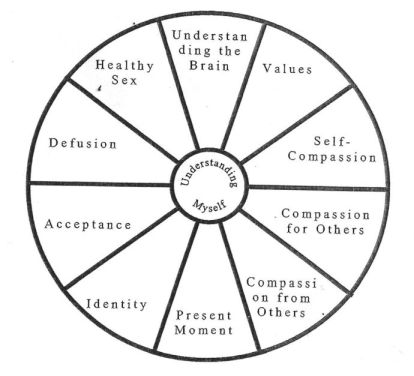
Quotes from: Compassion-focused therapy as an intervention for sexual offending
Conclusion:
The development of trauma–aware practice demonstrates the prevalence of adverse child experiences in the histories of people with sexual offences an points to functional links between trauma and sexual offending. However, common feature of the predominant intervention models is a focus on criminogenic needs without attention to the (often traumatic) genesis for these.
We have argued here that survival responses to trauma and adversity give rise to the development of criminogenic needs, and it is necessary to address the origins of criminogenic factors in order to prevent further harm. We propose that CFT offers a therapeutic model for doing this, providing a means to formulate criminogenic needs in the context of trauma and a means of developing a motivation that moves people away from harmful behaviour. The two case examples of interventions that use CFT as their main component show promising outcomes for psychological wellbeing and acknowledgment risk.
PS:
* A Dutch version is given here:
< https://www.helping-people.info/compassie_als_de_kern.html >.
Conclusion:
The development of trauma–aware practice demonstrates the prevalence of adverse child experiences in the histories of people with sexual offences an points to functional links between trauma and sexual offending. However, common feature of the predominant intervention models is a focus on criminogenic needs without attention to the (often traumatic) genesis for these.
We have argued here that survival responses to trauma and adversity give rise to the development of criminogenic needs, and it is necessary to address the origins of criminogenic factors in order to prevent further harm. We propose that CFT offers a therapeutic model for doing this, providing a means to formulate criminogenic needs in the context of trauma and a means of developing a motivation that moves people away from harmful behaviour. The two case examples of interventions that use CFT as their main component show promising outcomes for psychological wellbeing and acknowledgment risk.
PS:
* A Dutch version is given here:
< https://www.helping-people.info/compassie_als_de_kern.html >.

;
Ambivalence
The author sees a 'blind spot' in quantitative research, a.o. of Rind c.s.
In the quantitavie research, there is a line between +1 and -1, with zero between both figures: 'neutral' between 'positive' and 'negative.
In the qualitative view, there are two positions possible between positive and negative: neutral and ambivalent: positive and negative both.
The ambivalent feelings may be felt during the act, thus empirically, but also may have came up by influences later by other people: 'It was nice, but I have learned that is was bad, thus morally wrong'.
The latter view is quite often given by a psychologist with a blind eye for attachment problems within the family: 'That dirty man have caused all your problems', or even 'has destroyed your life', whereafter the parents think: 'We are OK'.
The author sees a 'blind spot' in quantitative research, a.o. of Rind c.s.
In the quantitavie research, there is a line between +1 and -1, with zero between both figures: 'neutral' between 'positive' and 'negative.
In the qualitative view, there are two positions possible between positive and negative: neutral and ambivalent: positive and negative both.
The ambivalent feelings may be felt during the act, thus empirically, but also may have came up by influences later by other people: 'It was nice, but I have learned that is was bad, thus morally wrong'.
The latter view is quite often given by a psychologist with a blind eye for attachment problems within the family: 'That dirty man have caused all your problems', or even 'has destroyed your life', whereafter the parents think: 'We are OK'.
;
Intelligence, Memory, and Handedness in Pedophilia
A sample of 473 male patients with pedophilia (assessed by the patients’ sexual history and penile response in the laboratory to standardized, erotic stimuli) or other problematic sexual interests or behaviors received brief neuropsychological assessments. [...]
Pedophilia showed significant negative correlations with IQ and immediate
and delayed recall memory. Pedophilia was also related to non-right-handedness even after covarying age and IQ.
These results suggest that pedophilia is linked to early neurodevelopmental perturbations.
Given is the article in PDF format, and Abstract and some quotes in html format, followed by a Comment by PhD F. Gieles.
A sample of 473 male patients with pedophilia (assessed by the patients’ sexual history and penile response in the laboratory to standardized, erotic stimuli) or other problematic sexual interests or behaviors received brief neuropsychological assessments. [...]
Pedophilia showed significant negative correlations with IQ and immediate
and delayed recall memory. Pedophilia was also related to non-right-handedness even after covarying age and IQ.
These results suggest that pedophilia is linked to early neurodevelopmental perturbations.
Given is the article in PDF format, and Abstract and some quotes in html format, followed by a Comment by PhD F. Gieles.